Make Existing Props Easier to Borrow Than Rebuild
A circular props library is a service, not just a room full of retained scenery. Designers need to discover useful objects early, borrowers need dependable availability information, and returning crews need a clear place to report damage and missing parts. Tags, storage, and check-out records connect those tasks. The system can begin with an ordinary shared register rather than specialist software, provided it distinguishes identity, location, condition, reservation, and actual possession. Foam props deserve particular attention because large visual volume can conceal fragile surfaces, awkward packing, and construction that is easy to misinterpret from a photograph. A successful library preserves the information needed to use each object appropriately while making legitimate reuse convenient. Its environmental value comes from documented returns to service and avoided unnecessary fabrication, not from keeping every object forever or counting crowded shelves as a completed reuse outcome.
A: Record the base as a shared dependency and reserve it explicitly so both kits cannot appear fully available at once.
A: Only after the appropriate completeness and condition review; physical return is not the same as readiness.
A: Use the stable human-readable identifier and the normal catalog record rather than assigning a new identity.
A: Permission, the proposed finish, any effect on later bookings, and the required return condition before alteration begins.
A: With known facts and unresolved history distinguished, plus any restrictions or assessment needed before use.
A: The carrier and detached modules may determine route and vehicle needs differently from display dimensions.
A: No. Changed exposure and use need the appropriate project review and responsible approval.
A: Record the incomplete kit and hold the relevant availability state until the specified replacement or review is resolved.
A: Use clear fields and responsibilities for identity, location, condition, reservation, custody, and return, with backups.
A: No. Track reuse directly and distinguish documented avoided fabrication from unsupported environmental estimates.
Decide What the Library Promises
Define the users and service boundary. A single theater storing its own stock has different responsibilities from a shared community library lending to several venues. Decide who may browse, reserve, borrow, authorize changes, and approve returns. State whether transport, installation, packing, or repair support is included. Ambiguity about those services can turn an apparently available prop into an unusable last-minute surprise.
Separate visual suitability from authorization for a particular use. A listing can describe a decorative foam throne without declaring it suitable for seating. A large sculpture can be available for display while still needing assessment for a new outdoor location. Keep documented intended use and limitations visible rather than expecting borrowers to infer them from the object’s appearance.
Choose a manageable starting collection. Prioritize items with plausible demand, identifiable construction, practical storage, and a reasonable condition. An indiscriminate intake policy can consume the available space with objects nobody can use or trust. The library needs a route for declining, reviewing, transferring, or retiring donations as well as accepting them.
Give Each Physical Object a Stable Identity
Assign an identifier that does not change when the object is renamed, repainted, or moved. The name can remain descriptive and searchable, while the identifier links the physical object to its history. Avoid encoding the current shelf location into the only permanent identity; locations change, but records should continue following the same item.
Attach the tag in a suitable concealed or non-damaging place and keep a photograph showing where it is. A barcode or QR code can speed retrieval, but provide a readable identifier as a fallback. A lost phone connection or damaged printed code should not make the object anonymous. Keep the underlying record accessible through the library’s normal system.
Describe the Object for Real Discovery
Use search terms that match how designers think: object type, period or style where supported, dominant color, visual material effect, theme, and scale. Distinguish a prop’s actual material from what it represents. A stone-look foam column should be discoverable as a column without being mistaken for a heavy stone object.
Photograph the front, rear, sides, and important details against a readable background. Include an agreed scale reference and record actual dimensions separately. A dramatic production photograph can supplement the listing, but it may hide a support, exaggerate size, or show accessories that are not included. Make the ordinary inventory images do the factual work.
Record completed weight where it matters to handling, the packed envelope, and the number of modules. A large lightweight prop can still be awkward to move through a narrow route. Include designated handling areas and the carrier or packaging that belongs with it. Borrowers need enough information to plan a realistic journey before confirming a loan.
Identify uncertainty rather than inventing a description. If the original maker is unknown or the finish has been repeatedly changed, say so. Do not assign a historical attribution, material grade, or performance capability simply because it seems likely. The library becomes more trustworthy when the record distinguishes known facts from unresolved history.
Treat Kits as Kits, Not Loose Objects
A modular arch may include several scenic sections, bases, covers, fasteners, tools, and a carrier. Give the complete kit a parent record and its important pieces child identifiers. Keep a packing image and parts list with the record. A single photograph of the assembled front is not enough to prove that the object is complete.
Define whether parts may be loaned independently. Removing a base for another project can make the remaining arch unavailable even if the reservation calendar still shows it free. Record those dependencies so a shared component cannot be promised to two borrowers at once. When a kit’s configuration changes, update its inventory before the next booking.
Keep ordinary spare parts distinguishable from specified assembly hardware. A library should not encourage a borrower to replace missing structural or critical connection items from an anonymous mixed bin. Link the accepted connection information and any required review to the kit. Completeness is a technical as well as an administrative question.
Use Condition States That Mean Something
Separate available, reserved, checked out, returned awaiting inspection, repair pending, restricted, and retired states. The names can be adapted, but each should trigger a clear action. An item placed back on a shelf is not automatically ready for the next borrower. A return needs a condition and completeness review appropriate to the object.
Record cosmetic damage separately from concerns that may affect intended use. A paint scuff on a broad decorative face differs from cracking near an attachment. Define who can assess or authorize repairs through the library’s actual responsibilities. Do not let a general good-condition label imply that every possible new application has been approved.
Photograph defects close enough to identify them and also in context. Record the affected module, date, and reported cause where known. Avoid vague notes such as needs attention that provide no usable information to the next person. A clear local record helps decide whether the item can be used within restrictions, repaired, or taken out of circulation.
Keep uncertainty visible during lending discussions. An item with an unresolved support history may still have a future after appropriate assessment, but it should not appear beside fully documented stock without distinction. A library builds confidence by controlling availability, not by maximizing the number of green icons in its catalog.
Separate Reservations From Actual Possession
A reservation records intent; check-out records custody. Track planned pickup, event dates, expected return, responsible borrower, destination, and contact. Include preparation and inspection time around the loan rather than booking back-to-back uses with no realistic turnaround. A prop due back at midnight is not automatically ready for another morning delivery.
Use a clear process for extending a loan or changing destination. The borrower should not assume a prop can remain away because the next event is not visible to them. The library needs the opportunity to protect later commitments and review changed conditions. Keep the actual return status separate from the original planned date.
Make Storage Location Searchable
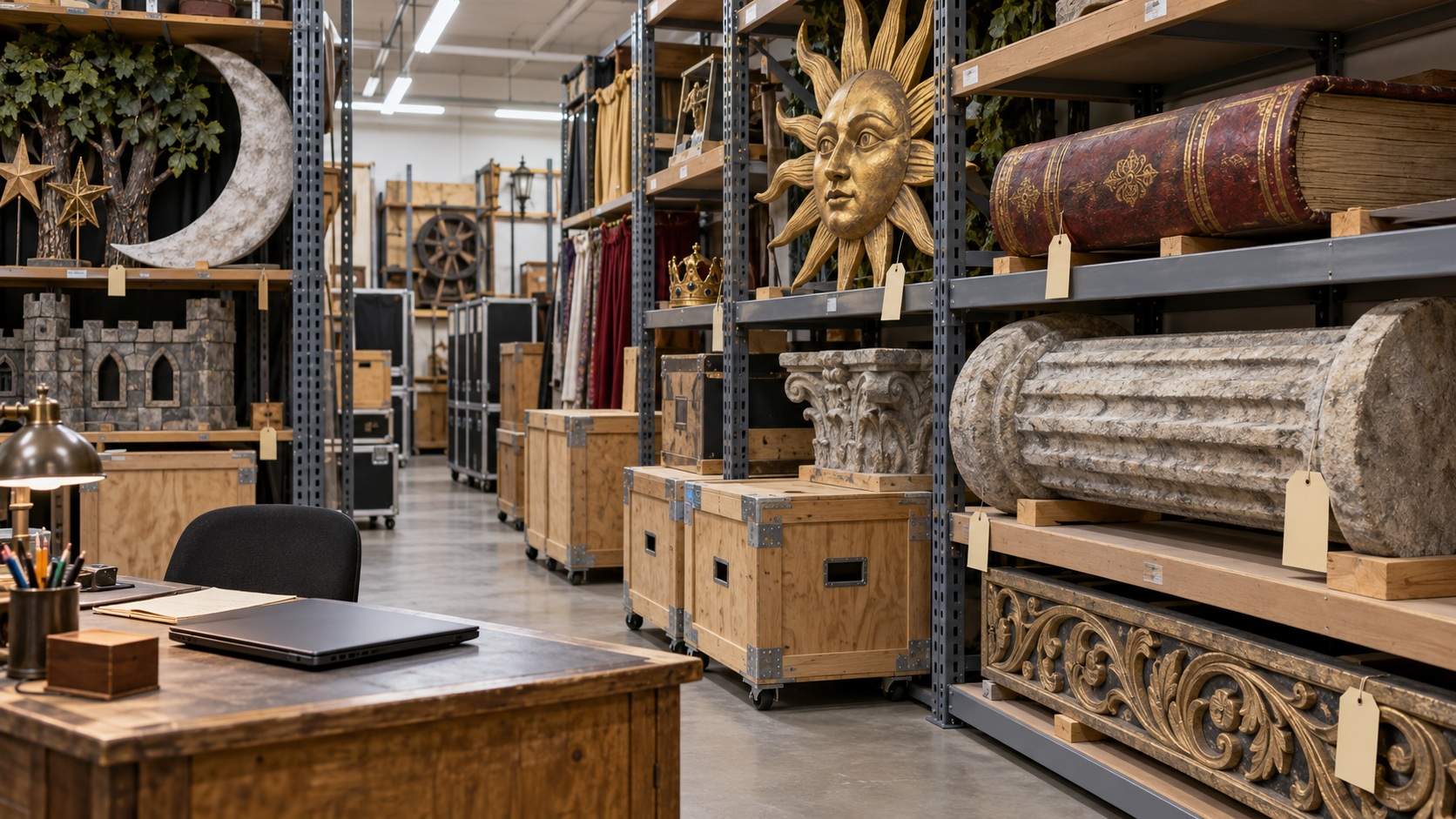
Give storage zones and positions unambiguous identifiers, then keep the current location in the item record. A photograph of a crowded aisle does not substitute for a location. Place tags and access arrangements so staff can retrieve an item without moving a large collection of unrelated fragile objects first.
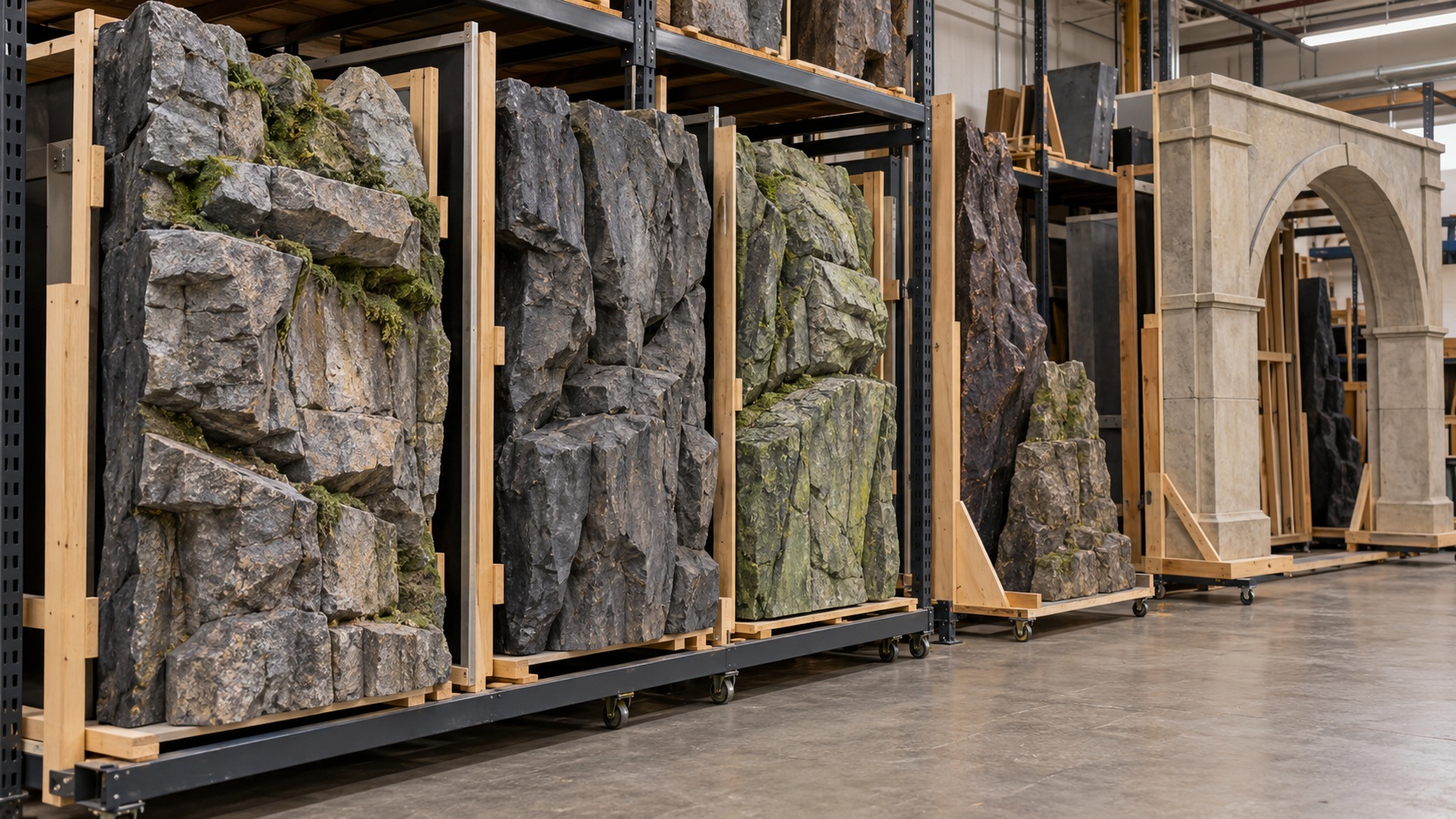
Store foam pieces on suitable supports that protect relief, projections, and known handling interfaces. Keep required access and circulation clear and follow the workplace’s storage assessment. Do not make fragile horns, fingers, or scenic edges carry another object’s weight. A retained carrier can be part of the storage solution as well as the transport kit.
Group by retrieval needs as well as visual similarity. Frequently borrowed stock should be accessible, while awkward large modules may require a planned handling zone. Keep related kit pieces together or link their separate locations clearly. A theoretically organized room can still waste time if every check-out requires searching several distant shelves.
Review storage pressure with demand information. If new donations displace frequently used stock into inaccessible areas, the collection policy needs adjustment. The library exists to return objects to useful service. Keeping low-demand items should be a deliberate decision with a review date, not the automatic outcome of having accepted them once.
Make Check-Out a Practical Handover
Confirm the item or kit identity, accepted condition, included parts, packing, and responsible borrower together. Photograph the outgoing condition and provide the relevant assembly, handling, maintenance, and use limitations. Agree which alterations require permission. A coat of paint can affect a later booking even when the borrower considers it a harmless temporary change.
Review transport and intended use at an appropriate level. An old indoor listing should not silently authorize a new outdoor installation, suspension, or performer interaction. Refer those questions to the responsible qualified people and applicable project requirements. The catalog is an information tool, not a substitute for assessment of changed use.
Make return instructions simple and specific: where the item comes back, how parts are packed, what damage or changes must be reported, and who receives it. Avoid leaving the object unattended in an unofficial location. The handover should create an actual custody record rather than merely an expectation that everything will reappear eventually.
Close Returns Before Opening New Loans
Inspect against the parts list and outgoing images. Record missing components, new damage, finish changes, and any relevant exposure during the loan. Place the item in the correct condition state while repairs or assessment are pending. Do not hide an incomplete return by marking it available and hoping the next borrower will solve it.
Capture useful experience from the borrower. Which carrier worked, how long assembly took, and whether a stated dimension was misleading can improve the next loan. Keep those observations distinct from accepted instructions until they are reviewed. A casual workaround should not automatically become the new official method.
Measure Use and Review the Collection
Track completed loans, actual returns to service, repair effort, storage needs, and objects repeatedly requested but unavailable. These measures can guide acquisitions and retirement. A large number of catalog entries is not the same as a functioning circulation system. Use the records to discover what is genuinely useful.
Keep environmental reporting bounded. A loan may prevent a new build, but that outcome should not be assumed for every transaction without evidence. Ask what the borrower would otherwise have done and distinguish documented avoided fabrication from ordinary reuse counts. Do not assign invented carbon savings to an attractive dashboard.
Review retirement through condition, demand, repair prospects, and a real next destination. Transfer an item to another accepting user where appropriate, recover materials through confirmed routes, or dispose through the applicable process. Keep the history and retirement reason in the record so a lost object is not confused with a deliberate removal.
Maintain an export or backup of the register and establish who administers it. A simple durable spreadsheet with clear rules can outperform an elaborate platform nobody maintains. The important system is the shared discipline linking the tag, physical location, condition, reservation, custody, and return.
Circulate Knowledge With the Objects
A props library works when useful items can be found, trusted within their documented limits, borrowed clearly, and returned in an inspectable state. Keep identities stable, kits complete, locations current, and custody explicit. Measure successful circulation rather than the volume of things retained.