From ancient artisans frothing sap and animal fats into primitive cushions to space-age scientists engineering cells at the molecular level, the story of foam is a buoyant timeline of human ingenuity. This section traces how bubbling matter—once a kitchen accident and a brewer’s delight—became insulation, flotation, footwear, packaging, props, and lifesaving equipment. We’ll meet early latex pioneers, bakelite tinkerers, wartime chemists who unlocked polyurethane, and postwar designers who turned airy plastics into modern comfort. Along the way, breakthroughs in blowing agents, environmental standards, and recycling reshaped what foams could do and how responsibly they could be made. You’ll see how EPS and XPS insulated cities, how memory foam softened sleep, how EPP absorbed impacts, and how bio-based innovations point to a lighter footprint. Whether you’re a maker, contractor, cosplayer, or curious historian, dive into timelines, materials spotlights, iconic case studies, and surprising firsts that changed industries. Start here, then follow the bubbles through history’s most flexible materials. From ancient cushions to lunar landings, foam’s evolution mirrors ours—resourceful, resilient, and endlessly inventive across centuries, shaping industries.
A: Otto Bayer and colleagues developed PU chemistry in the late 1930s; large-scale foaming took off in the 1950s.
A: XPS was commercialized in the early 1940s; EPS bead expansion systems were popularized around 1950.
A: Viscoelastic polyurethane research in the 1960s for cushioning and energy absorption later became consumer mattresses.
A: Environmental regulations phased out ozone-depleting CFCs, then reduced high-GWP HFCs, steering toward water, hydrocarbons, and HFOs.
A: Dunlop (1929) is earlier and denser; Talalay (1940s) adds vacuum and controlled freezing/CO₂ for finer, more uniform cells.
A: From the late 1960s–1970s, EVA’s light, rebounding midsole changed sports shoe cushioning.
A: No—“Styrofoam” is a branded XPS board; many disposable cups/boxes are EPS, not XPS.
A: Post-1970s energy crises, rigid PU, XPS, and EPS dramatically improved insulation value per inch.
A: EPP’s recoverable energy absorption became key in bumper cores, headrests, and child restraints.
A: Bio-based polyols, CO₂ utilization, and recyclable thermoplastic foams are defining the current chapter.

The History of Foam Latex in Creature Effects and Sculpture
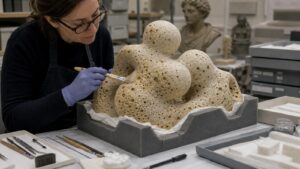
Foam latex revolutionized creature effects and sculpture, bringing monsters and fantastical beings to life with flexibility and realism. From Planet of the Apes to The Thing, it defined decades of horror, fantasy, and theater. This history traces its rise, challenges, and enduring legacy as the material that turned static sculpture into living illusion.

Foam in Theater and Film Props: A Historical Look at Creativity
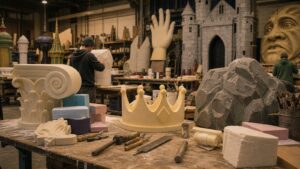
From Broadway backdrops to Hollywood blockbusters, foam has transformed prop-making with its lightness, versatility, and creative potential. This historical look explores how foam shaped theater illusions, creature effects, and cinematic worlds while fueling innovation in design. Its journey reveals the artistry behind props and the material that made larger-than-life storytelling possible.

The Rise of Foam in 20th Century Sculpture
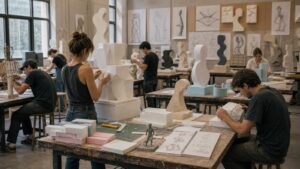
Foam rose from industrial byproduct to artistic revolution in the 20th century, transforming sculpture with new possibilities of scale, form, and impermanence. From Pop Art’s playful monuments to Eva Hesse’s fragile experiments, foam challenged tradition and mirrored modern society’s disposable culture, leaving a lasting mark on the history of contemporary art.

From Insulation to Art: The Historical Transformation of Foam
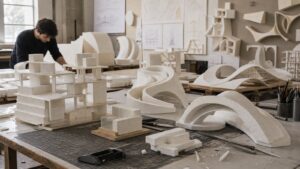
Foam’s transformation from a hidden industrial workhorse into a celebrated sculptural medium is one of the most intriguing material evolutions in modern art. Once prized only for its thermal and protective qualities, foam now fuels creativity in studios, theaters, exhibitions, and public art projects. Lightweight, carveable, and endlessly adaptable, it empowers artists to work at scales and speeds that traditional materials rarely allow. From the chemistry of EPS, XPS, and polyurethane to advanced finishing techniques and digital fabrication, this in-depth review examines foam’s artistic rise, its handling and durability, and its growing role in sustainable making.

Styrofoam Origins: Dow Chemical’s Legacy in Sculpture History
Styrofoam began as a Dow Chemical insulation breakthrough in 1941, but its lightweight structure and affordability soon reshaped the art world. Sculptors embraced foam for its ease of carving and monumental scale, turning it into a staple of Pop Art, public installations, and scenic industries. Though the brand technically refers to extruded polystyrene, “Styrofoam” has become shorthand for all polystyrene foams, cementing Dow’s lasting legacy in sculpture history. Today, foam is celebrated as both tool and subject, even as environmental questions challenge its future.

The Invention of Polyurethane Foam: A Sculptural Game-Changer
When Otto Bayer first invented polyurethane foam in 1937, no one imagined it would revolutionize sculpture. Initially prized for its industrial uses in insulation, furniture, and packaging, polyurethane foam soon caught the attention of artists who recognized its versatility. From flexible forms cast in movie creature suits to rigid blocks carved into monumental public works, the material became a sculptural game-changer. Its lightweight nature allowed for unprecedented scale, while coatings and finishes gave it durability and surface illusion. Today, polyurethane foam remains central to contemporary sculpture, bridging digital design and physical craft while pointing toward a future of sustainable innovation.

Early Foam Materials: The First Artists Who Experimented with Plastics
The story of foam in sculpture begins with curiosity and experimentation. In the mid-twentieth century, as plastics and synthetic foams emerged from industrial laboratories, adventurous artists began carving, layering, and coating these strange new materials. What began as an exploration of lightness and affordability soon evolved into a radical shift in sculptural practice. Early foam pioneers proved that plastics could rival stone and wood in expressive potential, while opening the door to scale, speed, and entirely new aesthetics. Their work laid the foundation for the widespread adoption of foam in theater, film, public art, and fine art, sparking a material revolution that continues to shape contemporary sculpture.

How Foam Became a Sculptor’s Material: A Historical Journey
Foam’s journey into sculpture is one of the most fascinating material stories of the modern age. Once reserved for insulation and packaging, foam was adopted by artists for its lightness, affordability, and adaptability. Scenic designers carved it into grand stage sets, filmmakers used it for creatures and props, and fine artists reimagined it as both prototype and final form. From the invention of hot-wire cutters to the rise of robotic carving, foam’s toolset expanded alongside its artistic impact. Today, with coatings that extend its durability and sustainable alternatives emerging, foam is celebrated as a material of possibility—democratizing scale and revolutionizing what sculpture can be.

The Complete History of Foam in Sculpture: From Industry to Art
Foam has revolutionized the art of sculpture, offering lightness, versatility, and creative freedom that traditional materials could never provide. Emerging first from industrial insulation and packaging, foam quickly became a staple in stagecraft, film sets, and public art installations. From EPS blocks hot-wire cut into massive structures to EVA sheets shaping wearable art, foam’s adaptability transformed both process and aesthetics. Today, it bridges digital fabrication and hand-carved craftsmanship, while advances in coatings, sustainability, and safety have solidified its place in professional studios. The story of foam in sculpture is ultimately a story of accessibility and imagination—where monumental ideas become possible without monumental weight.