


Environmental Considerations
Welcome to Environmental Considerations—a practical launchpad for people who want their projects to leave lighter footprints. Here, we translate sustainability from buzzword to blueprint, guiding you through smart recycling strategies and today’s most promising biodegradable options. You’ll find clear breakdowns of material lifecycles, from sourcing and manufacturing to use, recovery, plus step-by-step guides for setting up sorting, partnering with local recyclers, and avoiding wish-cycling pitfalls. We also spotlight compostable and
Safety with Foam
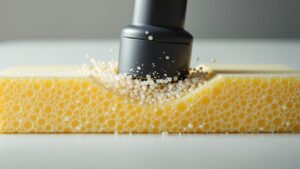
Foam is wonderfully versatile—soft enough to cushion a fall, tough enough to insulate a house, and adaptable enough to sculpt into almost anything—but using it safely is its own craft. Welcome to our Safety with Foam hub, your guided path to working smarter, cleaner, and more confidently with everything from EPS blocks to flexible polyurethane sheets. Here you’ll learn how to choose the right respirators, blades, and sealants; set up

History of Foam Materials
From ancient artisans frothing sap and animal fats into primitive cushions to space-age scientists engineering cells at the molecular level, the story of foam is a buoyant timeline of human ingenuity. This section traces how bubbling matter—once a kitchen accident and a brewer’s delight—became insulation, flotation, footwear, packaging, props, and lifesaving equipment. We’ll meet early latex pioneers, bakelite tinkerers, wartime chemists who unlocked polyurethane, and postwar designers who turned airy

Benefits & Limitations of Foam
From ancient artisans frothing sap and animal fats into primitive cushions to space-age scientists engineering cells at the molecular level, the story of foam is a buoyant timeline of human ingenuity. This section traces how bubbling matter—once a kitchen accident and a brewer’s delight—became insulation, flotation, footwear, packaging, props, and lifesaving equipment. We’ll meet early latex pioneers, bakelite tinkerers, wartime chemists who unlocked polyurethane, and postwar designers who turned airy

What is Foam?
Foam is one of those fascinating materials that hides in plain sight—something you encounter every day without realizing how much potential it carries. From the cushion on your chair to the packaging that protects your favorite gadgets, foam is everywhere. But what exactly is it? At its core, foam is a structure made of gas bubbles trapped in a solid or liquid matrix, giving it that light, airy, and sometimes