The Creative Power of Recycled Foam in Education
School and camp projects thrive on imagination, teamwork, and hands-on learning. Recycled foam brings all three together in one incredibly versatile material. From discarded packaging foam and exercise mats to surplus upholstery scraps, recycled foam can be transformed into stage props, STEM prototypes, obstacle course elements, art installations, and environmental awareness projects. In a world where sustainability education matters more than ever, using recycled foam in school and camp crafts teaches creativity and environmental responsibility at the same time. Recycled foam projects are lightweight, low-cost, and adaptable for nearly every age group. Elementary students can create tactile learning models, middle schoolers can engineer simple structures, and teens can design elaborate camp themes or theatrical builds. With proper safety procedures and sanitization practices in place, foam becomes one of the most accessible and forgiving materials for group creativity. Its ease of cutting, shaping, and decorating makes it ideal for educators and camp leaders seeking simple wins without overwhelming prep or expensive tools.
A: Yes, when sanitized and used with supervised tools.
A: Mild soap, approved disinfectant, and full drying.
A: Water-based acrylics.
A: Yes, when sealed and stored properly.
A: Only for smoothing; keep ventilation in mind.
A: All ages with appropriate supervision.
A: Dry, flat, labeled containers.
A: Yes, if sealed against moisture.
A: PVA and water-based glues.
A: It’s sustainable, affordable, and versatile.
Why Recycled Foam Is a Smart, Sustainable Choice
Recycling foam reduces waste and introduces students to practical sustainability. Foam packaging often ends up in landfills because it is bulky and lightweight. When schools repurpose this material into meaningful projects, they not only save money but also demonstrate real-world reuse solutions. Teaching students how to responsibly collect, sanitize, and reimagine materials helps them understand circular design principles and environmental stewardship. Foam’s lightweight nature makes it safer than wood or metal for large group builds. Camp signage, themed décor, STEM challenges, and parade-style props can be created without heavy lifting or complex machinery. Foam projects encourage collaboration because pieces can be assembled modularly, allowing different teams to contribute components that fit into a larger design. This cooperative model fosters communication skills and problem-solving in an organic, exciting way.
Safety First: Building a Responsible Foam Project Framework
Any successful recycled foam program begins with safety. While foam is generally safe to handle, proper supervision and planning are essential. Leaders should evaluate the type of foam being used. Closed-cell foams such as EVA or polyethylene are durable and less absorbent, making them easier to sanitize. Open-cell foams may require sealing before repeated use.
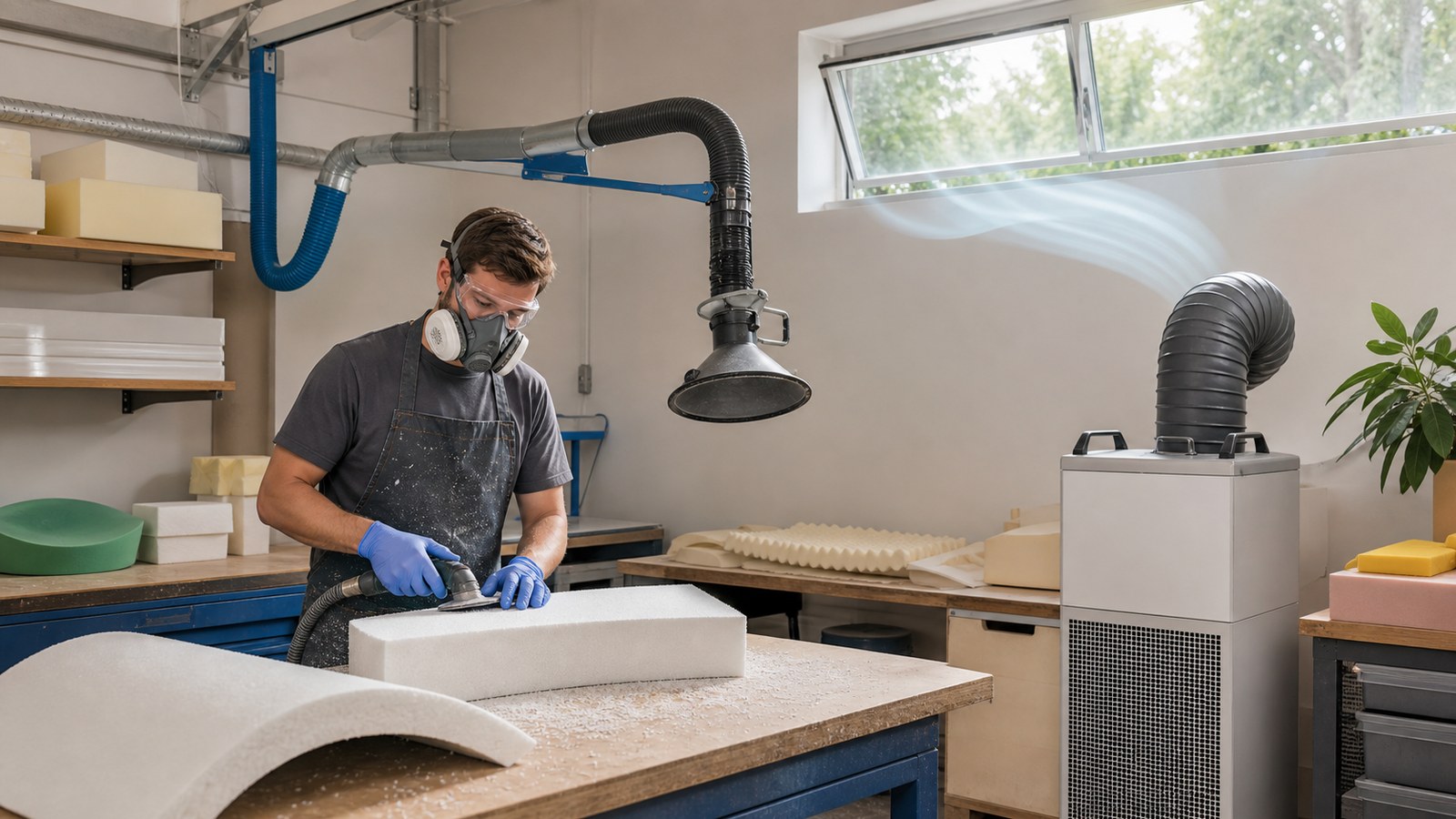
Cutting tools must be age-appropriate. Younger students should use blunt safety scissors or pre-cut shapes prepared by adults. Older participants can use utility knives under supervision with clear safety zones established. Worktables should be stable and clutter-free, and participants should wear eye protection during cutting or sanding activities. Dust control matters. When sanding or shaping foam, especially polystyrene or polyurethane types, fine particles can become airborne. Outdoor workspaces or well-ventilated areas reduce exposure. For larger builds, adults may consider dust masks rated for particulate filtration. Maintaining a clean workspace reinforces safe building habits and demonstrates professional craft standards.
Sanitization: Keeping Recycled Foam Clean and Classroom-Ready
Sanitizing recycled foam is a critical step before introducing it into shared school or camp environments. Foam collected from packaging must be inspected for contamination. Any foam exposed to food residue, oils, or chemical spills should be discarded. Clean foam can be wiped with mild soap and water and allowed to dry completely.
For additional sanitization, diluted vinegar solutions or gentle disinfectant sprays safe for porous materials can be used. Always test a small area to ensure the solution does not degrade the foam surface. Allow materials to fully dry in a well-ventilated area before storage or use. Clear labeling of sanitized foam storage bins helps maintain hygiene standards and prevents cross-contamination. If foam will be reused over multiple sessions, sealing it with water-based primers or coatings can create a wipeable surface. This step is especially useful for camp props or obstacle course elements that will be handled repeatedly. Sanitization procedures should be documented and communicated clearly to staff and volunteers.
Simple Wins: Easy Projects with Big Impact
Recycled foam offers countless quick-win projects that require minimal tools and deliver high engagement. Large foam letters can be cut to spell camp themes or school mottos. Foam geometric shapes can support math lessons. Lightweight stage props for plays or assemblies can be crafted and painted in a single afternoon. Campers can build giant foam puzzle walls that encourage teamwork. Science groups can design model landscapes showing ecosystems or landforms. Physical education teams can create soft foam relay batons or themed targets. Art classes can carve relief designs into foam blocks and experiment with painting techniques. These projects provide immediate visual rewards while reinforcing lessons in design and structure.
Encouraging STEM Learning Through Foam Builds
Recycled foam is an outstanding STEM education tool. Students can test structural integrity by building arches or bridges from laminated foam sheets. They can explore buoyancy by designing floating foam platforms for water-based experiments. Camps focused on engineering can create miniature architectural models using foam blocks and safe adhesives.
Because foam is easy to cut and shape, students can prototype ideas quickly. Rapid iteration builds confidence and encourages experimentation. Unlike rigid materials that discourage revision, foam welcomes trial and error. Students learn that improvement is part of the creative process. Educators can integrate measurement, geometry, and basic physics into foam-based projects. Calculating dimensions, balancing loads, and understanding stability become tangible lessons rather than abstract concepts.
Creative Arts and Themed Camp Builds
Foam is beloved in theater, set design, and themed event décor because it mimics heavier materials without the risk. Recycled foam can be transformed into faux stone walls, castle towers, jungle scenery, or underwater landscapes. Camps can develop immersive themed environments while keeping materials lightweight and manageable. Painting techniques bring foam creations to life. Water-based acrylic paints are generally safest and prevent chemical reactions with foam surfaces. Layering colors, dry brushing textures, and adding sealants enhance realism and durability. Artistic expression flourishes when materials are forgiving and scalable.
Organizing a Foam Project Workflow
Successful school and camp foam programs rely on structure. Planning sessions should include material sorting, sanitizing, cutting schedules, and cleanup responsibilities. Assigning roles such as design lead, cutting supervisor, painting coordinator, and sanitation monitor builds leadership skills among students. Storage is equally important. Labeled bins and flat shelving prevent compression damage. Keeping foam dry and protected ensures longevity and repeat usability. A documented checklist of safety and sanitization steps builds institutional trust and consistency.
Environmental Education Through Action
Recycled foam projects naturally support sustainability lessons. Students can research how foam is manufactured and why recycling challenges exist. They can compare waste reduction strategies and measure how much material they diverted from landfill by reusing foam in projects.
This tangible connection between creativity and conservation deepens learning. Participants see the real-world impact of reuse. Instead of simply hearing about environmental responsibility, they practice it through hands-on design.
Managing Risk and Liability in Group Settings
Clear safety guidelines reduce risk and demonstrate professionalism. Parental permission forms may include project descriptions, especially for older students using cutting tools. Staff should receive training in proper handling procedures. Maintaining supervision ratios appropriate for tool usage is essential. Emergency preparedness also matters. First-aid kits, clear tool storage protocols, and defined safety zones create a secure environment. Leaders who emphasize preparation and caution build confidence in both participants and parents.
Long-Term Benefits of Foam-Based Programs
Incorporating recycled foam projects into school and camp curricula builds more than artistic skill. It fosters collaboration, environmental awareness, engineering curiosity, and confidence. Lightweight materials make ambitious ideas possible. Sanitization practices ensure shared environments remain healthy. Safety protocols reinforce responsibility. Simple wins become stepping stones to larger creative achievements. As students master foundational builds, they begin imagining bigger designs. Camps can establish annual foam build traditions. Schools can integrate cross-disciplinary foam challenges connecting art, science, and environmental studies. Recycled foam is more than a craft supply. It is a platform for sustainable education, creative empowerment, and safe, structured experimentation. When educators commit to thoughtful safety standards and sanitization routines, recycled foam projects become a reliable, inspiring tool that supports both imaginative growth and environmental stewardship.