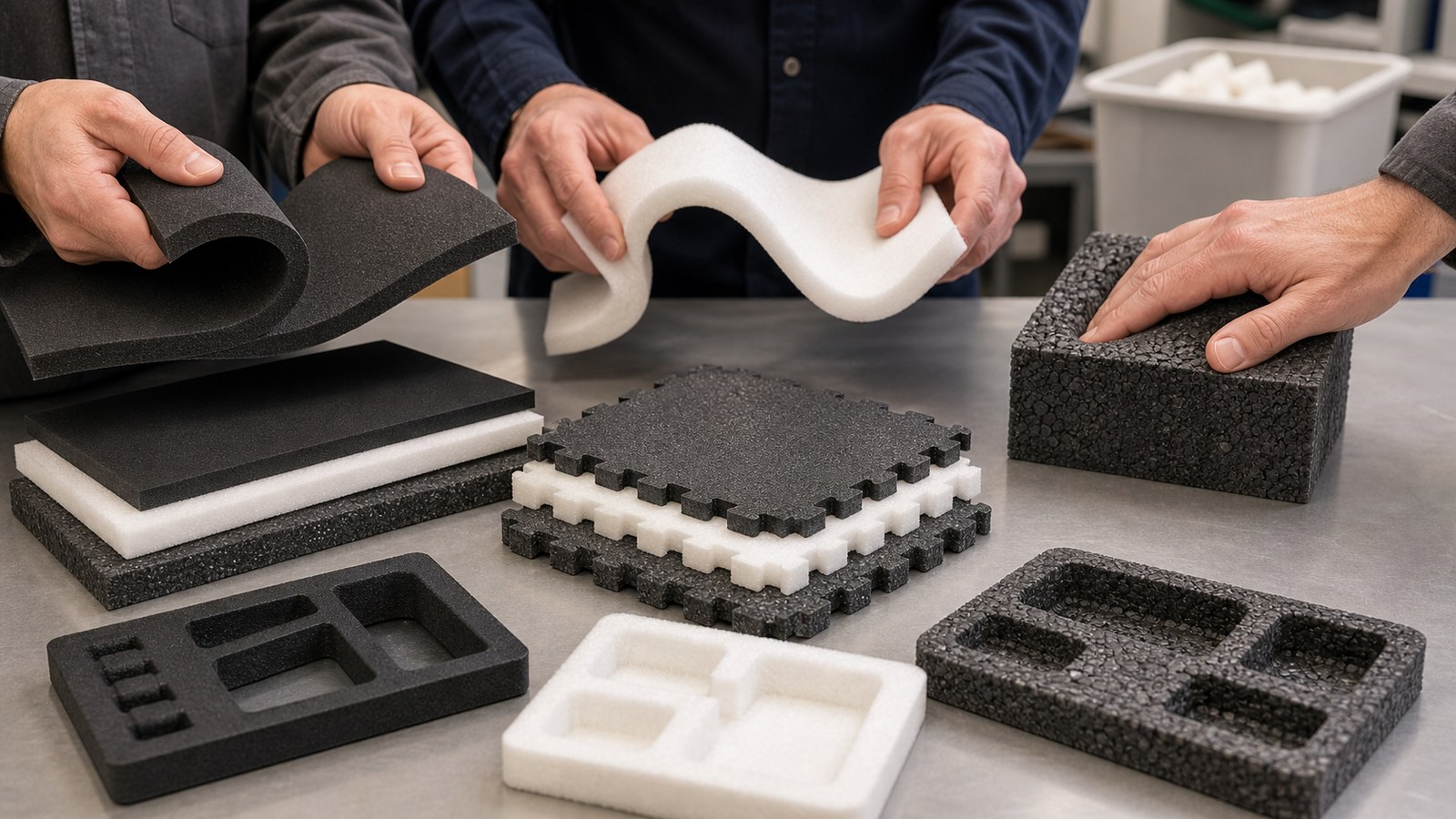
Foam sculpting has long been the unsung hero of stage design, architectural models, cosplay, film sets, and experimental art installations. From towering fantasy landscapes in theater to hyper-realistic props in film, foam delivers what wood, stone, or metal cannot: flexibility, affordability, and lightness. Yet in recent years, a new conversation has emerged that overlays the artistry of foam work with the responsibility of sustainability. Foam, after all, is petroleum-derived, energy-intensive to produce, and often discarded after use, leading to landfill overflow and significant carbon emissions. This has given rise to the notion of carbon-smart sculpting—an approach where artists, fabricators, and builders think critically about the carbon footprint of their projects, measure it with available tools, and actively seek methods of reduction without compromising the creative vision. What follows is a deep dive into how to estimate, understand, and reduce the environmental impact of foam projects while still celebrating their aesthetic power.
A: Multiply material weight by published emission factors, add electricity and coatings.
A: Yes—EPS can be re-pelletized; EVA is harder but can be downcycled into mats and padding.
A: Water-based acrylics and natural paper laminates are preferred over epoxies.
A: Plan patterns digitally, cut with nesting layouts, and reuse scraps.
A: Yes—with durable, UV-stable coatings that extend lifespan, reducing replacement needs.
A: Virgin petrochemical-based foam production and solvent-heavy coatings.
A: Currently more niche, but small projects can trial mushroom or algae-based panels.
A: Build modularly, nest pieces, and source materials locally.
A: They use electricity but create less waste than mechanical sawing.
A: Start with small changes—recycled foam, water-based coatings, modular builds—to cut both waste and costs.
Understanding the Carbon Cost of Foam
To sculpt carbon-smart, one must first understand what gives foam its footprint. The majority of rigid and flexible foams used in projects—such as expanded polystyrene (EPS), polyurethane, and extruded polystyrene (XPS)—are manufactured from petrochemicals. The extraction of crude oil, the processing into plastics, and the energy used during production all contribute to significant embodied carbon. For instance, a single cubic foot of EPS foam can represent several pounds of CO₂ equivalent, when transportation and processing are factored in. That may seem small, but projects often use dozens of blocks or sheets at a time, multiplying the impact. Moreover, foam waste is stubborn: it is lightweight and bulky, often bypassing recycling streams, and its decomposition timeline stretches centuries. Each cut, carve, and sanding pass of a hot wire or rotary tool is tied to an invisible but very real carbon ledger.
Estimating Emissions in Practice
Estimating the carbon footprint of a foam project does not require advanced lab tools, but it does demand attention to detail. Start with volume: how many cubic feet or sheets of foam will your project require? Each material has an embodied carbon factor that can be found in lifecycle analysis databases or sustainability reports from manufacturers. For example, polyurethane has a different footprint per pound than EPS, and higher-density foams carry a heavier carbon load because more material is packed into the same space. Beyond the raw block, the adhesives, coatings, paints, and sealants applied during finishing also carry carbon costs. A sculptor coating a giant set piece with epoxy resin is effectively adding another significant layer of emissions on top of the foam substrate. Transport distance should also be factored in: foam shipped across the country by truck carries a larger footprint than foam procured locally. By tallying these elements, a sculptor can estimate the total project emissions and make informed decisions about where reduction is possible.
Smart Material Choices
One of the most powerful levers for carbon-smart sculpting lies in material choice. Not all foams are created equal, and some newer innovations aim to address the environmental shortcomings of traditional options. Plant-based foams, for instance, substitute a percentage of petrochemical inputs with renewable starches, soy, or even algae. These biopolymer foams can reduce embodied carbon while still providing sculptability. Recycled-content foams are another option, where manufacturers reprocess waste foam into usable blocks or beads. Choosing a foam density appropriate to the task is also critical: using high-density structural foam when low-density EPS would suffice is akin to driving an eighteen-wheeler to fetch groceries. Carbon-smart sculpting means picking materials that balance strength, workability, and footprint, instead of reflexively reaching for the same block every time.
The Energy of Making
Even beyond the foam itself, the act of sculpting has its own environmental consequences. Hot wire cutters, sanders, rotary tools, and air compressors all draw electricity, and depending on the source of that power, the carbon intensity can vary greatly. A sculptor working in a studio powered by coal-heavy grids has a higher impact than one operating with renewable energy credits or solar panels. Efficient tool use—cutting once instead of trimming multiple times, or designing precise patterns before carving—can reduce wasted energy. Dust collection systems and filters may not reduce carbon directly but improve air quality and reduce microplastic pollution released into the workspace. Artists who choose manual carving for certain details not only reconnect with the tactile nature of the medium but also avoid unnecessary power consumption. Every amp matters when striving for a carbon-smart process.
Design for Disassembly and Reuse
A major source of waste in foam projects is their one-time nature. Theater backdrops are struck after a run, film props are discarded when the shoot ends, and architectural mock-ups are demolished when construction begins. To address this, carbon-smart sculptors design with the afterlife in mind. Can the piece be disassembled into sections and stored for future use? Can large blocks be joined with reversible adhesives or mechanical fasteners instead of permanent epoxies, making it easier to reclaim material? Even surface finishes can be chosen with reusability in mind: a water-based coating may allow a block to be stripped and reused, whereas a thick resin layer renders it destined for landfill. By adopting a modular, reuse-centered mindset, artists extend the life of their materials and amortize the carbon footprint over multiple projects.
Innovations in Recycling and Upcycling
Traditional recycling streams struggle with foam because of its low density and contamination from coatings or adhesives. Yet new solutions are emerging. Some companies offer densifiers that compress waste foam into compact bricks, making it easier to transport for reprocessing. Others are experimenting with chemical recycling that breaks foam down into its monomer components for reuse. On the creative side, foam scraps can be upcycled into mosaics, filler material for new sculptures, or even mixed with concrete to create lightweight construction blocks. Carbon-smart sculpting encourages thinking about waste as raw material for the next creation, rather than as trash to be hauled away. An artist who integrates foam offcuts into new textures not only reduces landfill contributions but also develops a signature aesthetic rooted in sustainability.
The Hidden Carbon of Finishing
While foam is often the star, the coatings and finishes used to harden, paint, and protect it often carry their own environmental baggage. Epoxies, polyureas, and fiberglass resins are notorious for their high carbon footprints and hazardous emissions. Yet many sculptors reach for them reflexively because they provide strength and durability. Alternatives exist: water-based coatings, clay-based finishes, and biodegradable sealants are making inroads, offering lower-carbon protection for foam forms. Pigments, too, can be sourced responsibly, with mineral-based paints often outperforming synthetic petrochemical varieties in sustainability metrics. The finishing stage is a chance to either multiply or mitigate emissions, and conscious choices here can make a meaningful difference.
Digital Design as a Carbon Tool
In the past, sculptors might have blocked out a shape roughly and refined it through trial and error, producing large piles of waste shavings. Today, digital design tools like CAD modeling, CNC routers, and 3D scanning allow for precision planning and execution. By simulating cuts on a screen before ever touching a block, sculptors can minimize waste. CNC routers, while energy-hungry, often produce less overall material loss because they cut with precision. Some artists integrate augmented reality or projection mapping to visualize forms on blank foam before carving, ensuring accuracy and reducing false starts. Digital workflows thus become not just creative aids but carbon reduction strategies, aligning the precision of modern design with the ethics of sustainability.
Collaboration with Suppliers
Carbon-smart sculpting is not a solitary effort; it involves dialogue with material suppliers, manufacturers, and disposal partners. Sculptors who ask suppliers about recycled content, embodied carbon metrics, or take-back programs create demand for greener products. Some foam distributors are beginning to provide environmental product declarations (EPDs), giving transparency about the carbon impact of their products. Others are piloting closed-loop programs where offcuts are returned for reprocessing. By treating suppliers as collaborators rather than passive vendors, artists extend the culture of sustainability beyond their studio walls and into the wider ecosystem of production.
Case Studies: Carbon-Smart in Action
Several creative industries provide inspiring examples of carbon-smart sculpting in action. A regional theater company in Oregon redesigned its set-building approach, switching from virgin EPS to recycled-content foam and adopting a disassembly strategy that allowed pieces to be reused across multiple productions. The result was a 40% reduction in foam waste over a single season. In the world of cosplay, some makers have embraced biopolymer foams derived from algae, not only reducing their footprint but also creating conversation pieces about sustainability at conventions. Large-scale art festivals like Burning Man are also experimenting with guidelines that encourage artists to plan for reuse and minimize landfill-bound foam. These case studies prove that carbon-smart sculpting is not a theoretical idea but a practical framework already reshaping creative practice.
Balancing Aesthetics and Ethics
A recurring challenge in carbon-smart sculpting is the perceived trade-off between aesthetics and sustainability. Some artists fear that switching to recycled or biobased foams will compromise finish quality or structural integrity. Others worry that low-carbon coatings may not hold up under outdoor conditions. Yet innovation often flourishes under constraint. Artists who embrace sustainability frequently discover new textures, techniques, or narratives that enrich their work. A slightly rougher surface from recycled foam can evoke a weathered authenticity, while modular joinery opens possibilities for reconfiguration and audience interaction. The marriage of aesthetics and ethics is not a burden but an invitation to expand the vocabulary of foam art.
Measuring Success Beyond Carbon
While carbon is a powerful metric, it is not the only lens through which to view sustainable sculpting. Water use, toxicity, indoor air quality, and community impact all matter as well. A foam project that reduces carbon but relies on toxic solvents may shift the burden from the atmosphere to the lungs of workers. Carbon-smart sculpting is part of a larger holistic view of responsible making, one that acknowledges interconnected systems. The most inspiring projects are those that reduce emissions while also protecting workers, educating audiences, and building cultures of care in creative communities.
Looking Ahead: The Future of Foam and Footprints
The landscape of materials science is shifting rapidly, and the next decade promises even more breakthroughs relevant to foam sculptors. Research into carbon-negative foams derived from agricultural waste, mycelium-based composites, and bioengineered polymers is advancing quickly. As costs fall and availability increases, sculptors will have access to materials that not only reduce emissions but potentially sequester carbon. Digital twin technology may allow creators to model the carbon footprint of a project before physical production begins, adjusting design choices in real time. The vision of carbon-smart sculpting is not just about minimizing harm but about actively participating in the repair of ecological systems through creative practice.
Carving a Lighter Future
Foam sculpting has always been a medium of possibility—shaping mountains, creatures, and impossible worlds from simple blocks. Now, as the climate crisis intensifies, that spirit of possibility must extend beyond aesthetics into sustainability. Carbon-smart sculpting invites makers to ask deeper questions about the materials they use, the energy they consume, and the afterlives of their creations. By estimating footprints, making mindful choices, and embracing innovation, sculptors can align their creative brilliance with environmental responsibility. The future of foam need not be heavy with emissions and waste. Instead, it can be light, inventive, and regenerative—proof that artistry and stewardship can coexist, and that every cut, carve, and contour can help sculpt a more sustainable world.