EPS Has More Than One Route into Sculpture
The history of expanded polystyrene in sculpture is not a simple sequence in which discarded packaging suddenly became art. Industrial production supplied new blocks as well as protective packaging; artists could carve purchased stock, assemble found forms, use foam as a temporary model, or investigate the cultural meaning of a disposable material. Those routes overlap, but they should not be collapsed into one origin story. EPS also needs to be distinguished from other polystyrene products and from polyurethane foam. The evidence supports a history of industrial availability, individual artistic experiments, and later questions about reuse and waste. It does not establish one universal first sculptor or prove that every white foam artwork began as recovered packaging.
A: The documented industrial story centers on products such as insulation and packaging, not a single sculptural origin.
A: No. Records also identify new supplied blocks and other forms of stock.
A: No. Preserve the source's level of material specificity.
A: Its institutional archive names the material, supplied blocks, public setting, and 1980 presentation.
A: They served as fillings in sewn containers rather than simply as carved blocks.
A: His documented polystyrene work shows a route from a graphic language into lightweight three dimensional form.
A: No. Conceptual association and physical material recovery are different claims.
A: No. It is an editorial concept, not evidence of an actual event or artwork.
A: These selected sources do not establish a defensible universal first.
A: Add specific archival cases while keeping product identity, provenance, versions, and dates distinct.
An Industrial Material Before an Artistic Category
BASF’s corporate chronology identifies 1951 as the beginning of Styropor production and describes applications in insulation and packaging. Its 1951 history entry places the material within a postwar industrial product story rather than an art movement. That date is useful as a documented manufacturing milestone. It should not be mistaken for the first use of every kind of polystyrene foam or the first moment a sculptor encountered a cellular plastic. Material histories require that level of distinction because similar names can cover different processes and products.
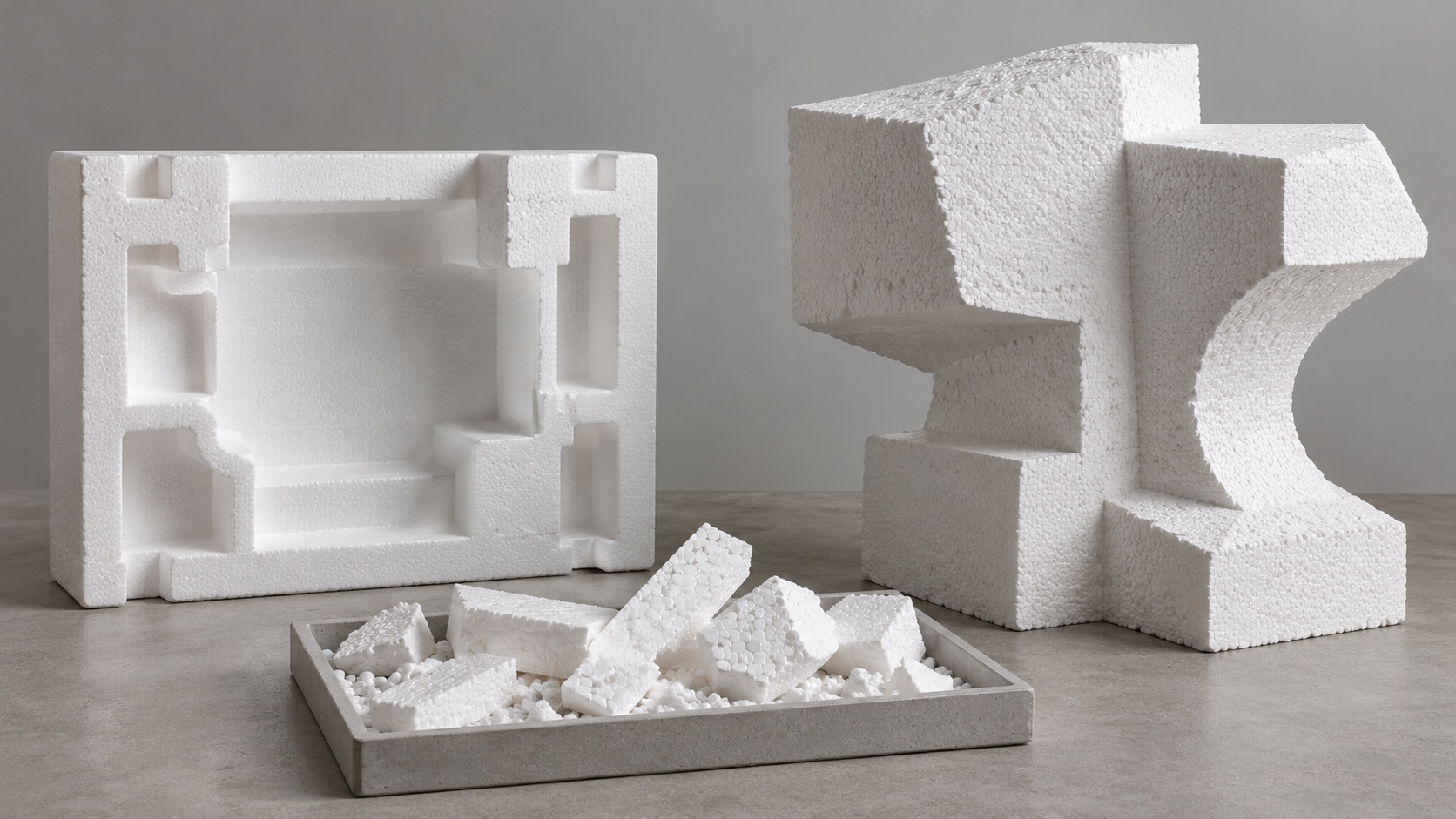
EPS is a bead-based foam. Its familiar fused-bead surface and low mass relative to its volume help explain its practical appeal in both packaging and shape making. A protective insert is already a three dimensional industrial form, while a large block offers a volume that can be reduced. Those two starting points suggest different artistic operations: accepting and recombining an existing geometry, or carving an independent shape. This is an interpretation of the material’s possibilities, not evidence that every early artist followed either route. The starting stock still needs to be established for each documented work.
Brand language complicates the record. Styropor, Styrofoam, polystyrene, and foam are sometimes used loosely in exhibition texts and everyday descriptions. A historical catalogue may identify a broad material without specifying the manufacturing process. Preserve that uncertainty rather than rewriting every entry as EPS. Polyurethane can expand through different chemistry and belongs to another material family. A convincing history is not weakened by saying a record is nonspecific; it becomes more useful because readers can distinguish an established material identification from a plausible but unproven assumption.
Polystyrene as a Bridge from Drawing to Form
Jean Dubuffet provides a documented example of polystyrene entering an artist’s working method during the Hourloupe period. Pace’s presentation of his 1969 letter to Arne Glimcher describes sculptures carved from polystyrene foam and painted with graphic lines. The record supports a connection between a lightweight shape-making material and a visual language developed across media. It does not establish that the blocks were discarded packaging. That difference matters: the material’s artistic role here concerns a way of developing form, not automatically an environmental reuse gesture.
A useful interpretation is that quick material removal can shorten the interval between a drawn idea and a three dimensional proposition. Foam can let an artist test a boundary or silhouette without first organizing the mass and equipment of a heavier material. Yet the visible spontaneity of a finished work does not reveal every stage of fabrication. A foam model may be transferred into another support, enlarged, coated, or remade. The historical question is therefore not only what the final object contains, but what materials made its design possible along the way.
Soft Containers Show a Different Material Logic
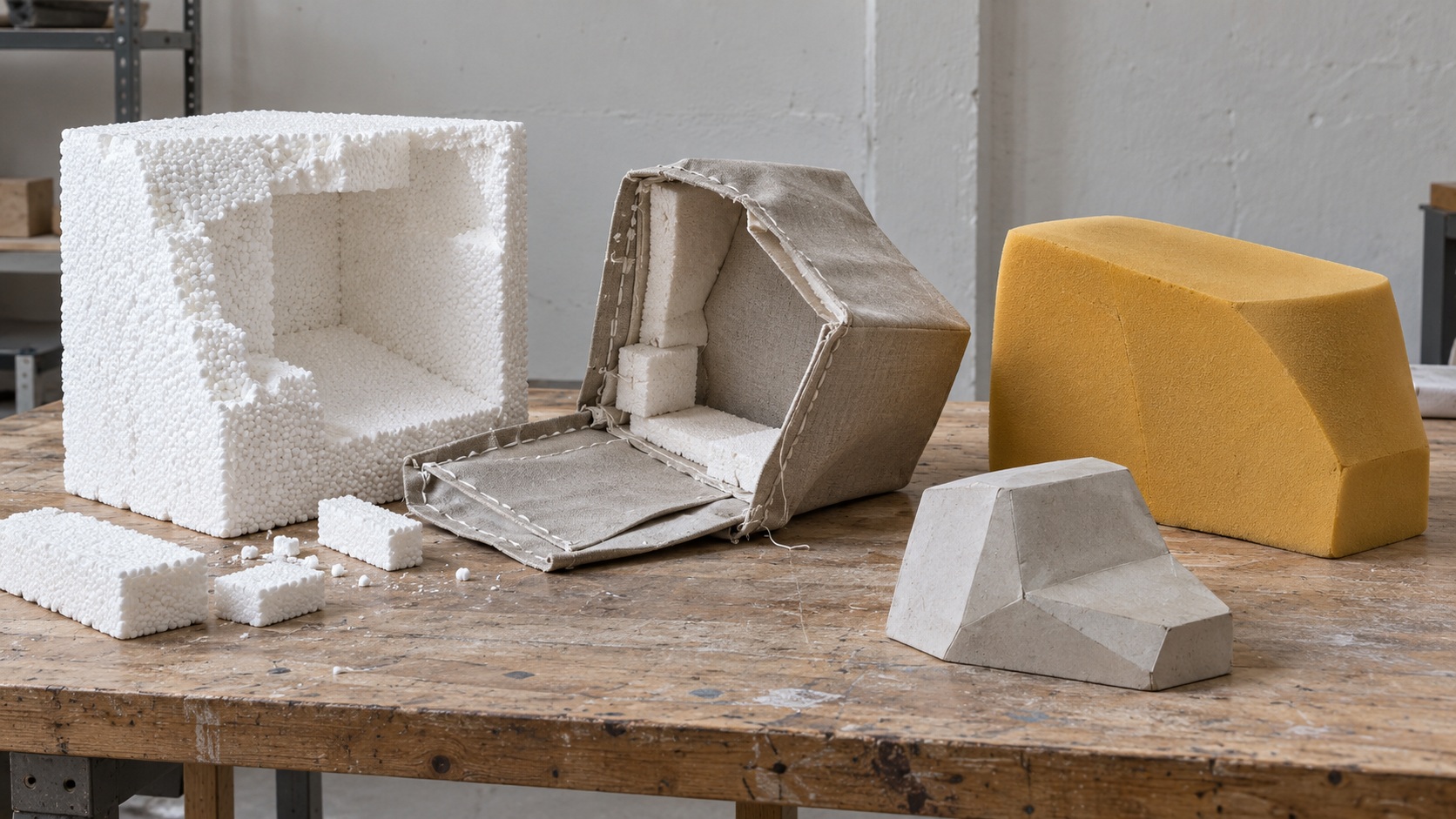
A 1974 MoMA press release about Barry Flanagan looks back to his experiments beginning in 1965 with sewn containers and varied fillings, including polystyrene chips. That institutional record documents a different role for the material from carving a rigid block. The filling and its container participated in determining form. The source names polystyrene chips; it does not identify every chip’s prior use or establish that they were recovered packing waste. The account should retain those limits while recognizing that foam-like particulate material could enter sculpture through containment rather than subtraction.
The distinction changes how a viewer understands authorship and shape. A carved form records decisions about removal, whereas a filled container also responds to gravity, distribution, and the fabric’s constraints. These are interpretive comparisons, not evidence that one method replaced the other. They show why an industrial material could support several sculptural questions at once. Its relevance did not depend only on being cheaper or lighter than stone. The material could participate in the form’s behavior and in the artist’s investigation of what makes an object sculptural.
Packaging already works through the relationship between an object and a protective surrounding shape. When artists use containers, inserts, or cushioning materials, that relationship can become part of the subject. A cavity may suggest an absent product or body; a protective shell can be presented without the thing it once protected. Such readings need to be offered as interpretations of particular works, not assigned to all foam sculpture. The same material can serve a purely practical workshop function in one project and a conceptually explicit role in another.
Nor does a soft or lightweight material automatically imply an informal production process. Cutting, sewing, assembly, coating, and installation can remain labor intensive. The industrial origin may reduce one barrier while introducing other fabrication choices. Historical photographs often show the completed arrangement more clearly than the making. To reconstruct the process, look for artist statements, studio records, technical studies, and institutional documentation. A material caption is valuable evidence, but it rarely answers every question about how the work was built or why that particular stock was selected.
A Documented EPS Landscape in 1980
Marvin Torffield’s Volume, presented in Central Park in 1980, offers unusually specific material documentation. The Public Art Fund archive identifies molded Styropor blocks and describes their division into contoured forms. The record also connects the project with material support from BASF Wyandotte. This is evidence of a new industrial material used directly at a large sculptural scale, not a documented transformation of discarded household packaging. It helps correct an overly narrow assumption that EPS entered public art only through salvaged scraps.
The winter setting and wave-like cuts invite a comparison between industrial foam and landscape or ice. That reading follows the documented presentation without requiring the artwork to imitate a permanent natural substance. Its significance for this history is the combination of supplied block stock, large scale, and a temporary public setting. The work demonstrates one possible route from industrial manufacture to artistic presentation. It should not be promoted as the first EPS sculpture in the world simply because an accessible archive gives it a clear date and detailed description.
Packaging Becomes a Cultural Reference
By the early twenty-first century, institutional records also document artists addressing plastics through their relationship to circulation, consumption, and the body. The Wattis archive for Shirley Tse’s 2002–2003 Capp Street Project includes an artist statement about plastic materials, polystyrene platforms, and memory foam. It presents material behavior and bodily interaction as part of the work. The record names several plastics, so it should not be reduced to an EPS-only account. Its value here is the explicit attention to packaging-related meanings rather than a claim that all the installation’s material had one origin.
This broadens the history beyond a contest over which artist discovered the easiest carving stock. Packaging can be read as evidence of trade, standardization, protection, or disposability. An existing molded insert can carry traces of a product’s geometry even after the product is gone. A new block can evoke the same industrial world without having been waste. These are different relationships to consumer culture. Calling every such work recycled art erases the distinction between physical recovery of an object and a conceptual reference to the system that produced it.
The difference is especially important when an artwork’s caption becomes an environmental claim. A reused insert has a prior life, but adding coatings, adhesives, and a new support changes the material system. A sculpture made from new EPS can still explore waste critically without itself being made from waste. Neither artistic intention nor material provenance should be invented to make the story more appealing. Keep the claim as specific as the evidence: recovered packaging where documented, supplied stock where documented, and unspecified polystyrene where that is all the record establishes.
Reuse and Recycling Are Different Later Chapters
Reusing a packaging shape in an artwork keeps that shape in another use; it does not necessarily send the polymer through a recycling process. Coating or bonding it may also affect its eventual recovery options. The distinction helps explain why a sculpture can be made from recovered material yet remain difficult to recycle after exhibition. Check current local acceptance rather than assuming that the original packaging category follows the object through every modification. A bead texture is not an acceptance certificate for a painted composite.
There is no need to turn the historical narrative into a blanket defense or condemnation of EPS. Industrial usefulness, artistic experimentation, and environmental limitations can all be true. The medium’s low mass and formability help explain its appeal, while its persistence and collection difficulties shape later responsibilities. An honest history can acknowledge both without claiming that early artists anticipated every contemporary environmental concern. Ask what a source actually says about intention, supply, and disposal. Silence about one of those subjects is a gap in the record, not permission to supply a modern motive.
Read the Evidence at the Right Level
Dates need labels. A production milestone, an artist’s first use, an exhibition opening, and the later fabrication of a model are not the same event. Materials need labels too: foam in a studio model differs from foam retained in the final sculpture. When a work exists in several versions, consult the specific version’s record rather than carrying a material caption across them all. These distinctions prevent a lively history from becoming a chain of accidental substitutions in which the right artist and title are attached to the wrong object or material.
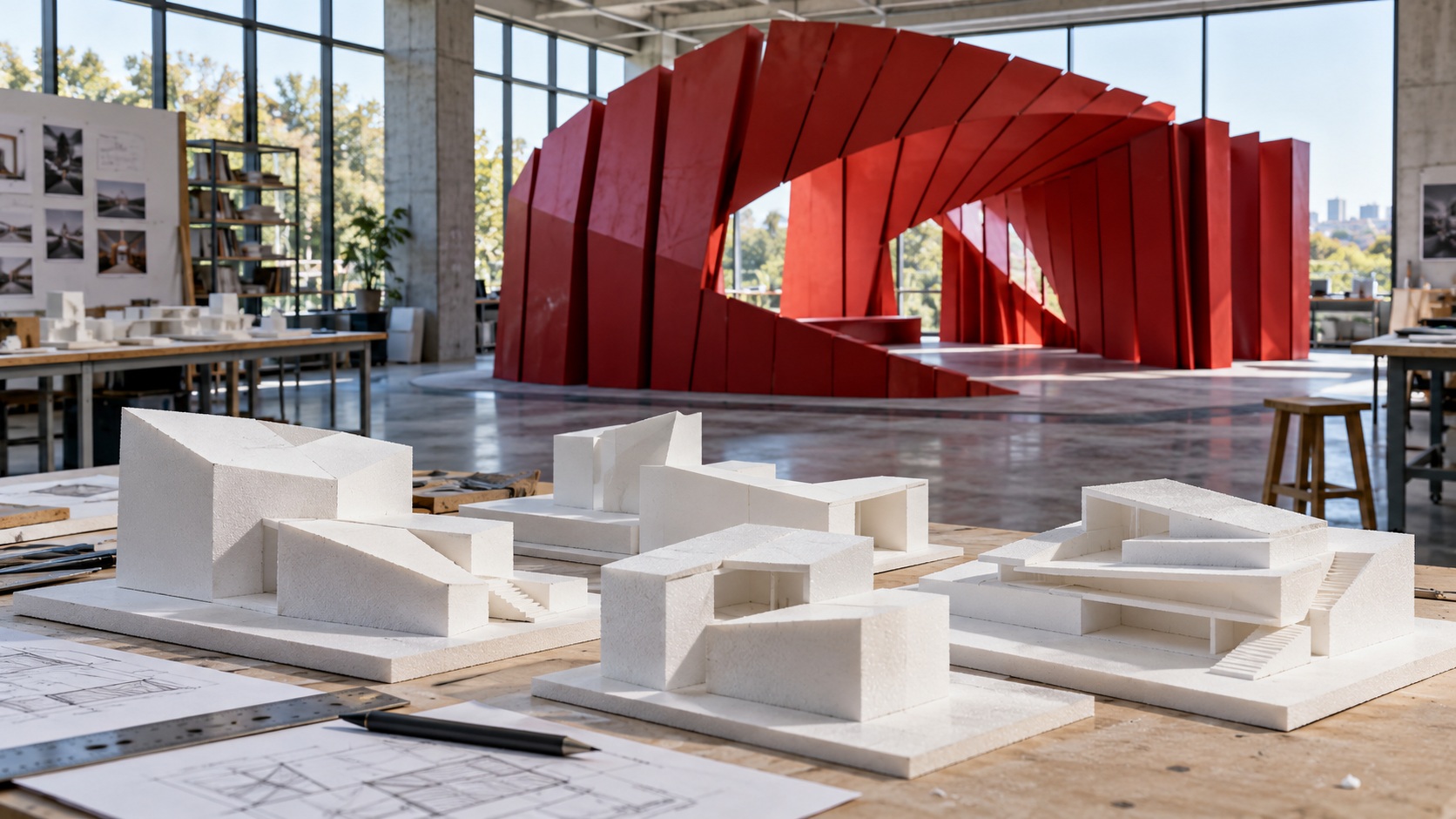
Images also need accurate status. An archival photograph can document a particular installation, while a newly generated editorial image can only illustrate a material idea. The image accompanying this article is an AI-generated editorial concept, not an archival view of any named artwork or historical event. It should not be used as evidence for an artist’s process. Follow the institutional links for documented works and their associated records. Keeping the illustration separate from the evidence protects the history from acquiring persuasive but invented visual details.
The resulting account is a branching one: postwar EPS production supplied industrial uses; artists explored polystyrene through carving, containment, models, and public forms; later practices could foreground the material’s packaging associations and afterlife. Some episodes involve new stock, some may involve recovered objects, and some records remain nonspecific. That is a more defensible history than a single heroic conversion of trash into art. It leaves room for further archival research while giving readers concrete examples of how an industrial cellular plastic became available to sculptural thought.
Follow the Material Without Inventing One Origin
EPS reached sculpture through several documented industrial and artistic routes. Preserve the distinctions between new stock, recovered packaging, temporary models, and finished works, and let the evidence—not a convenient first-use story—shape the history.