Public Scale Makes the Whole Construction a Public Responsibility
Foam can give a public artwork considerable visible volume without making the entire volume solid stone, timber, or metal. It can support a modeled core, an expressive surface, or a temporary intervention whose logistics would otherwise be difficult. Outside the studio, however, the same object meets weather, maintenance equipment, unplanned contact, and people who have never read its handling instructions. The relevant question is not whether foam belongs in public art as a category. It is whether a particular complete construction is appropriate for a particular place and period, with a credible owner, inspection plan, and response when conditions change. A low-mass core can be an advantage while leaving substantial responsibilities at the surface, connections, foundation, and public boundary.
A: No. Suitability depends on the complete assembly, site, duration, public interaction, and care arrangements.
A: No. Wind, geometry, connections, and ground conditions still require site-specific review.
A: No. Seams, penetrations, damage, and maintenance remain relevant.
A: No. Appearance and integrity are related but distinct condition questions.
A: Later inspection or repair may need information that the finished exterior conceals.
A: No. Shape, location, and actual public behavior must inform the design.
A: The responsible commissioner or owner needs an enduring arrangement with appropriate technical input.
A: No. A limited-duration installation can still encounter severe conditions.
A: Not automatically; the complete waste stream needs receiver confirmation.
A: No. It is an AI editorial concept, not a documented commission or validated construction.
Distinguish a Display Medium from a Fabrication Core
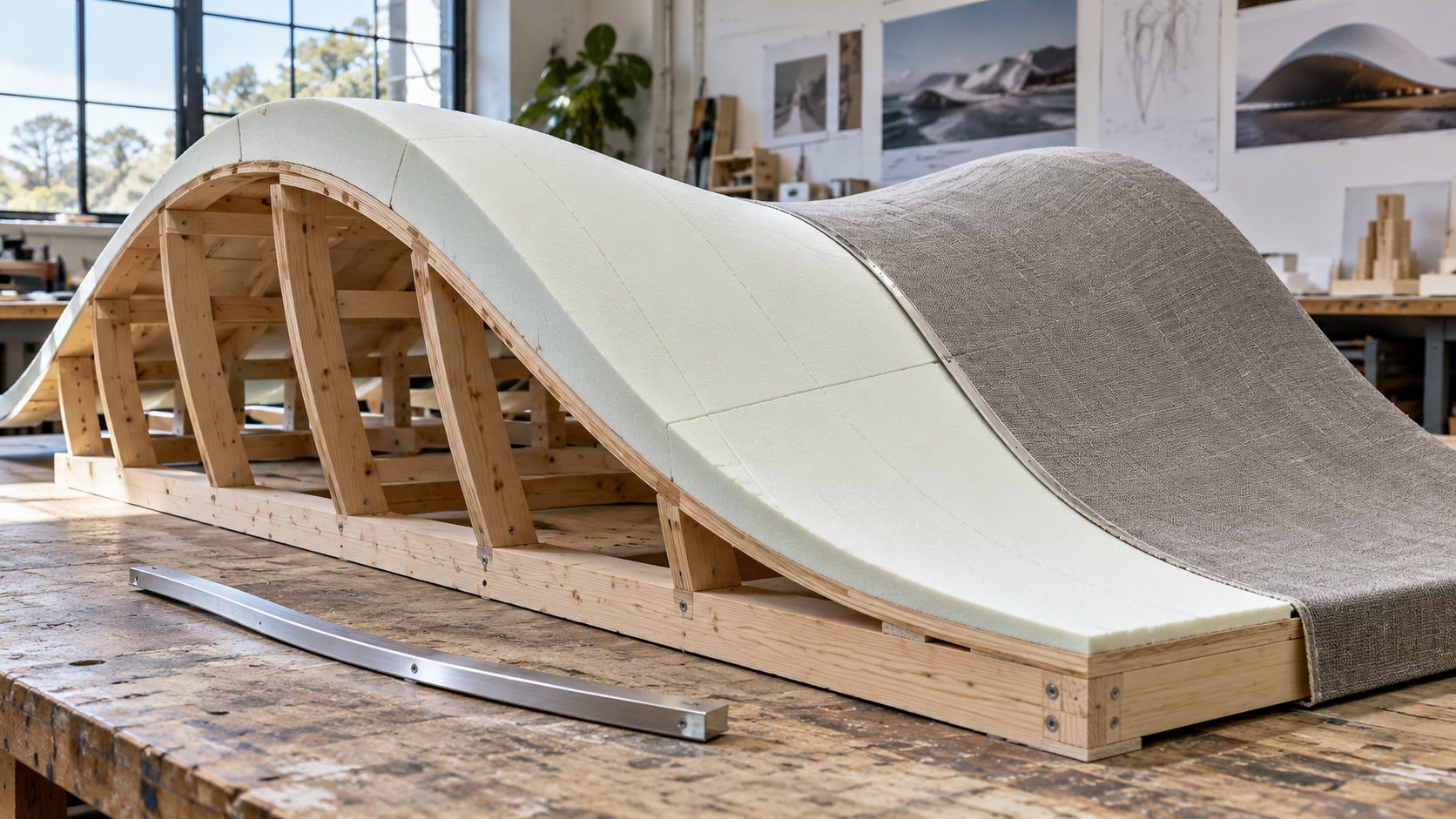
Foam can occupy several positions within a public-art project. It may remain visible, sit beneath a protective composite, or serve only as a pattern used to manufacture a different final material. Those roles should be named precisely in proposals and public descriptions. If a foam pattern is removed during fabrication, the outdoor sculpture does not acquire foam’s service limitations simply because foam helped make it. Conversely, a hard painted surface does not prove that the final work is solid or that its hidden core has no maintenance implications.
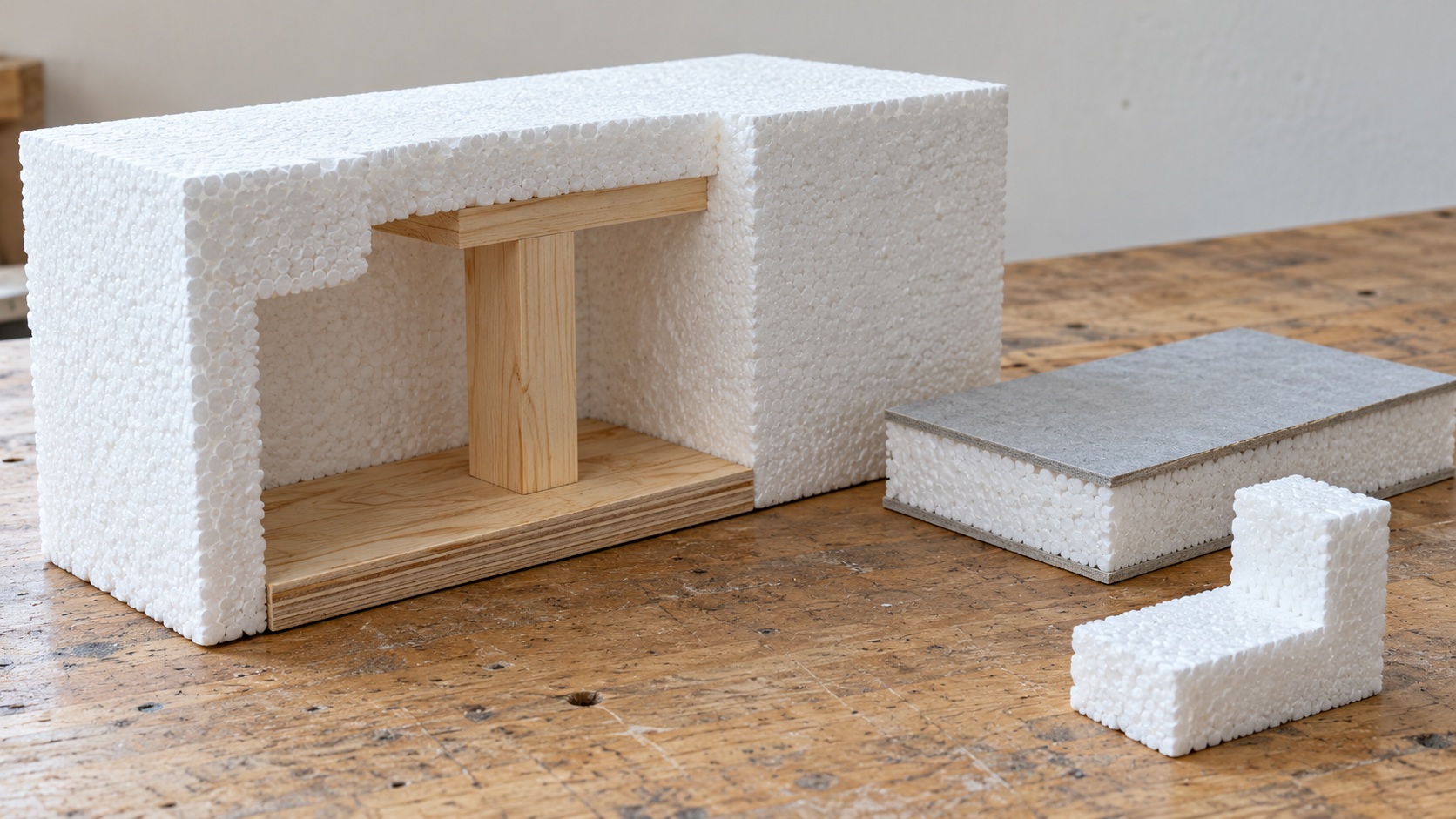
When foam remains, describe the assembly rather than offering the core’s product data as the specification for the whole sculpture. The skin, bond lines, internal support, fasteners, base, and attachments can each govern a different kind of failure. A weather-resistant exterior may still have a vulnerable seam or access opening. A robust armature can remain standing while an unsupported projection breaks away. The public-facing claim should reflect these different functions instead of compressing them into the phrase coated foam.
The benefit of lower core mass can be real. It may permit a form to be fabricated in sections or reduce some handling demands compared with a solid equivalent. But the finished assembly also includes reinforcement, coatings, hardware, and other material. Its final weight must be established for handling and support decisions, not estimated from the bare foam alone. Likewise, a lightweight object is not immune to overturning, sliding, or separation. Its interaction with the site needs an appropriate structural design.
These distinctions belong in the artist’s concept stage because they affect the kind of public work being offered. A fragile exposed surface may suit a carefully managed short presentation but conflict with an unattended permanent commission. A substantial protective shell can preserve a visual effect while changing texture, cost, repair methods, and end-of-use options. Neither solution is automatically superior. The artist and commissioner need an explicit agreement about which material qualities are essential and which can change to meet the setting.
Exposure Is a Combination of Site and Duration
Outdoor conditions do not form one uniform category. A sheltered courtyard, irrigated planting bed, open waterfront, and street corner can expose an object to different combinations of sunlight, rain, salt, heat, dirt, impact, and maintenance operations. Orientation also matters: one face may receive direct sunlight while another remains damp or shaded. Describe the actual location and expected presentation period. A product’s broad exterior-use description does not establish that every assembled detail will survive every outdoor microclimate for an unspecified number of years.
The Canadian Conservation Institute’s guidance on plastics and rubbers explains that light can affect polymers and their additives, with consequences including discoloration and embrittlement. Those are not interchangeable observations. A color change can be visually important, while a loss of integrity can affect whether a component remains intact. Record the expected appearance separately from the conditions that require technical action. A sculpture need not look dramatically faded before a joint or local surface needs attention.
Weather Protection Depends on Details, Not a Coating Slogan
Rain reaches more than the broad painted face. Water can collect at horizontal recesses, enter damaged joints, or follow hardware penetrations into places that are difficult to inspect. A proposal should show how the geometry handles water and how vulnerable interfaces are protected. Do not assume a closed-cell core makes every cavity, adhesive, and internal support unaffected by moisture. The narrowest limit may belong to another component. Manufacturer guidance and qualified detailing should address the actual construction rather than a generic material stereotype.
Coating evidence needs a similarly specific reading. A finish may have documented properties when applied at a stated thickness to a prepared substrate, but those results do not automatically transfer to a sculptural seam, an unsupported edge, or a different primer. Keep the system information together: substrate, preparation, reinforcement, application conditions, and maintenance. Where a custom combination lacks relevant evidence, representative testing can inform development, but a successful small sample is not a guarantee of long-term service for a large installed object.
Exposure can also be concealed by an apparently attractive exterior. A repair that seals over an unresolved moisture path may improve appearance while making later inspection harder. A deep cavity repainted from the outside may retain damage behind it. Design access to the areas that need it and document the construction before it is closed. The most useful maintenance image may show an unpainted seam or internal connection, not the final promotional view that hides every technical feature.
The maintenance plan should state which cleaning methods are compatible with the complete surface and what requires referral. Pressure washing, solvents, aggressive brushing, and improvised graffiti removal may be unsuitable for a particular skin. Do not leave caretakers to discover those limits after staining occurs. A public work is likely to be cleaned by someone other than its maker, possibly years later. Clear limits and contact information are part of making the artwork maintainable rather than merely delivering it in good initial condition.
People Meet an Object, Not Its Intended Use Statement
A form near a walkway may be touched, leaned on, photographed closely, or interpreted as a place to sit even when the artist intended viewing only. A broad ledge or low projecting element can invite behavior through its shape. Assess foreseeable contact and decide whether the design will accommodate it, discourage it through a suitable layout, or need a different location. A small do-not-touch sign cannot be assumed to prevent loading that the form and setting otherwise encourage.
Accessibility is part of that site review. The U.S. Access Board’s ADA standards address protruding objects, circulation paths, and accessible routes. Requirements and applicability must be checked for the particular project and jurisdiction; this article is not an access determination. The design team should examine projections, headroom, base edges, and the route around the artwork before placement is fixed. An object can obstruct movement even if it is visually appealing and comparatively light.
Nearby operations deserve the same attention as visitors. Grounds staff, delivery carts, cleaning machines, snow-removal equipment, and irrigation systems may routinely occupy the area. A vulnerable plinth edge can be damaged by equipment that never approaches the upper artwork. Share the site plan and maintenance boundaries with those responsible for the surrounding space. A design that depends on every future caretaker recognizing an invisible fragile zone is less robust than one that makes those limits clear through layout, detailing, and documentation.
Connections Need a Site-Specific Structural Account
Large surface area can matter even when an object has little mass. Wind can act on the overall shape, on projecting components, and on partially enclosed spaces. The load path through skin, supports, connections, and foundation requires review by appropriately qualified professionals for the proposed site and service. Generic advice to add a heavier base is inadequate: ballast, anchorage, ground conditions, and local failure can be separate issues. This is not a situation in which an article should supply a universal screw size or ballast weight.
Design the separation between decorative and structural roles deliberately. A fastener should not be assumed to gain reliable capacity from an arbitrary volume of foam around it. A protective finish should not silently become a structural shell because a drawing lacks another support. If the skin is intended to carry load, that function needs engineering evidence and compatible connections. If it is decorative, provide an independent support strategy where required and avoid describing the finish as reinforcement without defining what it is reinforcing against.
Installation evidence should match the final work. Material substitutions, altered openings, added surface area, or changed support positions may affect assumptions made during design. Record those changes and obtain the necessary review rather than treating the original approval as a blanket for every later version. The installed object, not the earlier attractive rendering, is what the public encounters. Close-out documentation should include the as-built construction and the information needed to identify components during inspection and repair.
Short-term status does not remove these duties. A temporary public work can still experience a severe weather event or unplanned contact during its display period. Its operational plan may include closure, removal, or another specified response, but that response must be practicable with available staff and access. Define who is authorized to act and what information they need. A plan that requires the artist to arrive immediately from another city is not a dependable local response arrangement.
Commission the Care Along with the Object
The College Art Association’s guidelines for public work call for maintenance and conservation considerations in the initial proposal and recognize the commissioning institution’s ongoing role. This provides a useful framework for foam-containing work: care should not appear only after the first defect. Identify ownership, inspection responsibility, access for maintenance, repair authority, and funding. An artist’s willingness to answer questions is helpful, but it cannot replace an organizational plan that remains usable when personnel change.
A condition record should distinguish cosmetic change from evidence that triggers specialist review or removal from access. Photograph the same vulnerable details over time and retain dates, observations, and actions. The inspection frequency and criteria must suit the design and location; no universal monthly interval covers every object. GSA’s artwork care recommendations are explicitly generic guidance, not a foam-specific maintenance recipe. Use such resources to organize stewardship while obtaining appropriate instructions for the actual materials and construction.
Plan an Ending That Preserves Meaning and Responsibility
Every commission should have a way to respond when its intended service ends or its condition becomes unacceptable. The answer might involve conservation, replacement of documented sacrificial components, relocation, or deinstallation. Those options have different implications for an artwork’s identity. Agree early which material may be replaced and who decides. A temporary commission should not become indefinitely installed by inaction, particularly when its materials and operational assumptions were selected for a limited presentation.
End-of-use planning also needs material honesty. A coated foam composite may not enter the same route as clean manufacturing offcuts. Keep a component inventory and ask real receivers about acceptance rather than promising recyclability based only on the core polymer. Separation features can preserve options if they do not compromise the work’s required performance. Budget for removal, handling, and an appropriate destination. The public benefit of a large expressive form should not leave an unassigned waste and transport problem when the display is over.
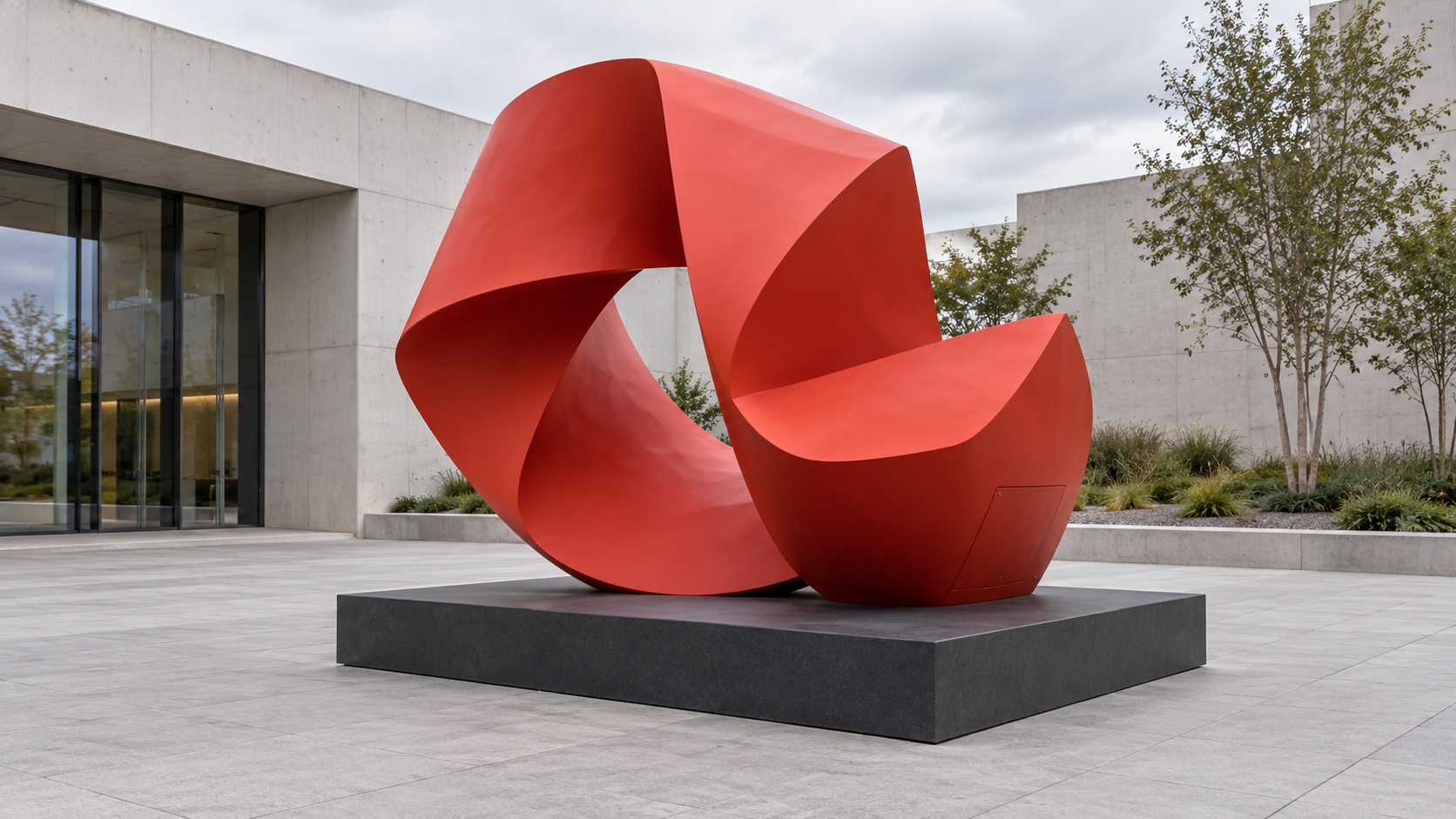
The illustration here is an AI-generated editorial concept of an original coated sculptural form in a courtyard. It is not a photograph of an actual commissioned artwork, a validated structural detail, or a demonstrated outdoor coating system. The image communicates the relationship between scale and setting; suitability would require the evidence discussed above. Foam’s public-art potential is strongest when its logistical and formal advantages are accompanied by a credible account of exposure, public contact, technical limits, and continuing care.
Let Scale Arrive with Stewardship
A foam core can make an ambitious public form practical. The complete artwork still needs a site-specific design, appropriate surface system, clear public boundary, and funded care. Treat those commitments as part of the artistic proposition, not as additions after the unveiling.