A Temporary Installation Has More Than One Deadline
Foam can give a short lived installation an ambitious shape without the mass of a solid mineral or timber equivalent. That is attractive for a shop window, exhibition feature, promotional setting, or photographic environment. Yet the public opening is only one deadline. The object must also be fabricated, finished, delivered, approved, installed, maintained, removed, and given a destination afterward. A material that saves two days of shaping can lose that advantage if its coating needs additional cure time or its bulky parts cannot leave the venue through the available door. Whether foam is a benefit or a drawback depends on that whole sequence, especially the operations squeezed into the hours immediately before opening and after closing.
A: No. The whole fabrication, finish, approval, use, and removal sequence determines its value.
A: Only when seating is separately designed and assessed; the appearance alone does not establish suitability.
A: The complete route the packed object must travel, including openings and turns.
A: Often yes, especially where the public can touch or brush past it.
A: No. Provide the evidence and obtain the permissions required for the actual installation.
A: Seams can behave differently from a flat uninterrupted face.
A: Use a pre-agreed contingency with the venue rather than leaving an unassigned object behind.
A: When an available object meets the brief and avoids unnecessary custom fabrication and retirement tasks.
A: A wanted next application, viable storage, documented assembly, and transport arrangements.
A: Assembly, packing, damage, and strike photographs reveal practical issues that opening images omit.
Specify What Temporary Actually Means
A two hour photographic display and a six week public installation are both temporary, but their material demands are different. Start with the duration, location, audience distance, touch exposure, and number of moves. Include the time the object will spend waiting in a loading area or vehicle, not just its advertised display hours. A foam object viewed from behind glass may need little abrasion resistance. The same object placed beside a queue may receive repeated contact from bags, hands, and cleaning equipment. Those conditions should shape the brief before a sculptor chooses a shell or decides how thin a decorative feature can be.
Define the installation’s visual job. Is it a background seen from several meters away, a close inspection piece, or an object people will lean against for photographs? Foam is often effective as a volume that supports an illusion, but that does not mean it should carry people or function as furniture. If the brief includes sitting, climbing, overhead placement, or structural support, those functions need their own appropriate design and assessment. Do not let a visually convincing stone or timber finish imply that the foam replica has the physical properties of the material it imitates.
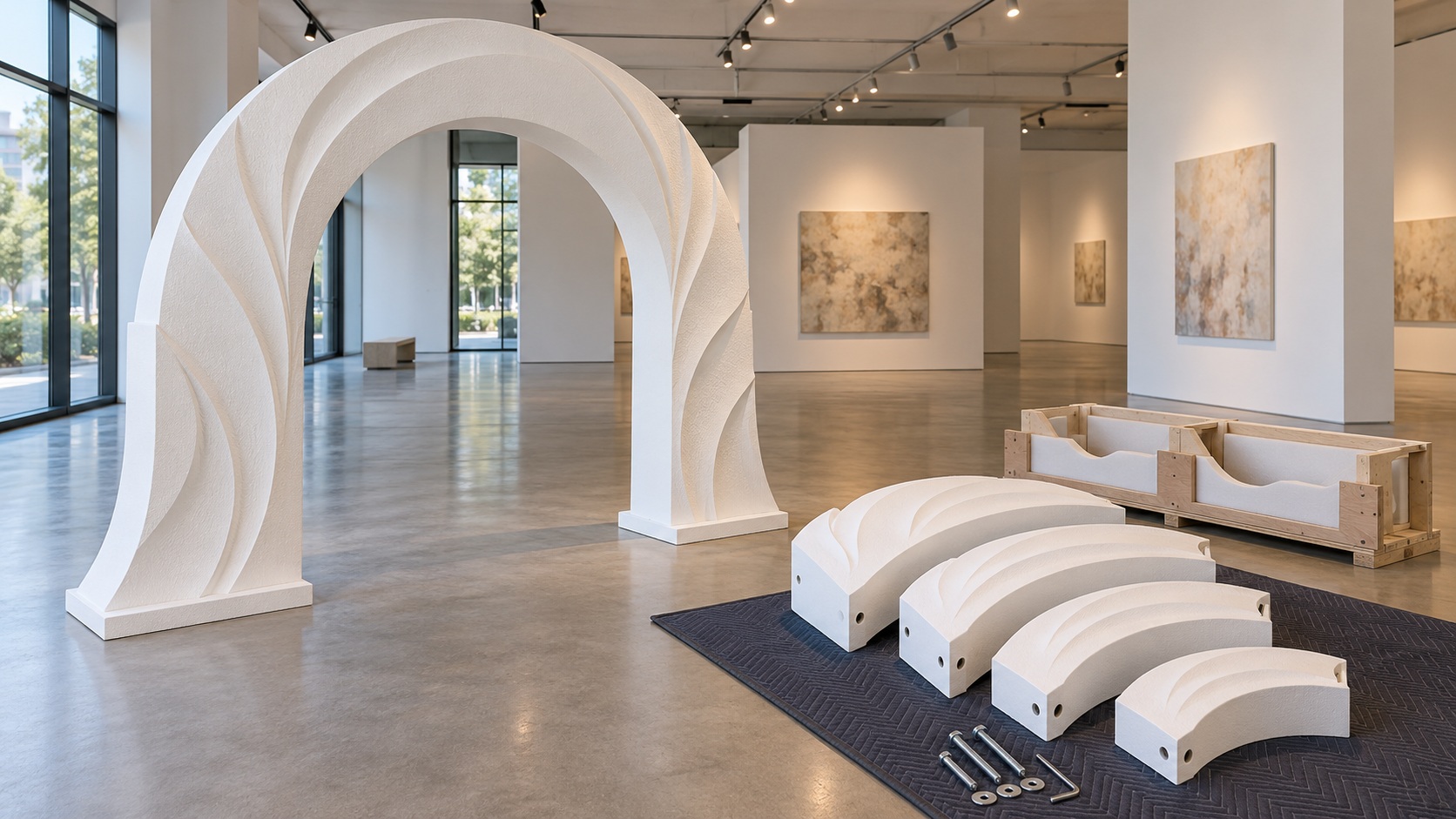
Write down the restrictions imposed by the site. Door openings, lifts, loading times, wall protection, fixing permissions, floor condition, and access for maintenance can all affect the design. Ask for actual measurements and current venue requirements rather than relying on an old installation photograph. A seamless sculpture may be aesthetically appealing but impractical if it must pass through a narrow service corridor. A modular version might solve delivery while introducing visible joints. Resolve that tradeoff on the drawing, where the composition can accommodate it, instead of discovering it when a crew is waiting at the door.
Agree who has authority to accept the installation and who can stop its use if conditions change. That includes venue staff, the client, the fabricator, and any required specialist reviewers. A short duration does not remove approval obligations. The installation plan should identify the documents and information needed for the actual setting, including material and finish details where requested. Keep promotional claims separate from acceptance evidence. A supplier’s general description of a foam product is not automatically documentation for the completed, coated, mounted assembly in a particular room.
Count the Time Hidden in the Finish
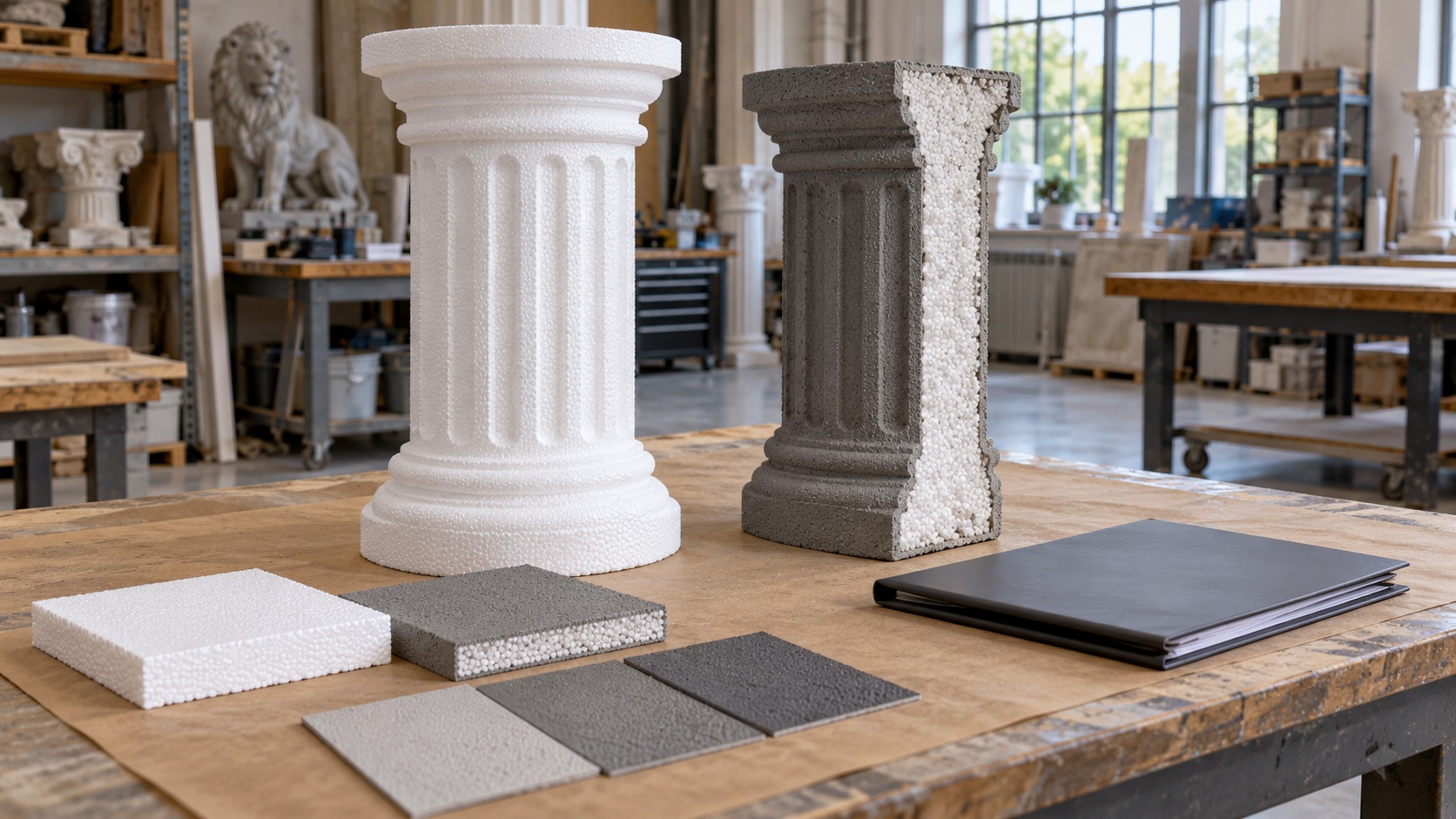
Foam’s easy shaping can shift the schedule bottleneck to finishing. Filling joints, applying reinforcement, drying or curing layers, sanding, painting, and repairing handling marks all take time. The sequence matters: applying another layer before the previous one is ready can create defects that are not obvious until installation. Use the manufacturer’s instructions for application conditions and cure stages, and trial the complete finish on a representative piece. Include a seam and a curved feature in the trial. A flat coupon alone can miss the places where coating accumulates or where reinforcement changes the appearance of an edge.
Work backward from the first time the sculpture must be packed, not just from the opening ceremony. A surface that tolerates careful studio handling may not yet tolerate prolonged contact with wrapping. If the schedule leaves no realistic finishing window, simplify the surface treatment, revise the design, or choose another construction. Do not promise a polished shell on a deadline that only supports a bare carved form. A lower detail finish planned from the outset can look intentional; a rushed attempt at a more demanding system often creates patching and repainting during the most expensive hours of the project.
Make Mounting Independent of the Illusion
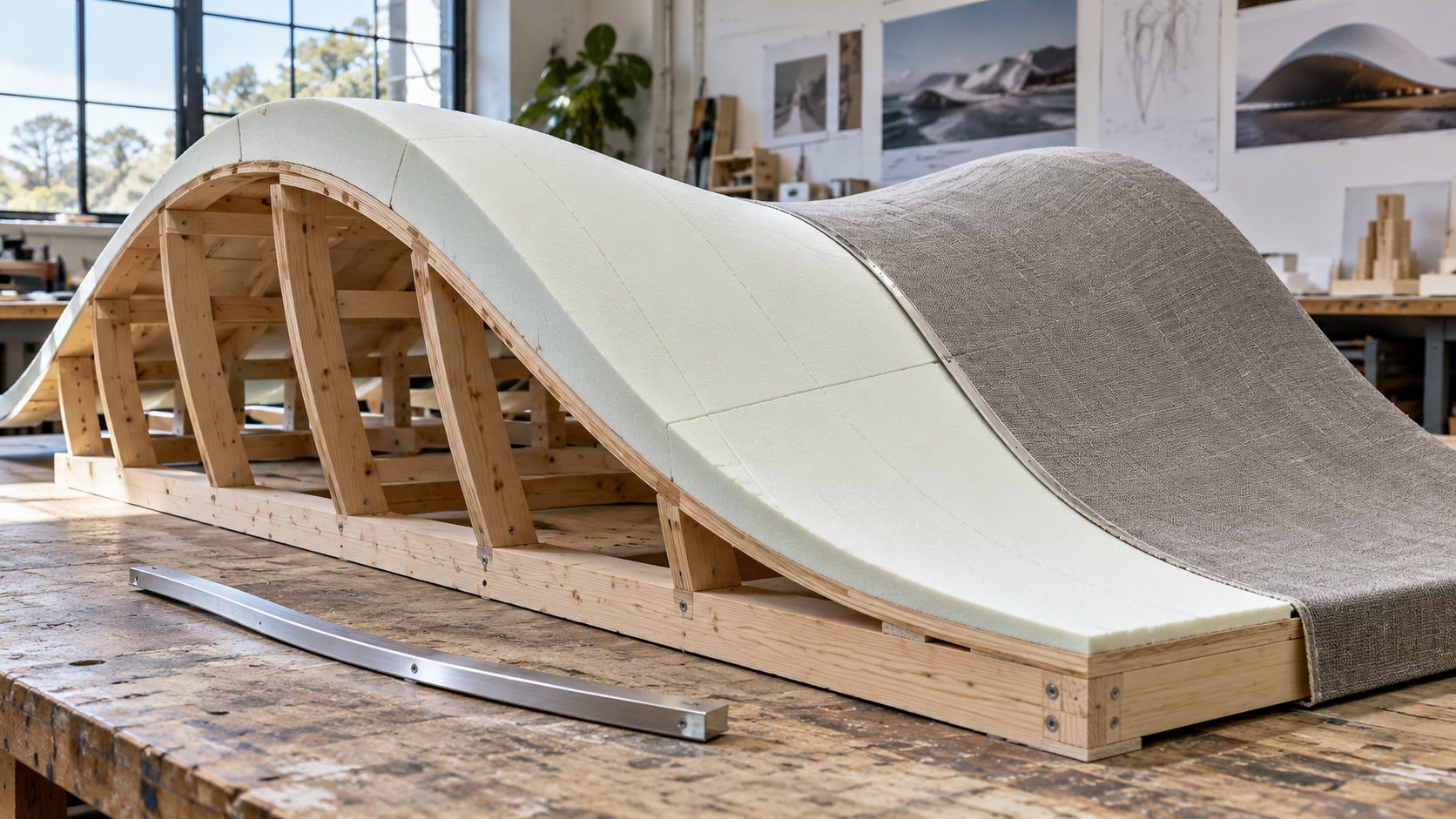
A lightweight foam body still needs a deliberate mounting arrangement. Its low mass can make it easier to lift, but it can also make an unrestrained piece easy to move accidentally. The visual skin should not be the only thing securing the object unless that assembly has been designed for the purpose. Use the specified base, frame, or attachment system, and ensure installation staff can reach the connections without damaging the finish. Where the design has structural consequences, use appropriately qualified assessment. There is no universal quantity of ballast or adhesive that makes every foam installation suitable for every site.
Think about the space around the work as part of the installation. People need an understandable route that does not invite them through a fragile feature or behind an unstable decorative surface. Barriers, setbacks, or positioning can reduce casual contact, but their arrangement must suit the venue and audience. Avoid sharp projections at expected contact height and do not hide trip hazards in an attractive base treatment. A piece built only for viewing can remain successful when its placement makes that purpose obvious. It becomes problematic when the setting encourages interaction the object was never intended to receive.
Fire precautions must address the actual materials and setting. Foam should not be described as fireproof because it has been painted or treated. The UK Health and Safety Executive’s cellular plastics guidance explains that these materials can present significant fire and smoke hazards. For an installation, obtain the evidence and permissions required by the venue and relevant authority, and keep the assembly away from unapproved ignition sources. Do not substitute an improvised flame demonstration for applicable testing or approval. If the proposed effect needs flame, hot equipment, or other special hazards, involve the responsible specialists before fabrication.
Budget for the Day Between Opening and Strike
Temporary objects are often budgeted as though they experience only two events: arrival and removal. In practice, someone may need to inspect the piece, remove dust, correct a scuff, or secure an accessory during the run. Decide who does those tasks and provide methods compatible with the finish. A janitorial crew should not have to guess whether a cleaner suitable for the floor is acceptable on a painted foam base. Give the venue a specific contact for damage reports and identify conditions that require the area to be taken out of use pending assessment.
Provide a small repair allowance appropriate to the design, without making emergency repair the operating plan. A replaceable decorative module can be more useful than a large box of unsorted supplies. Keep matching paint information and permitted repair products in the project record. When damage affects mounting, stability, or a structural component, stop treating it as a cosmetic issue. The person who can repaint a scratch may not be qualified to decide whether a compromised support remains suitable. Clear responsibilities reduce pressure to disguise a consequential defect merely because the installation still photographs well.
Design the Removal While the Site Is Empty
Strike often happens under tighter time pressure than installation. The next tenant or event may need the space immediately, and the original fabricator may not be on site. Give modules accessible connections and a dismantling order that does not rely on destructive guessing. Label them in locations that survive normal display but remain discreet. A joint hidden under continuous scenic texture can look excellent until somebody must find and open it in a dark loading period. If a destructive step is unavoidable, identify it explicitly and keep it away from reusable parts that should leave intact.
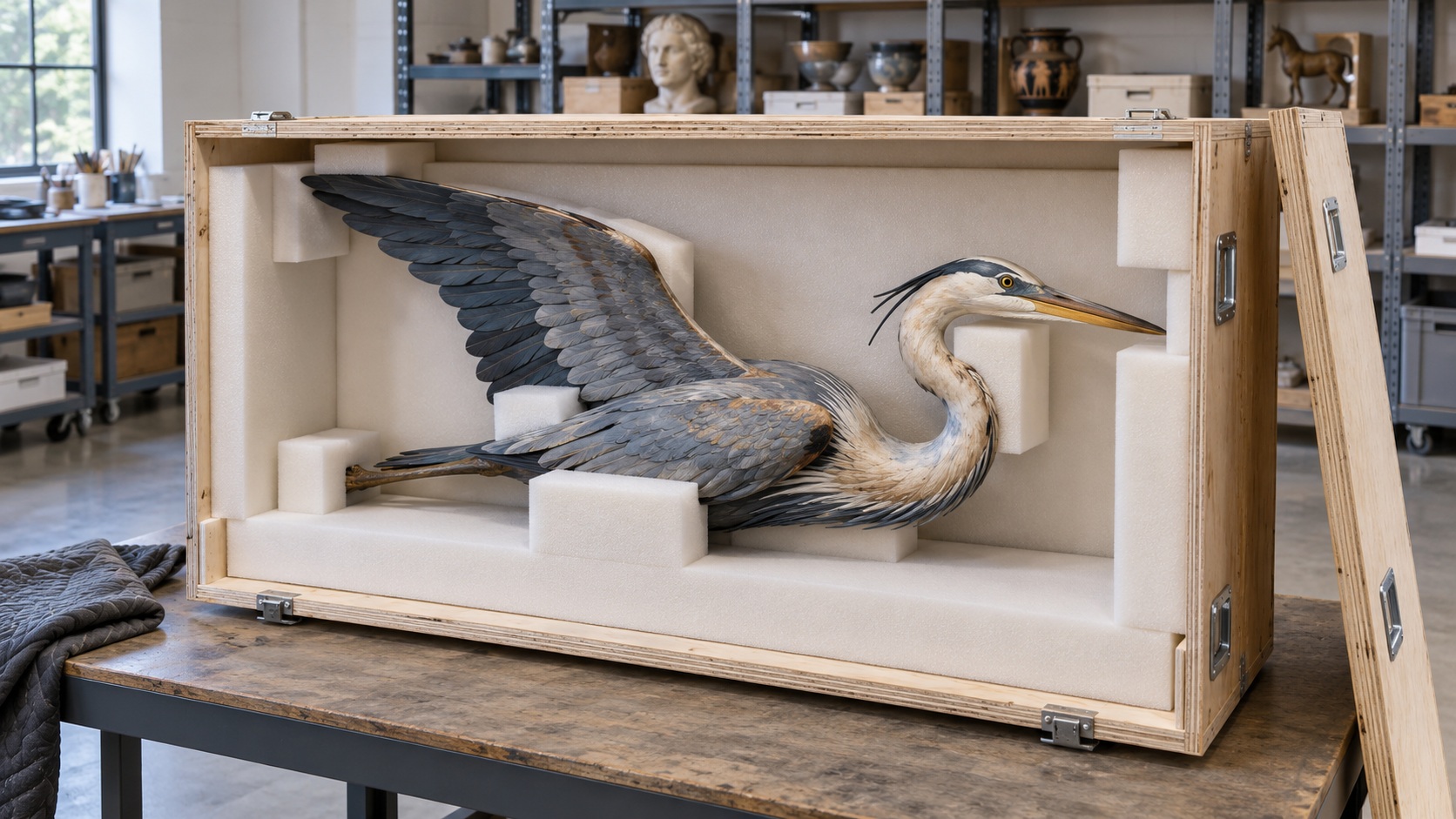
Measure the outgoing package. The object may have arrived before other fixtures were installed, and the exit route may now be narrower. Decorative additions made on site can also increase its size. Confirm that cases, handling aids, and transport will be present when needed. A temporary object left overnight without an agreed storage location can become a venue problem even when the exhibition itself was successful. Include protection for walls and floors during removal and assign someone to collect small fragments rather than leaving them to the general cleaning crew after the vehicle has departed.
The destination after removal should be specific. Reuse needs a named next use or a recipient who wants the object, together with storage and transport arrangements. Recycling needs acceptance of the actual polymer and its coatings, not a general belief that foam is recyclable. Disposal needs a local route and a budget. A reusable base can be recovered even when the decorative body cannot, provided the joint allows it. Make that separation practical during strike. The environmental outcome depends on what the crew can actually do within the available time, not only on the intentions written in the proposal.
Compare those costs with alternatives early enough to change course. Renting an existing object, making a tensioned fabric volume, adapting stock scenery, or reducing scale may meet the same visual goal with a different balance of labor and waste. Foam may still be the strongest choice for a distinctive shape that must be moved by a small crew, especially when the body can serve more than one use. The comparison should include finishing, mounting, packing, storage, and removal. A low price for the starting block is not a reliable estimate of the delivered installation, and a recyclable raw material is not automatically the easiest finished object to retire.
Review the Whole Sequence Before Committing
Run a table based rehearsal with the people responsible for fabrication, venue access, and removal. Start with the first material delivery and walk through every transfer of responsibility. Ask where the sculpture rests while the finish cures, who checks it on arrival, who supplies the mounting hardware, and who removes it if the planned vehicle is delayed. These questions expose missing tasks without requiring a full physical rehearsal. Record decisions in a compact installation document, including drawings and contact details. The goal is an executable sequence that another competent crew can follow, not a long collection of general cautions.
After the installation, compare the forecast with what happened. Note which features survived well, which operations took longer than expected, and what material actually left through each exit route. Photographs of assembly and strike can be more useful for the next job than the official opening image. Keep this information associated with the reusable components. Over time, a studio can build dependable temporary systems whose visual bodies change while bases, packing, and working methods improve. That is a more durable advantage than repeatedly exploiting foam’s carving speed while relearning the same delivery and removal problems on each commission.
Temporary Should Describe the Display, Not the Planning
Foam benefits a temporary installation when shaping speed fits a complete delivery and removal plan. Treat finishing, mounting, maintenance, and the final destination as design requirements, and its advantages become easier to judge honestly.