Choose the Optical Effect Before the Sparkle Material
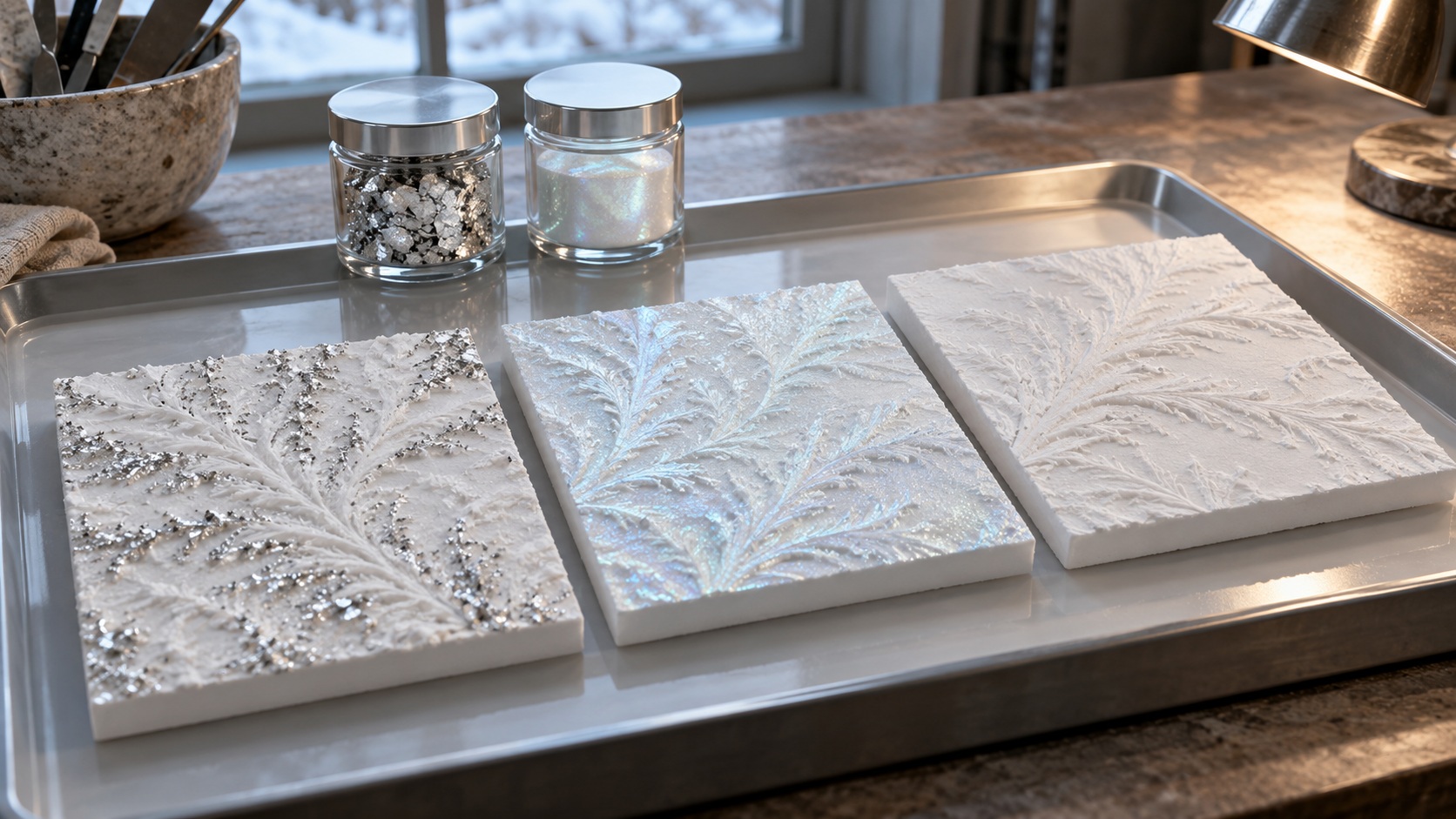
A sparkling foam surface can suggest frost, mineral crystal, metallic fabric, or magical dust, but those appearances do not require the same particles or application method. Begin with what the audience should see under the actual lights. Large discrete flashes, a soft pearlescent shift, and a uniform metallic sheen are different optical jobs. Once that effect is clear, compare the available materials by composition, application behavior, shedding, and the disposal route of the complete coated object. Cellulose-based glitter and mica pigments can offer alternatives to conventional plastic glitter, but neither name justifies a blanket harmless or eco-friendly claim. Binders, colors, surface treatments, particle sizes, and test conditions matter. A restrained effect that stays attached through repeated use may be more useful than a lavish loose application purchased under a vague green label. Treat sparkle as a designed surface system, not an environmental promise scattered over the foam.
A: Not necessarily. Ask about the complete particle, including reflective, colored, and protective layers.
A: No. Containment and appropriate waste handling still apply, especially to mixtures containing binder and paint.
A: Usually the optical effect differs; compare particle size, sheen, and flashes under the intended light.
A: No. Review the actual product information and use suitable exposure controls.
A: Surface angle, crevices, and edges affect distribution, retention, and reflection differently from a flat card.
A: No. A clear layer can alter reflection, color, and the contrast that makes particles visible.
A: Where the product and process permit, keep it separate from wet, dusty, or color-contaminated debris.
A: No. Current rules distinguish materials and uses; consult the applicable official guidance for the exact product.
A: Do not infer that from one ingredient; obtain acceptance for the complete composite from the receiving organization.
A: A specific documented improvement such as less loose application loss or longer retained service, with its limits stated.
Distinguish Glitter From Pearlescent Pigment
Glitter usually creates separate visible flashes as individual particles reflect light. A mica-based effect can create a broader pearlescent or metallic appearance when fine plate-like particles are distributed in a suitable binder. Particle size, coating, orientation, and concentration influence the result. Do not expect a fine powder to reproduce the chunky flashes of a coarse glitter simply because both look shiny inside their containers.
Make small effect studies on the same relief used in the project. A smooth face can orient particles differently from a rough carved bark or rock texture. Look at the sample from the intended viewing distance and move the light or sample through the angles expected during use. A beautiful effect visible only at one extreme angle may not serve a static display or a broad theater audience.
Consider whether paint and lighting can create the needed impression without loose decorative particles. A metallic or pearlescent coating may achieve a controlled shimmer with less opportunity for scattering during application. That does not automatically make it environmentally superior, but it changes the containment problem. Compare complete products and actual use rather than assuming that every sparkling scene needs poured glitter.
Ask What Cellulose-Based Actually Includes
Request a composition statement for the finished particle, not only the base film. Cellulose may form the substrate while colorants, reflective layers, binders, or protective treatments contribute other materials. A renewable starting material does not prove that every layer shares the same end-of-life behavior. Keep the supplier’s evidence tied to the exact product and variant being purchased.
Read degradation claims with their conditions. A laboratory result in a specified medium over a stated period is not a promise that particles will disappear quickly in a garden, stream, landfill, or sealed storage box. Ask what was tested, how the outcome was measured, and whether the claim covers the complete colored product. Avoid substituting a general statement about cellulose for evidence about the glitter in the container.
Compostable is also a specific claim, not a synonym for natural. The FTC’s Green Guides summary explains the evidence and qualifications associated with compostability and degradability claims. A particle with supporting documentation does not make the foam sculpture, glue, paint, and clear coat compostable as a combined object.
If a supplier’s documentation is incomplete, describe that uncertainty plainly in the purchasing record. You can still compare color, adhesion, and application performance without making an unsupported environmental conclusion. A transparent statement that a material uses a cellulose substrate is narrower and more defensible than calling it harmless to waterways or suitable for uncontrolled outdoor release.
Understand Mica as a Different Material Choice
Natural mica and synthetic pearlescent substrates are not identical sourcing propositions. Ask which material is present and what surface treatments or pigments produce the color. Seek traceable sourcing information where that matters to the project.
Mineral origin alone does not establish low impact, and synthetic manufacture alone does not establish the opposite. The available evidence should determine the scope of the comparison.
Fine powders require exposure control during weighing, mixing, and cleanup. NIOSH maintains a Pocket Guide entry for mica; the actual commercial pigment may include additional ingredients with their own information. Review the product safety data and choose appropriate controls for the process. Cosmetic use language should not be treated as permission to disperse an airborne cloud in a workshop.
Match the Binder to the Foam and the Effect
Identify the foam and existing surface before choosing the adhesive or clear medium. A binder that holds particles well on paper may attack the foam, soften an existing paint layer, or remain unsuitable for the intended environment. Test the complete primer, color, binder, particles, and any protective layer together. Immediate compatibility and eventual adhesion are separate observations.
Decide whether particles will be mixed into the binder or applied to a controlled wet layer. The two approaches can produce different distribution, orientation, and coverage. Some products are formulated for a particular method. Follow that guidance rather than assuming the same quantity will work in either approach. A thick binder can bury the sparkle; too little binder can leave poorly attached material.
Use the smallest area that produces the intended composition. Sparkle concentrated at selected frost edges or mineral veins often communicates more clearly than equal coverage across every face. This also makes application and cleanup more manageable. Keep a quiet background so the bright points have contrast instead of competing with another equally reflective field.
For a powder pigment, introduce it using the supplier’s supported mixing method and appropriate containment. Do not improvise spraying or dusting solely because a dry cloud produces an appealing temporary effect. Application method changes exposure and overspray, so it belongs in the process assessment. A carefully brushed sample can answer many aesthetic questions without creating unnecessary airborne material.
Work in a Contained Application Area
Use trays or protected work surfaces that let excess material be collected without spreading across the floor. Position the object so accessible surfaces can be treated in a controlled sequence. Avoid pouring a large quantity over a tall sculpture and relying on later sweeping. Repeatedly transferring loose particles between open containers increases opportunities for contamination and loss.
Keep recovered clean material separate from debris containing foam dust, wet adhesive, or other colors. Reuse only where the product and process allow it. A container of mixed sweepings is not equivalent to the original material, even if it still sparkles. Label the exact product and maintain an appropriate closed storage arrangement between applications.
Choose cleanup from the product guidance and workplace assessment. Do not wash loose particles into drains or blow them outside with compressed air. Collect contaminated liners and wipes through the applicable waste route. Water-soluble or biodegradable wording should not become a reason to bypass containment, especially when the waste also contains binder and paint.
Test Adhesion Without Destroying the Sparkle
Allow the supported cure time before judging shedding. Then expose a representative sample to the handling expected in service: packing contact, gentle routine cleaning, or the specified touch conditions. Keep the test consistent across candidates and record detached material. An effect that looks perfect under the light but transfers onto every packing pad may be unsuitable for a reusable prop.
A protective clear layer can change the appearance as well as the retention. It may reduce the contrast of reflective particles, alter sheen, or shift the perceived color. Test it over the exact particle and binder system rather than assuming any clear finish is optically neutral. More layers can also affect flexibility and detail, so do not keep adding finish until shedding seems reduced without checking the rest of the surface.
Inspect edges, recesses, and high-contact points separately. Flat coupons can hide the difficulty of coating a sculpted lip or a deep crevice. A small local change to the effect may be better than an extra heavy coat over the entire object. For example, a less vulnerable painted shimmer can replace loose sparkle on a frequently handled edge while the intended bright effect remains in protected areas.
Document the cleaning method that preserves the result. Abrasive wiping can remove a coating or detach particles even when ordinary careful maintenance would not. Give the operator realistic instructions based on the accepted sample. If the effect cannot tolerate the cleaning required by the venue, choose another system instead of promising maintenance conditions the event cannot provide.
Keep Outdoor and Regulatory Claims Narrow
Outdoor use raises both durability and release questions. Rain, abrasion, transport, and weathering can carry particles away from the object. Do not assume a material is suitable for environmental release because its source is plant-based or mineral. Prefer a controlled retained surface and evaluate its performance for the actual display conditions.
Rules differ by material and jurisdiction. The European Commission’s microplastics restriction guidance distinguishes glitter by composition and use; it is not a universal statement that every glitter is banned. Check current applicable guidance for a project involving purchase, sale, or use in that market. A workshop article cannot replace product-specific regulatory advice.
Plan Retirement of the Complete Surface
Consider whether the object will be reused, recoated, stripped, or discarded. A durable effect on a long-lived reusable prop can serve a different purpose from a one-night loose decoration. Keep enough product information to repair a local worn area without coating the whole sculpture again. Store a finished sample so a later replacement can match the actual surface rather than only the original color name.
If composting or recycling is proposed, ask the accepting organization about the complete material combination. Foam, adhesive, pigments, reflective treatments, and clear layers may produce a composite outside its acceptance rules. Do not send mixed decorative waste into a clean foam stream based on the composition of one ingredient. Separate recoverable stock before decoration where practical.
Record useful limited outcomes: reduced loose application loss, better retention during a documented handling trial, fewer replacement coats, or a known supplier composition. These findings can guide future builds without claiming an entire environmental ranking. The absence of a complete lifecycle assessment does not prevent improvement, but it should limit the language used to describe that improvement.
Specify the Effect So It Can Be Repeated
Photograph the accepted sample with the light direction and viewing position recorded. Include a plain matte reference area in the same image. Automatic camera exposure can make a weakly sparkling sample appear dramatic or suppress the brightest flashes, so a photograph should accompany the physical sample rather than replace it. Note whether the desired result is isolated flashes, a soft shift, or a continuous sheen. That description helps another maker reproduce the intention without simply adding more material whenever the surface seems less bright in different light.
For a large installation, approve a representative area before completing every module. Check it beside the surrounding scenery and from the expected visitor position. A repeated effect can become visually overwhelming when multiplied across a wall even though the small coupon looked restrained. Adjust coverage deliberately and retain the revised sample. Keep the purchasing quantity tied to the accepted coverage so unused stock does not become an invitation to oversaturate the finished piece.
Make the Light Work With Less Loose Material
A controlled sparkle effect begins with the desired reflection and ends with a retained, maintainable surface. Choose documented materials, test the complete binder system, contain excess particles, and avoid treating cellulose or mica as shorthand for unrestricted environmental release.