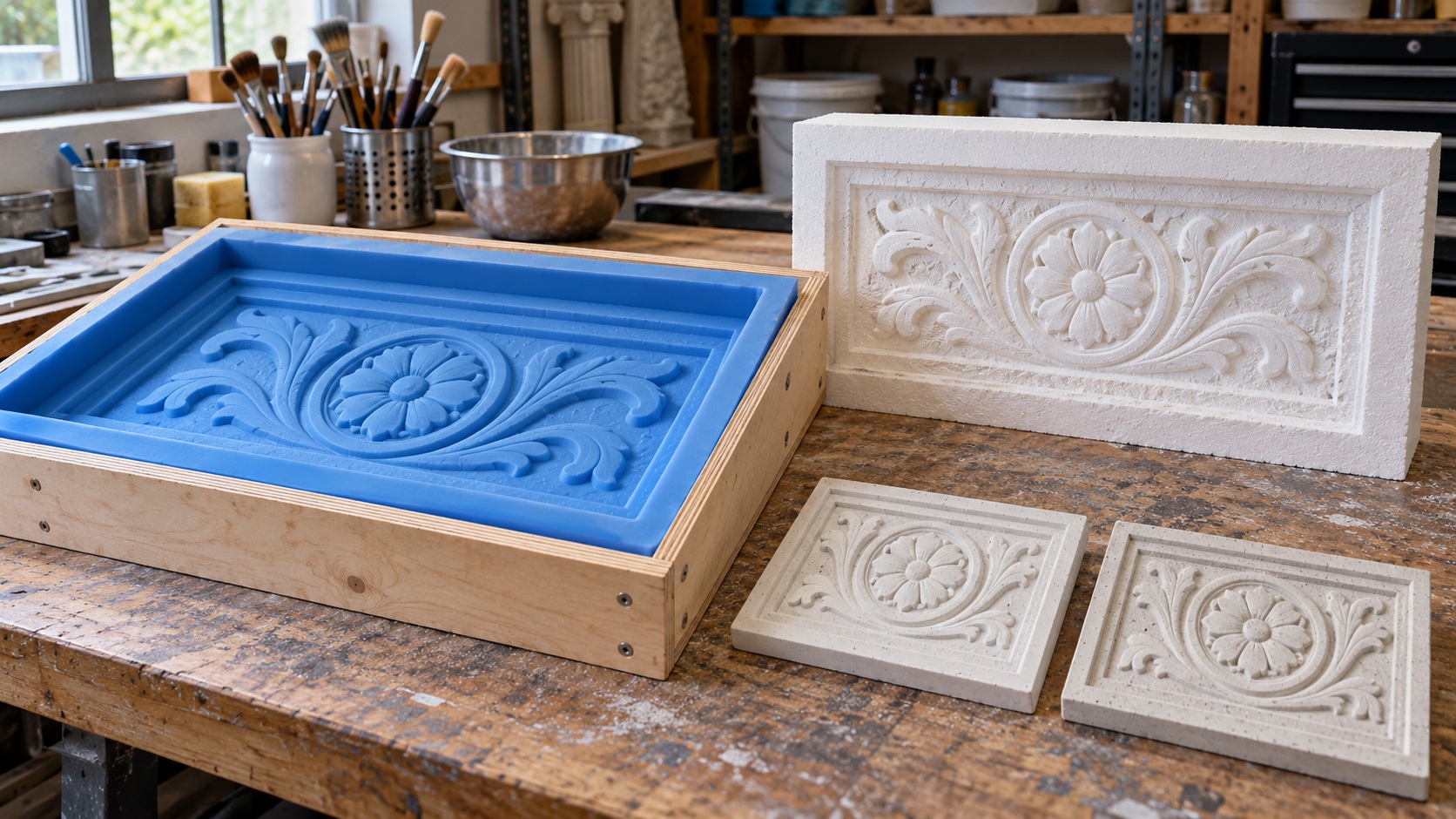
Reuse the Tooling Without Guessing About the Break
A scenic breakaway is a performance effect, not merely a weak version of an ordinary prop. Its appearance, handling, release behavior, fragments, and reset must suit a specific approved action. Environmental improvement cannot come from making an untested substitution in that system. The useful opportunity is to distinguish the parts that can remain in service from the parts intentionally consumed: a durable master, reusable molding tools, a removable scenic core, and a replaceable effect element may have different roles. This distinction can reduce unnecessary rebuilding while preserving control over the actual effect. It does not establish that any proposed fill is suitable for performer contact or accepted by a recycler. Begin with the responsible effects and performance specialists, then explore reuse and recovery inside the limits of the approved design. The goal is a repeatable theatrical result with traceable materials, not a supposedly green recipe that transfers uncertainty onto performers and crew.
A: No. Any change affecting the intended effect requires appropriate specialist review and acceptance.
A: Depending on the approved design, masters, molds, supports, and removable cores may serve beyond one effect.
A: No. Useful cycles, rejected output, cleaning, storage, and material consumption all affect the comparison.
A: Similar-looking variants can have different construction and behavior that the crew must not confuse.
A: Only if inspection and the accepted design support another cycle without inappropriate wear or buildup.
A: Acceptance of the actual composite and contamination conditions by a real receiving organization.
A: The plan must be rehearsed and compatible with inspection, clearing, and readiness duties.
A: Yes. A repair may alter the behavior and needs the relevant review rather than assumption.
A: Equivalent accepted effects or replacement elements meeting the same artistic and performance brief.
A: Their failure reasons prevent later crews from mistaking an unsuitable experiment for an approved reusable method.
Separate the Objects Hidden Inside the Word Prop
The master defines the original surface and geometry. A mold reproduces that information. A support or foam core may establish volume or carry a non-breaking region. A sacrificial element creates the visible event. These functions can be integrated in a particular design, but keeping them conceptually separate reveals what really needs replacement after each use. A damaged decorative skin does not automatically require a new master.
Draw a simple component map with intended reuse status. Mark permanent tooling, inspection-dependent reusable parts, consumable effect elements, and materials requiring special collection. Include adhesives, release agents, pigments, and finishes rather than counting only the most visible fill. Those small additions can affect mold life, contamination, and the practical recovery route.
Do not let the component map substitute for an effects design. The responsible specialist must determine which parts can remain intact during the approved action and what behavior is acceptable. A foam insert that seems convenient for reuse may change the action or the resulting debris. That is a performance and safety question before it is a waste question.
Start With the Approved Action
Define the intended effect, the people involved, their positions, the surrounding scenery, and the reset. A visual reveal performed away from people differs from an object involved in choreographed contact. The latter requires appropriate specialist planning and rehearsal. Do not improvise a fill, hidden reinforcement, or alternative skin based on an assumption that lightweight material cannot cause harm.
Ontario’s official stage combat and stunt guidance emphasizes preparation for the intended performance. Consult the rules and qualified personnel relevant to the actual production. A general article about reusable molds cannot establish suitability for a particular impact, fall, or interaction.
Set change control before testing alternatives. If a material, thickness, finish, core, or release method changes, the approved result may change too. Record the revision and arrange the required reassessment. A visually identical replacement should not enter performance under an old approval merely because its surface color matches.
Keep test objects separate from performance stock. Label them and restrict their use through the production’s established process. A promising laboratory or workshop sample is not automatically a rehearsed prop. This distinction becomes especially important when sustainability trials produce several similar-looking variants that differ in material or construction.
Invest Reuse in the Master and Mold
A well-kept master can preserve the design while consumable elements change through approved revisions. Build it from materials suited to the chosen molding process and protect its surface from avoidable damage. Record reference dimensions and photographs before molding. That allows a later repair to recover the original geometry rather than copying wear that accumulated during production.
Choose mold materials and construction through their documented compatibility with the intended casting system. Release agents, cure conditions, cleaning, and repeated demolding affect performance. Ask the supplier about the actual combination, not merely whether the mold material is generally reusable. A mold that requires destructive cleaning after every cycle may not deliver the expected reuse benefit.
Count Useful Cycles Instead of Assuming Them
Track each mold through production. Record the number of acceptable parts, rejected casts, maintenance interventions, and reasons for retirement. An impressive theoretical lifespan does not describe a mold damaged after a few local cycles. Useful output matters more than the number of times material was poured into it.
Keep inspection criteria practical. Look for loss of detail, distortion, tears, residue, and changes that affect the approved geometry. A worn mold can produce parts that appear similar from a distance while differing where the effect depends on a controlled interface. Have the responsible team determine when maintenance or replacement is required rather than continuing solely to maximize a reuse count.
Store molds on appropriate supports, clean and protected according to the product instructions. Unsupported flexible tooling can distort, while poorly documented storage makes a valuable mold effectively unavailable. Use an identifier that links the mold to its master, material system, and accepted part revision. Reuse depends on finding the right tool in serviceable condition when the next production needs it.
Include cleaning materials and rejected output in the environmental comparison. A reusable mold may still require consumables or generate contaminated wash waste. Record those quantities where feasible. This provides a more honest view of the process than dividing the original mold mass by an optimistic number of future uses.
Keep Foam Cores Out of the Wrong Job
A foam core may be useful as a reusable volume former or as part of a non-breaking region in a designed effect. Its role must be explicit. Do not add a core simply to reduce fill volume without reviewing how it changes the action, support, or debris. The interface between the core and the sacrificial element belongs in the accepted construction information.
If the design permits removal and reuse, provide appropriate access and identification. Record the compatible release or separation method established for the system. A core buried under an inseparable shell may be theoretically reusable but practically recovered only through destructive labor. Evaluate the actual reset and recovery effort rather than listing every surviving fragment as a reusable component.
Inspect reusable cores for wear, deformation, and accumulated coatings before the next cycle. Repeated buildup can change fit and geometry. Keep replacement decisions tied to the approved design, and do not conceal a damaged core beneath another fresh layer. A reuse program needs permission to retire unsuitable parts.
Use Recyclable as a Receiving-Site Question
A fill is not practically recyclable merely because one constituent has a recycling symbol or a familiar material name. Ask a real receiving organization about the exact cured mixture, coatings, pigments, release residues, and contamination expected after the effect. Obtain its preparation and collection requirements before designing a recovery claim around the material.
Distinguish recycling from reuse, downcycling, composting, and ordinary disposal. These routes have different conditions and outputs. A collected fragment used as a reference sample has been retained, but it has not necessarily entered a recycling process. Precise language makes the production record useful and avoids turning uncertain waste into a marketing claim.
The FTC’s environmental claims guidance explains why broad claims need evidence and appropriate qualification. For a production, the useful statement may be that a named receiver accepted a documented quantity of a particular clean material. That is more specific than announcing that the whole breakaway system is recyclable.
Plan containment and sorting for the actual location. Fragments mixed with floor dust, tape, food waste, or unrelated scenery may no longer meet the recipient’s conditions. Assign collection responsibilities and suitable containers. The recovery plan should not delay or interfere with the production’s required inspection and reset.
Compare Systems by Accepted Effect Output
Use a functional comparison: a defined number of approved effects or usable replacement elements meeting the same artistic and performance brief. Count masters, mold material, fill, cores, finish, release agents, rejected parts, cleaning, packing, and transport. Comparing only the fill mass can hide substantial changes elsewhere in the system.
Record uncertainty rather than supplying invented environmental totals. You may know how many cores were reused and how much fill was discarded without knowing a complete carbon footprint. Those records can still identify improvements. Keep the conclusion limited to what was observed, and avoid describing lower mass as automatically lower toxicity or impact.
Make Reset Part of the Design Review
The reset includes inspection, clearing the operating area, collecting material, preparing the next approved element, and confirming readiness. Reusable tooling helps offstage production, but it does not automatically make this sequence faster. Rehearse the complete operation with the responsible team and evaluate whether collection and sorting are practical under the actual schedule.
Keep performance approval and environmental tracking distinct but connected. The effects lead decides whether the next object is ready for its intended action; the materials record documents what was consumed or recovered. Neither responsibility should be left implicit. A rushed reset is not the moment to debate whether an unfamiliar part was a prototype or the accepted version.
Provide a clear response to damage or unexpected behavior. Stop using affected parts through the production’s established process and seek the appropriate review. Do not patch an effect element with an arbitrary stronger adhesive or a convenient scrap because the next cue is close. A repair can change the very behavior the design was intended to control.
Preserve Knowledge Alongside Tooling
Store the accepted construction record with the mold identifier. Include the master revision, approved materials, intended use, inspection information, and the personnel responsible for the effect. If recipes or operating instructions are controlled by specialists, maintain that control instead of placing incomplete notes on an anonymous shelf. Reuse should preserve competence as well as objects.
Review the system after the run. Identify which molds remained useful, which cores returned intact, what the actual receiver accepted, and where waste arose unexpectedly. Keep failed trials clearly separated from approved stock. The next production benefits from knowing why a material was rejected just as much as from inheriting a well-maintained mold. Decide whether the tooling has a realistic next use. Retaining every oversized mold indefinitely can consume storage and transport resources without preventing a future purchase. Link retained tools to a searchable library and an identified review date. A working reuse system includes deliberate retirement rather than equating permanent accumulation with circularity.
Buy Only After the Route Is Understood
Request samples and documentation before ordering a production quantity of an unfamiliar fill. A material sold in a recyclable container may itself require an entirely different route after curing. Keep packaging claims separate from claims about the effect element inside it.
Ask what the receiver needs the shop to do before collection. Sorting, storage, contamination limits, and minimum quantities can determine whether a proposed route is workable. Include that effort in the comparison instead of treating collection as an automatic final step.
When no supported route exists, say so. The project may still improve by retaining the mold, using fewer rejected casts, or preserving a core for an approved next use. Those concrete outcomes remain valuable without disguising the remaining consumable fraction as circular.
Keep the Effect Controlled and the Claims Specific
Reusable masters, molds, and suitable cores can reduce repeated fabrication when they remain compatible with the approved effect. Validate changes through the responsible specialists, document actual useful cycles, and claim recovery only where a real receiving route supports it.