Organize a Swap Around Useful Material and Clear Decisions
A scrap swap can connect a prop maker’s surplus with another person’s next project, but it needs more structure than a room full of free piles. Participants need to know what may be brought, how items are checked, when selection begins, and who takes responsibility for leftovers. Organizers need enough space, volunteers, and confirmed receiving arrangements to finish the event properly. The purpose is useful transfer, not a temporary disappearance of clutter from individual workshops. Start small, define the accepted material categories, and design the event so people can assess items without competing at an uncontrolled unloading point. A thoughtful swap can also build relationships: someone who understands another maker’s material needs may make a better match next month without waiting for another event.
A: That is an organizer choice, but mandatory equal contributions can exclude recipients and encourage unsuitable offers.
A: Not without a specialized appropriate process; a general swap should have clear exclusions.
A: Hold it for the coordinator or refuse it rather than experimenting with the material.
A: Photographs, dimensions, condition information, and arranged pickup may work better than speculative delivery.
A: Clear observable rules, reasonable initial access, and consistent handling of reservations.
A: Only within the published holding and collection limits.
A: No. The recipient must assess the material and assembly for that new purpose.
A: No. Obtain appropriate advice and maintain competent venue and operating arrangements.
A: To prearranged accepting recipients or appropriate waste routes, not an unconsenting host or charity.
A: Document actual completed useful transfers and the remaining material honestly.
Choose a Simple Exchange Model
Decide whether the event is free selection, a limited-item exchange, a reservation board for large pieces, or another clearly explained model. Avoid inventing a complex token economy before learning what participants need. A first event can work with a modest accepted-material list and a fair initial selection period. Explain whether people must donate to participate. Requiring equal contributions may exclude useful recipients or encourage unsuitable donations brought only to qualify for entry.
Define what counts as a transfer. Taking an item home is clearer than placing it in a temporary holding pile that nobody collects. If reservations are allowed, set an expiry and a pickup process. Large scenery may be better offered through photographs and dimensions rather than transported into the hall speculatively. Keep the rules short enough for volunteers to apply consistently. Exceptions should be decided by a named coordinator, not by whichever person happens to be nearest the table.
Publish an Acceptance List With Real Boundaries
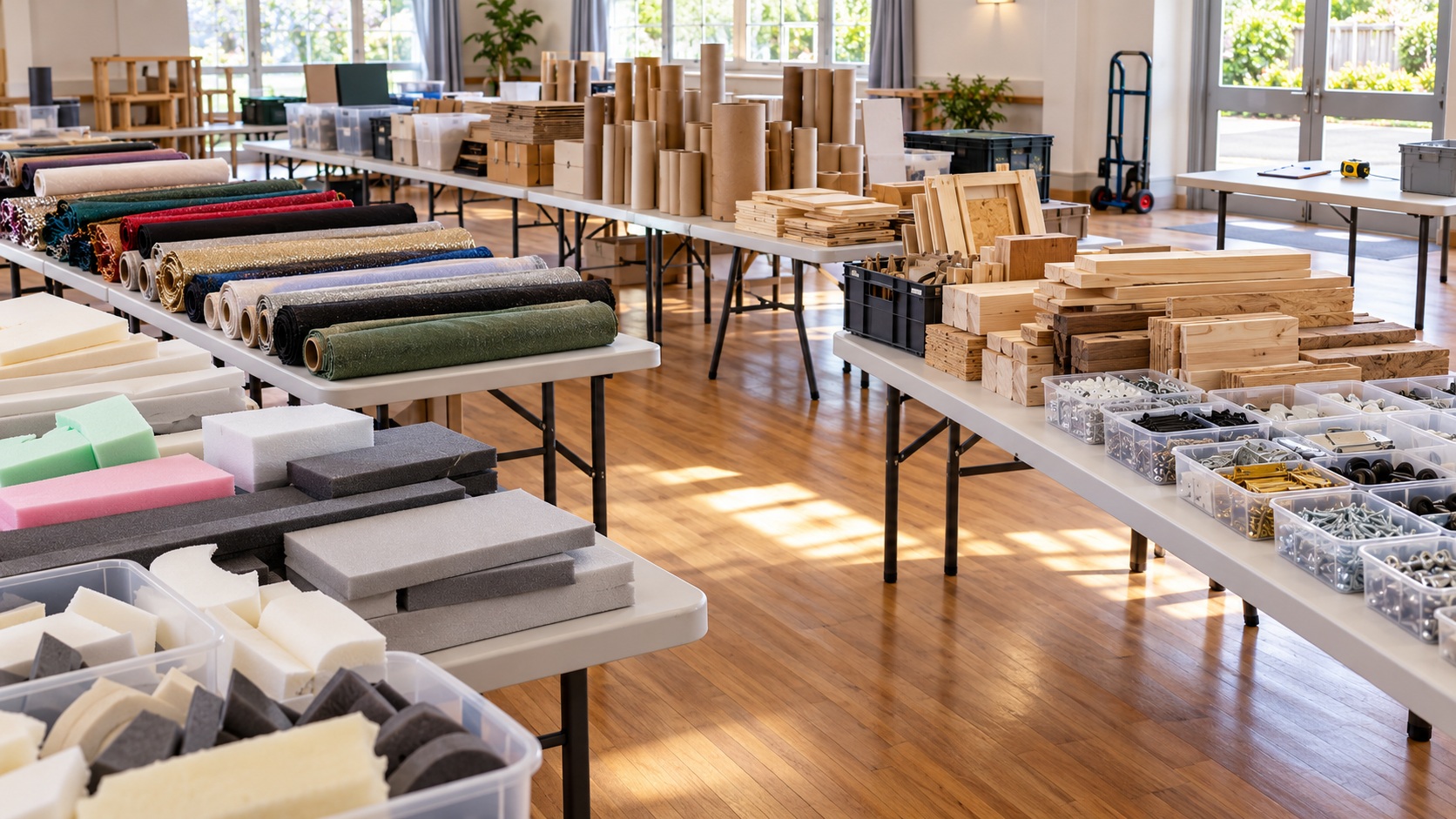
Choose materials the team can reasonably identify and manage. Clean known foam offcuts, usable fabric lengths, cardboard tubes, sound small timber pieces, and sorted hardware may be practical categories. Set minimum useful dimensions where appropriate so the event does not become a collection of dust and unusable slivers. Ask donors to group and identify their materials before arrival. A tidy bundle with known dimensions is easier for another maker to assess than an anonymous mixed bag.
Exclude unknown chemicals, contaminated materials, suspect old coatings, damaged electrical equipment, and items beyond the event’s competence. Do not offer the swap as a hazardous-waste service or a place to sanitize uncertain demolition salvage. Volunteers should not open, sniff, burn, or scrape materials to identify them. If the event wants to accept a more specialized category later, develop an appropriate process and expertise first. A small clear scope is better than an ambitious list the intake team cannot evaluate.
Ask for known product information on foam and coatings, but do not treat a donor’s guess as certification. Separate clean uncoated stock from finished scenic composites and describe the difference to recipients. A painted object may still be useful as an intact prop, yet unsuitable for a carving or recycling route someone had in mind. The material record should preserve what is known and what is uncertain. Avoid turning a volunteer’s acceptance decision into a broad claim that the item is safe for any use.
Require donors to retain responsibility for refused items and any specifically agreed return of unclaimed oversize pieces. Communicate this before collection, not after a van has been unloaded. If organizers accept custody of leftovers, they need a planned destination and budget. Do not promise that a charity or school will take everything. Confirm with actual recipients and respect their capacity and acceptance criteria. Otherwise, a community reuse event can simply move a disposal burden onto its host.
Match the Venue to Material Handling
Visit the venue with its manager and map intake, display tables, selection routes, holding areas, pickup, and the exit. Keep required routes and equipment accessible, and agree on capacity and emergency arrangements. The HSE site-design guidance provides useful planning principles, including coordination of shared responsibilities. Apply the relevant local requirements and venue rules rather than importing a fixed aisle width from an unrelated event. The actual layout and audience determine what needs review.
Check the loading route, door sizes, floor protection, and available handling equipment. A hall suitable for a meeting may be awkward for long boards or bulky scenic pieces. Separate vehicle movements and pedestrian selection through the event’s approved arrangement. Do not let a queue gather in the unloading area while volunteers carry awkward objects through it. If the venue cannot support large items, limit physical donations and use a photo-based matching process for those offers.
Make access useful to different participants. Provide reachable browsing arrangements where practical, a clear route, and a way to request help assessing or collecting an item. Avoid placing every desirable small component inside a deep floor box. Ask the venue about accessibility needs and communicate meaningful information in advance. A friendly invitation is not a substitute for an arrangement people can actually use. If a limitation cannot be resolved, explain it honestly rather than letting participants discover it on arrival.
Recruit Roles, Not Just Extra Hands
Assign an intake lead, table stewards, a coordinator for disputed or uncertain items, and a closing team appropriate to the event’s size. Volunteers need the acceptance list, refusal procedure, layout, incident contacts, and the limits of what they may assess. Do not ask them to repair equipment, identify unknown chemicals, or supervise fabrication simply because they are experienced makers. Keep the event focused on exchange. Any demonstration or tool activity would need its own planning rather than being added casually beside crowded material tables.
Make Intake Informative and Calm
Schedule or separate donor drop-off from the main selection period where the venue and event model allow it. This gives the team time to check that offers fit the published scope, group them, and keep the entrance clear. Record concise information: material as documented, usable dimensions, condition, known treatments, and donor contact only where needed and with an appropriate privacy practice. The record should help a recipient decide, not collect unnecessary personal information.
Place uncertain items on hold for the coordinator rather than letting them drift onto a table because intake is busy. A clear hold process protects volunteers from pressure to make decisions outside their knowledge. If an item is refused, explain the published reason calmly and direct the donor to an appropriate information source where available. Do not suggest an unverified disposal route merely to end the conversation. Consistent boundaries make the next event easier for donors to prepare for.
Group materials by useful properties, not just appearance. Foam needs known type and condition where available; fabric benefits from dimensions and backing information; hardware benefits from separated containers; finished props need photographs of assembled form and known limitations. Keep sharp edges and loose fasteners managed appropriately. Avoid creating towering mixed piles that people must pull apart to find one item. The browsing environment should encourage thoughtful selection rather than a scramble for whatever is visible on top.
Give Everyone a Fair Chance to Find a Match
Explain the first selection round before it begins. A temporary per-person limit can help prevent one participant from clearing a popular category immediately, followed by a later open round if material remains. Choose a rule that volunteers can observe and apply without arguing about imagined future projects. The goal is not perfect mathematical equality. It is a predictable process that gives different makers a reasonable opportunity to assess and collect useful material.
Encourage people to measure and consider transport before claiming a large item. Provide measuring tools at the table or a clear way to ask for dimensions. If an object requires disassembly, disclose whether that is permitted and who performs it. Do not turn the event floor into an improvised cutting shop. A piece that will not fit a participant’s vehicle may be better left available for someone with suitable transport than reserved indefinitely on a hopeful plan.
Use a holding area only with a simple time limit and a visible ownership or reservation system appropriate to the event. Keep it separate from the incoming donation area so a claimed piece is not accidentally re-offered. Set a final collection time well before venue handover. The coordinator should know how uncollected items return to the available stock or move into the agreed leftover plan. A pile labeled claimed without any follow-through can cause confusion at closing.
Allow conversation without making personal disclosure a condition of receiving material. Makers may enjoy explaining projects, but not everyone wants to compete through a persuasive story. Offer a voluntary way to share future results or exchange contact details. Those connections can be one of the event’s strongest outcomes, yet they should not replace clear allocation rules. A welcoming atmosphere comes from practical respect as much as from enthusiasm about creative reuse.
Prepare Recipients for the Next Decision
Transfer the known material information with the item. A simple record can state dimensions, product identity if documented, prior use, coatings, repairs, and unresolved limitations. Make clear that the recipient must assess suitability for the new project, including any venue, structural, fire, or contact requirements. An accepted swap item does not carry a universal approval. This is particularly important when a stage decoration is being considered for a classroom or a publicly handled display.
Use appropriate event terms and obtain qualified advice on legal, insurance, privacy, or tax matters relevant to the organizer. Do not assume a homemade waiver removes responsibilities or that a free transfer has no obligations. The operational aim is clarity: people should understand what information is provided, what the event does not evaluate, and who to contact about the agreed pickup. Avoid presenting informal paperwork as a substitute for competent planning and venue coordination.
Close With a Confirmed Destination for Everything
Begin the closing process early enough to sort unclaimed items, complete collections, and return the venue in the agreed condition. Use the prearranged recipient and disposal routes, confirming that the actual material still matches their terms. Do not leave leftovers outside the host’s door or deliver them to a charity without acceptance. An event that ends with the venue managing an unexpected waste pile has not completed its reuse plan, even if many participants left happily.
Record simple outcomes the team can substantiate: items transferred, approximate material categories, confirmed later pickups, leftovers retained under an agreed plan, and residual waste. Do not claim exact mass from photographs or count pending offers as completed reuse. EPA’s special-event waste guidance supports planning material destinations, but each organizer still needs real local arrangements. Honest modest records are more useful than a dramatic diversion number reconstructed after the room is empty.
Debrief with volunteers and the host. Ask which categories were useful, what was repeatedly refused, where intake slowed, and whether the selection rules felt workable. Invite optional participant feedback and project photographs without pressuring people to report. Use the results to narrow or improve the next event. A recurring swap should develop better matching and clearer expectations over time, not simply grow until the organizer can no longer manage its material volume.
Make Reuse Easy to Complete
A good scrap swap turns identified surplus into a useful next step. Clear acceptance, fair selection, practical collection, and a finished closing plan let community enthusiasm produce real transfers instead of another unresolved pile.