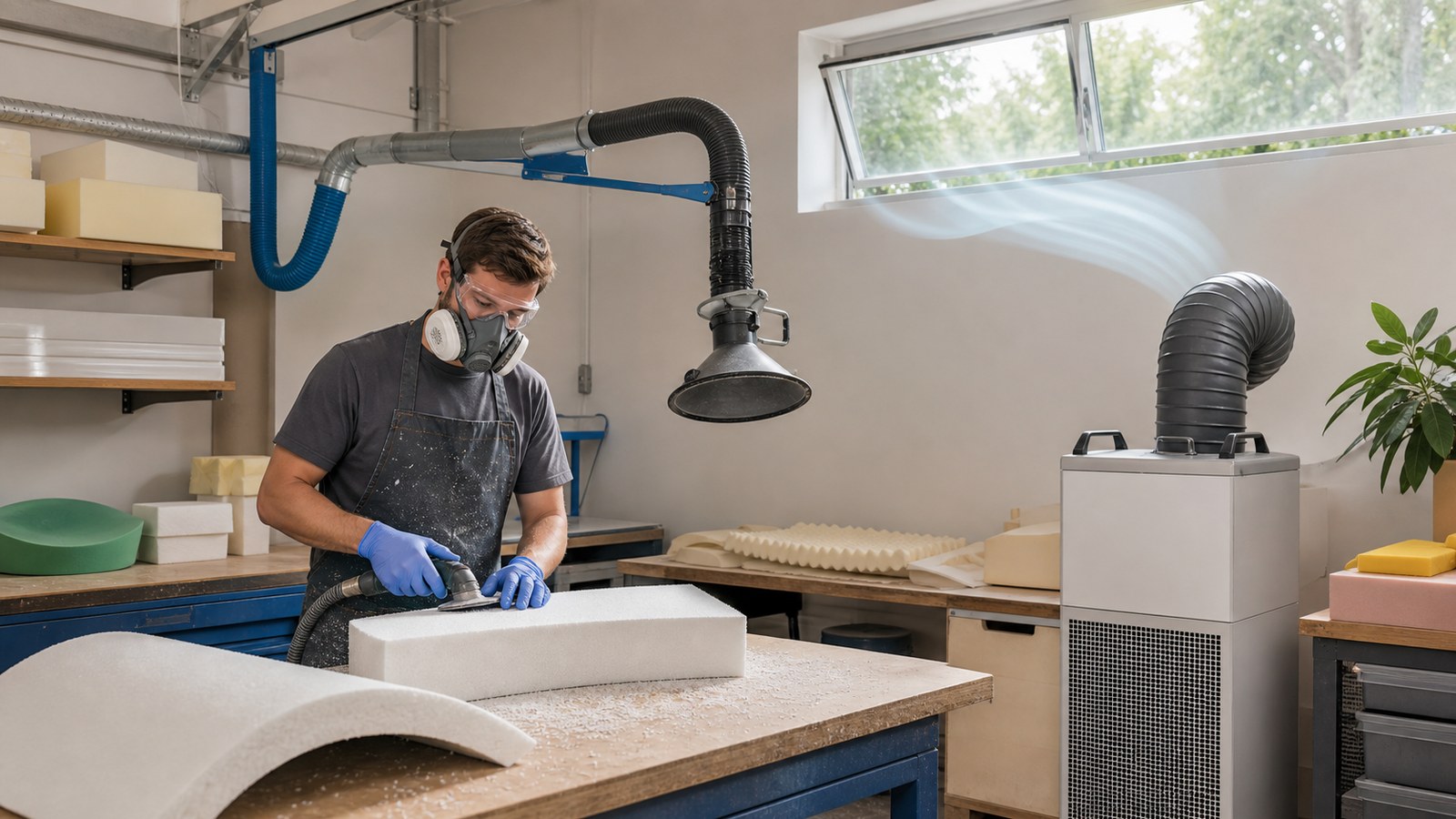
Hot-wire cutting has become an essential technique across industries ranging from insulation fabrication and packaging to prototyping, model making, and artistic sculpture. Its ability to produce clean, precise cuts with minimal mechanical force makes it uniquely suited for shaping foam materials such as EPS, XPS, and EPP. However, despite its advantages, hot-wire cutting introduces safety and efficiency challenges that are often underestimated. Heat-generated fumes, improper airflow, and excessive energy use can transform an otherwise elegant process into a health risk and operational liability. Understanding safer hot-wire practices is not merely about compliance or caution—it is about mastering the full lifecycle of the cut. This includes controlling emissions at the source, filtering airborne particles effectively, and optimizing energy usage so that cleaner cuts also become smarter cuts. When approached correctly, safety, performance, and sustainability reinforce each other rather than compete.
A: Some can irritate lungs and eyes; proper ventilation and filtration greatly reduce risk.
A: No—excess heat increases fumes, burns foam, and wastes energy.
A: In well-ventilated setups it may not be necessary, but it adds protection in enclosed spaces.
A: Filters reduce exposure but work best combined with airflow and proper temperature control.
A: Use the lowest effective heat, steady motion, and turn power off between cuts.
A: Overheating, residue buildup, and sudden power changes are common causes.
A: Fresh air helps, but wind direction and proximity still matter.
A: Yes, with controlled heat, good ventilation, and simple safety habits.
A: Absolutely—clean air usually means cleaner edges.
A: When odors increase or airflow drops—follow manufacturer guidelines.
Understanding the Science Behind Hot-Wire Cutting
At its core, hot-wire cutting relies on electrical resistance. When current passes through a thin wire—typically nichrome—it heats rapidly, reaching temperatures sufficient to melt or vaporize foam along the cutting path. This process does not slice material mechanically; instead, it displaces it thermally, allowing the wire to glide with minimal resistance.
The challenge arises from what happens to the foam during this thermal interaction. As foam polymers degrade under heat, they release gases and particulates that vary depending on material type, temperature, and cutting speed. Lower temperatures may cause smoldering and incomplete melting, while excessively high temperatures can trigger rapid chemical breakdown and higher emission rates.
Safer hot-wire practices begin with understanding that fumes are not an unavoidable byproduct—they are a controllable outcome shaped by technique, temperature, and environment.
Why Fume Minimization Matters More Than Ever
Foam fumes are often invisible, which leads many operators to underestimate their impact. While some materials emit relatively mild odors, others can release compounds that irritate the eyes, lungs, and nervous system when inhaled over time. Even short-term exposure in poorly ventilated spaces can lead to headaches, dizziness, or respiratory discomfort.
Beyond personal health, fume accumulation affects workspace cleanliness, tool longevity, and cut quality. Residue buildup on wires reduces cutting consistency, increases resistance, and demands higher power input, which in turn generates more heat and more fumes. This feedback loop creates a situation where unsafe conditions degrade both safety and precision.
Minimizing fumes is therefore not a separate safety step—it is a foundational practice that improves performance, comfort, and efficiency simultaneously.
Temperature Control as the First Line of Defense
One of the most effective ways to reduce fumes is precise temperature control. Many operators rely on instinct or trial-and-error, turning up the power until the wire cuts smoothly. While this may work initially, it often leads to overheating, excessive vaporization, and unnecessary energy consumption.
An optimized cutting temperature allows the wire to melt the foam cleanly without burning it. When properly calibrated, the wire passes through material with minimal drag, producing a smooth edge and dramatically reducing smoke and odor. The goal is not maximum heat but optimal heat—just enough to separate material without aggressive degradation.
Advanced power controllers, variable voltage systems, and digital readouts make temperature control more accessible than ever. Even simple adjustments, such as slowing feed speed instead of increasing wire temperature, can significantly reduce emissions while maintaining cut quality.
Material Awareness and Its Role in Safety
Not all foams behave the same under heat. Expanded polystyrene, extruded polystyrene, and polypropylene-based foams each have unique melting points and emission profiles. Treating them as interchangeable materials is a common mistake that increases both fume output and energy waste.
Safer hot-wire practices require material-specific approaches. Understanding how a particular foam responds to heat allows operators to select the right temperature range, cutting speed, and ventilation strategy. In many cases, manufacturers provide guidance on recommended cutting temperatures and safety considerations, which should be treated as essential information rather than optional reading.
By matching technique to material, operators reduce trial runs, shorten cutting time, and limit unnecessary exposure.
The Critical Role of Airflow and Ventilation
Even with optimized temperature settings, some level of fume generation is inevitable. This is where airflow becomes a decisive factor in safety. Proper ventilation does not simply disperse fumes—it directs them away from the breathing zone and toward filtration or exhaust systems designed to manage them safely.
Localized ventilation is particularly effective for hot-wire cutting. Rather than relying on general room airflow, targeted extraction near the cutting area captures fumes at the source. This prevents them from spreading throughout the workspace and settling on surfaces.
Airflow must be balanced carefully. Too much suction can cool the wire excessively, leading operators to compensate by increasing temperature. Too little airflow allows fumes to linger. The safest setups achieve steady, directional airflow that removes emissions without disrupting the cutting process.
Filters That Actually Make a Difference
Filtration is often misunderstood or improperly implemented in hot-wire environments. Not all filters are suitable for capturing foam-related fumes, and using the wrong type can provide a false sense of security.
Effective fume filtration typically involves multiple stages. Particulate filters capture solid residues, while activated carbon filters absorb gaseous compounds responsible for odors and irritation. When combined correctly, these systems significantly reduce airborne contaminants and improve overall air quality.
Maintenance is just as important as installation. Saturated filters lose effectiveness and can even re-release trapped substances. Establishing a routine inspection and replacement schedule ensures that filtration systems continue to protect rather than merely exist.
For smaller workshops and home-based operations, compact filtration units designed specifically for soldering or laser cutting often adapt well to hot-wire applications when properly configured.
Personal Protective Practices Without Overcomplication
While engineering controls like ventilation and filtration should always be the primary defense, personal practices still matter. Working habits influence exposure levels just as much as equipment choices.
Maintaining distance between the operator’s face and the cutting area reduces inhalation risk. Positioning the body upwind of airflow, avoiding leaning directly over the wire, and taking regular breaks all contribute to safer working conditions. In environments where additional protection is warranted, respirators designed for organic vapors can offer an extra layer of safety. However, they should never be used as a substitute for proper ventilation. Personal protective equipment works best when it complements, rather than replaces, environmental controls.
Energy Efficiency Starts With Cutting Technique
Energy efficiency in hot-wire cutting is often overlooked, yet it plays a direct role in safety and sustainability. Excessive power use not only increases operating costs but also amplifies heat-related risks and fume production.
Efficient cuts begin with smooth, consistent motion. Jerky movements or frequent stops cause localized overheating, which degrades both the foam and the wire. By maintaining steady feed rates and planning cuts in advance, operators minimize wasted energy and reduce thermal stress on equipment.
Wire tension also affects energy efficiency. A properly tensioned wire maintains uniform resistance, allowing it to heat evenly and cut predictably. Sagging or uneven wires require higher power input and produce inconsistent results.
Smarter Power Management for Long-Term Gains
Modern hot-wire systems increasingly incorporate energy-conscious features such as programmable controllers and automatic shutoff mechanisms. These tools not only improve precision but also prevent unnecessary power consumption when the system is idle.
Using power only when actively cutting extends wire lifespan and stabilizes temperature, reducing the need for frequent recalibration. Over time, these practices lower electricity usage while delivering more consistent results. Energy-efficient cutting is not about cutting corners—it is about refining control. When less energy produces better cuts, safety improves as a natural consequence.
Workspace Design as a Safety Multiplier
The layout of a cutting workspace has a profound impact on both safety and efficiency. Crowded areas restrict airflow, increase accidental contact risks, and make it harder to maintain clean working habits.
Designating a dedicated hot-wire station with clear boundaries allows ventilation systems to function effectively and keeps unrelated materials away from heat sources. Non-flammable surfaces, adequate lighting, and accessible controls all contribute to safer operation.
A well-organized workspace also reduces cognitive load. When tools, controls, and materials are positioned intuitively, operators can focus on technique rather than navigation, lowering the likelihood of mistakes that lead to overheating or exposure.
Training and Awareness as Ongoing Processes
Safer hot-wire practices are not static rules but evolving skills. Materials change, equipment improves, and new research continues to refine best practices. Treating safety as an ongoing learning process rather than a one-time setup ensures long-term success.
Training should emphasize cause-and-effect relationships rather than rigid instructions. Understanding why certain temperatures produce fewer fumes or how airflow interacts with wire heat empowers operators to adapt safely when conditions change. Even experienced users benefit from periodic reassessment of their methods. Small adjustments often yield significant improvements in both safety and efficiency.
Environmental Responsibility Beyond the Workspace
Energy-efficient hot-wire cutting also has environmental implications. Reduced power consumption lowers carbon footprints, while effective fume control limits the release of airborne pollutants. In large-scale operations, these benefits scale rapidly, making safer practices an ethical consideration as well as a practical one.
Waste reduction further enhances sustainability. Cleaner cuts produce fewer unusable scraps, and properly maintained wires last longer, reducing material turnover. When safety aligns with environmental responsibility, the entire process becomes more future-proof.
The Long-Term Benefits of Safer Hot-Wire Practices
Adopting safer hot-wire practices delivers cumulative advantages that extend far beyond immediate health protection. Operators experience improved comfort, clearer air, and greater confidence in their setups. Equipment performs more reliably, with fewer breakdowns and lower maintenance costs.
From a business perspective, safer operations reduce downtime, liability, and energy expenses while improving product quality. From a personal perspective, they protect long-term health and foster a more enjoyable working environment. Ultimately, safety is not a constraint—it is a performance enhancer.
Moving Toward a Cleaner, Smarter Cutting Future
Hot-wire cutting will continue to play a vital role in fabrication, design, and creative work. As its use expands, so does the responsibility to apply it thoughtfully. Fume minimization, effective filtration, and energy-efficient cutting are not separate goals but interconnected pillars of best practice. By controlling temperature precisely, understanding material behavior, optimizing airflow, and designing workspaces intentionally, operators can transform hot-wire cutting into a cleaner, safer, and more efficient process. The result is not only better cuts, but better conditions—where precision, sustainability, and safety coexist seamlessly. In mastering these practices, operators do more than protect themselves. They set a standard for responsible craftsmanship, proving that high-quality results and high safety standards are not only compatible, but inseparable.