Change the Coating System, Not Just the Cleanup Liquid
Replacing a solvent-borne finish with a water-reducible one can change odor, cleanup, application, drying, and the way a sculpted surface looks. It does not automatically establish foam compatibility or eliminate exposure concerns. The useful choice is a complete system: the identified core, any hardcoat or primer, decorative paint, and final clear layer. Each interface has to work, and each product has its own instructions. A clear finish that adheres beautifully to paint may still be unsuitable directly on exposed foam. Likewise, a coating designed to protect a cellular core is not necessarily a fine-art ground or a weatherproof varnish. Begin by assigning a job to each layer before deciding which water-based product deserves a trial.
A: No. Review the actual product, method, controls, and waste requirements.
A: No. Confirm the substrate and test the complete proposed system.
A: Its protective scenic-coating role and instructions differ from an ordinary thin ground.
A: No. Familiarity does not establish compatibility with every grade or assembly.
A: No. Follow each manufacturer's stated instructions.
A: Sheen and optical effects can alter color, texture, and visible surface irregularity.
A: Its meaning depends on the method and failure location; torn foam is not automatically coating-interface failure.
A: No. Follow the product's conditions and restrictions.
A: No. Service conditions and the complete system need appropriate evidence.
A: A retained sample, identified stock, exact product sequence, documented application, and stated limits.
Give Every Layer a Defined Job
A primer prepares a surface for what comes next. A high-build coating may fill cells or add a protective shell. A decorative paint supplies color and visual effects. A clear topcoat changes sheen or provides a particular kind of surface protection.
Some products can serve more than one purpose, but their names should not be treated as interchangeable. Write the desired result before choosing a container: preserved carving texture, smoother paint handling, improved abrasion resistance, or a controlled final sheen.
For example, an indoor foam relief may need enough preparation to accept a painted stone effect without filling its fine tool marks. A frequently moved scenic block may need a more protective surface construction. The same finish choice can be excellent for one and unnecessarily heavy or visually blunt for the other. A product swap should preserve the artistic objective, not simply replace one chemical category with another on the purchase list.
Separate the surface job from structural expectations. A harder finish does not automatically make a slender projection capable of carrying a load. A clear coat does not repair weak bonding between blocks. If the proposed coating is being asked to solve an assembly problem, reconsider the construction first. This keeps a finishing decision from accumulating responsibilities it was never designed or tested to perform.
Identify What the Liquid Will Touch
Record the foam type, grade if known, facings, previous finishes, adhesive seams, and repairs. New bare stock and a reused painted scenic object present different surfaces. On the latter, adhesion may depend on an old coating whose identity is uncertain. Do not claim a successful bond to foam when the new product actually adhered only to a previous paint film. The whole stack matters when the sculpture is handled.
Keep an expendable sample of each relevant substrate. Where the sculpture combines materials, include a junction in the trial. A finish can respond differently at a hard filler, adhesive bead, or exposed cellular edge. If the original material is significant artwork, do not use the object itself as the first compatibility experiment. Consult an appropriate conservator before changing original surfaces.
What Water-Reducible Does and Does Not Mean
Water may be the principal thinning or cleanup medium without being the only ingredient of concern. Read the technical sheet and safety information rather than assigning a product a universal harmless label. New Zealand’s building guidance on painting and decorating notes that water-based coatings can still contain volatile organic compounds. This is a reason to evaluate the actual formulation and method, not to dismiss the benefits of reducing unnecessary solvent use.
Low odor, low VOC content, and low emissions are related but not identical claims. Do not use your nose to decide ventilation or personal protection. The San Francisco Environment Department’s painting guidance cautions that no- and low-VOC products can still contain ingredients requiring care. Follow the product information and the assessment for the operation, particularly if spraying or sanding is involved.
Water-based cleanup can simplify some studio practices, but wash water still contains coating residue. Plan its collection and disposal through product and local guidance rather than assuming that anything mixed with water belongs in a drain. Purchase realistic quantities and keep leftover products identified. A substitution is more useful when its storage and waste arrangements improve alongside application.
Do not mix products or add extra water solely because both labels mention acrylic. Manufacturers specify different dilution limits and purposes. Excess thinning can change coverage, film formation, or the resulting properties. A product intended to be used substantially undiluted should not inherit a glaze’s dilution instructions, and a glaze requiring dilution should not be applied thickly because another coating tolerates that method.
Useful Product Families Have Different Roles
Rosco FoamCoat is a water-based scenic coating intended for foam and other specified surfaces. It is a useful example of a product selected for a protective coating role rather than merely for color. Consult its current instructions for preparation, application, thickness, drying, and restrictions. Do not assume that making a thinner mixture preserves every property of the undiluted application.
GOLDEN Gesso is described by its manufacturer as an acrylic dispersion ground providing tooth for paint. That description explains a ground’s role; it does not by itself approve every foam grade or an exterior sculpture system. If considering it in a foam assembly, confirm the intended substrate and test the proposed layers. An artist’s familiar painting product still needs evaluation when the support changes.
Rosco CrystalGel illustrates another category: a water-based scenic material that forms a flexible translucent surface and can be used in different surface techniques. Its gel consistency and thinning guidance differ from a conventional thin primer. The product’s particular properties may serve an effect, but it should not be treated as an interchangeable replacement for every clear finish.
A Clear Glaze Is Not Every Kind of Clearcoat
Rosco Clear Acrylic Glazes provide a concrete example of instructions that matter. The manufacturer requires dilution and thin applications, warns about clouding, and distinguishes these glazes from harder protective finishes for more demanding scenic abuse. Read the current directions rather than applying the product as though it were a thick hardcoat. A shared word such as clear does not establish the same function.
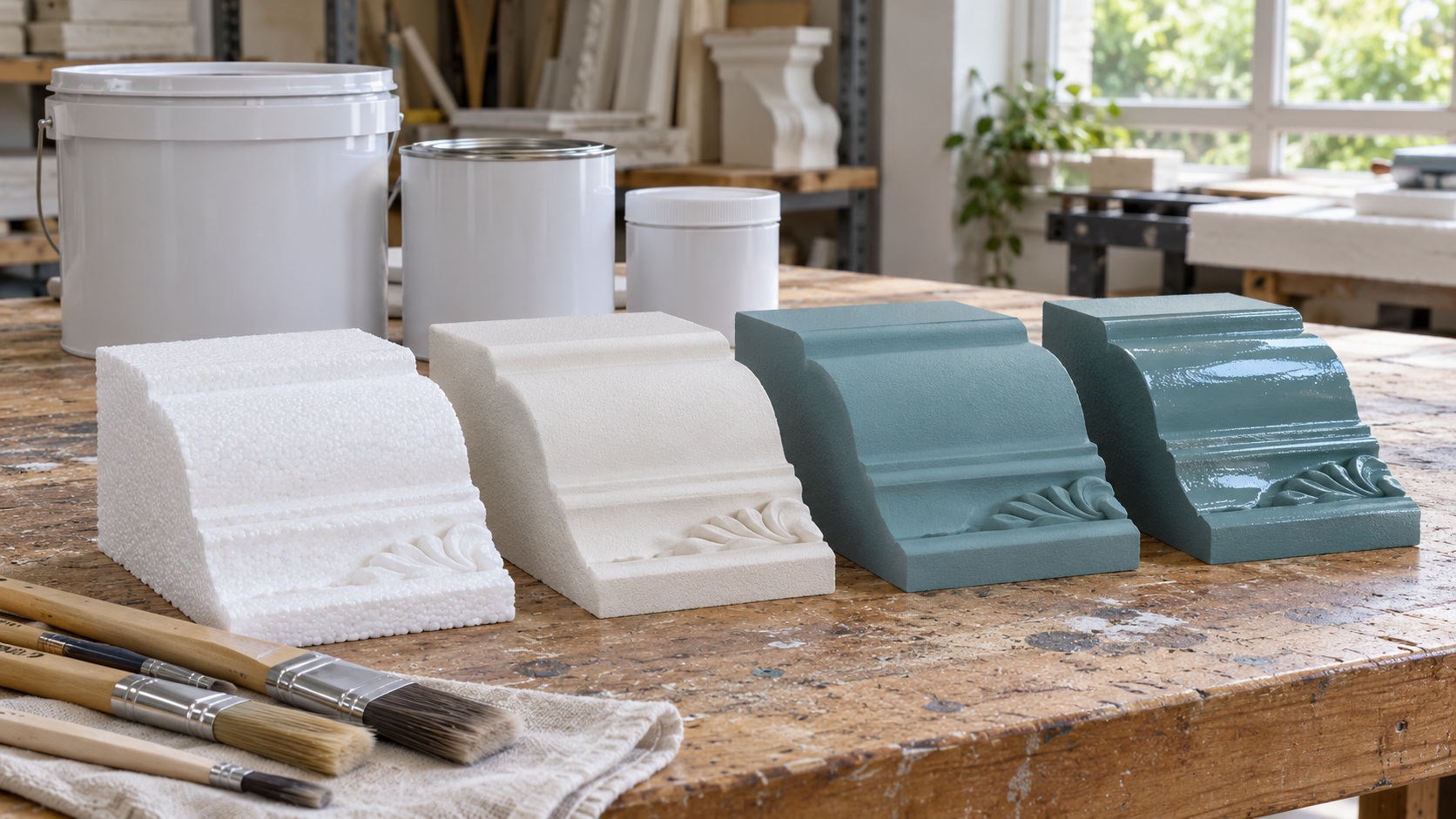
Choose sheen through a complete painted sample. A gloss layer can deepen apparent color and reveal surface waviness; a matte result can change the reading differently. Evaluate under the planned lighting and viewing distance. Clear protection is not visually neutral simply because it has no intended color. Ask the artist or designer to approve the finished stack, not only the paint beneath it.
Build a Trial That Can Reveal Interface Failure
Use the actual foam and include a carved edge, shallow recess, seam, and any representative repair. Prepare it through the proposed approved method. Make enough area to compare an uncoated reference with the complete system. A tiny drop test may reveal immediate attack but cannot tell the whole story about adhesion, appearance, handling, or an added clear layer. Keep a note of what the trial was designed to establish. A color-approval sample does not automatically answer a touring abrasion question, and an adhesion specimen may say little about a deep recess retaining detail. Define the question before judging the result.
Apply according to the instructions and keep the sequence recorded. Note the products, dilution where permitted, application tool, conditions, and waiting periods. Do not introduce a different brand or an extra sealing layer halfway through without treating it as a changed system. Otherwise a successful result becomes difficult to repeat and a failure becomes difficult to diagnose.
Inspect at more than one stage. Look for recession, persistent tack, lifting, cracking, unusual texture, and loss of detail. Let the specified cure occur before evaluating handling. If a trial fails, identify which interface failed: coating from core, paint from preparation, clear from paint, or a fracture within the foam itself. Calling every failure poor adhesion can send the next experiment in the wrong direction.
Use any formal adhesion test only through an appropriate agreed method. An improvised aggressive tape pull can tear a weak foam substrate without answering the intended question. The specimen should represent the demands of the actual piece, with the interpretation documented. A protected display relief and a touring block may justify different evaluation, but neither needs a dramatic destructive demonstration for its own sake.
Drying Needs Time and Suitable Conditions
A coating can feel dry at its surface while the complete application is not ready for the next operation. Follow the product’s distinction between touch drying, recoating, and cure. Thick recesses and broad flat regions may behave differently. Do not let the production schedule turn a manufacturer’s minimum condition into a promise that every sculpture reaches it at the same clock time.
Provide suitable environmental conditions and ventilation through the task assessment. Do not accelerate drying with an improvised heat source or fan when the product instructions prohibit or limit that approach. For a large sculpture, plan access and a place where the work can remain undisturbed. Repeatedly moving a partly developed finish to clear a shared bench creates both handling and surface problems.
Protect unused product according to its storage instructions, including any freezing restrictions. Stir or mix as directed, and keep the working container identified. A deteriorated or contaminated leftover should not be used merely to finish the last corner. Consistency of material condition is part of reproducing the approved sample.
Judge the Swap Over the Intended Service
An indoor stage piece and an outdoor permanent work need different evidence. Water resistance, abrasion resistance, flexibility, weather exposure, and UV-related performance are separate questions. Do not translate water-based into water-sensitive, but do not translate a clear surface into weatherproof either. Ask the supplier whether the complete system suits the intended environment and state the limitations in the specification.
Include handling and maintenance in the comparison. A finish that shows every finger mark may be awkward for a frequently moved object, while a heavy shell may make a subtle relief less expressive. Consider how repairs would be made and whether compatible materials will remain available. A useful substitution improves a real set of requirements instead of winning a single category while making the rest harder.
Keep the Approved Stack Reproducible
Save the sample and product references with the sculpture’s construction record. Identify where the sample matches the object and where the assembly differs. If an adhesive or paint changes later, revisit the affected interfaces rather than assuming the original approval follows the new product. Similar packaging is not a technical specification.
For repeated scenic work, maintain a short tested-system record with the actual stock and intended use. Record failures as well as successful combinations. This is not a shared recipe to apply blindly to every project; it is evidence that helps a fabricator choose which combination deserves a new trial. Keep each new sculpture’s artistic and service demands visible.
The environmental explanation should be just as specific. If the change reduced use of a particular solvent cleaner or avoided a rejected coating, say that. Do not claim the whole sculpture has become non-toxic, recyclable, or impact-free. Material efficiency, fewer failed applications, and an achievable maintenance plan can be meaningful benefits without turning them into universal environmental certification.
Choose by Role, Confirm by the Whole Stack
Water-reducible coatings offer useful options when their purpose, compatibility, application, and service limits fit the sculpture. Keep the approved sample and instructions together so the successful substitution can be repeated honestly.