Improve the Room Without Hiding Its Safety Systems
Acoustic foam can help control reflections inside a studio, but a quieter-sounding room is not automatically a better-protected room. Panels introduce material onto walls or ceilings, and their product identity, test evidence, attachment, and placement all matter. A wedge profile does not reveal fire performance, and a marketing phrase such as studio grade does not establish approval for a particular building. Start by separating the acoustic goal from the fire and installation review. Decide which reflection problem needs treatment, identify a product with suitable documentation, and have the proposed arrangement assessed through the venue’s responsible people. Do not cover every available surface first and ask whether the result is acceptable afterward.
A: No. Identify the product and review applicable test evidence.
A: Absorption and sound isolation are different problems; more thin foam may not solve transmission.
A: No. It reports behavior under a defined test, not immunity from fire.
A: Only if the report's scope and the responsible review support that application.
A: No. Obtain recognized documentation and appropriate installation review.
A: No. Assess the complete covered assembly's acoustic and fire implications.
A: Use the actual equipment and material requirements with qualified advice, not a universal distance.
A: No. Follow an appropriate attachment design for the whole assembly.
A: Review the changed use with the responsible building and safety personnel.
A: Do not alter them casually; ask about compatibility, acoustic behavior, and supporting evidence.
Separate Absorption From Isolation
Absorption changes how sound behaves within a room. Isolation concerns sound transmission between spaces. A studio covered in thin foam can still transmit significant sound through walls, doors, structure, and other paths. Confusing these goals can lead to unnecessary material coverage and disappointing results. Describe the problem specifically: flutter between parallel surfaces, an early reflection affecting monitoring, a long decay, or sound reaching a neighboring room.
If the aim is isolation, obtain appropriate acoustic or building advice rather than buying more foam. The answer may involve construction, seals, ventilation paths, and structural transmission. If the aim is room treatment, assess what frequencies and positions matter. A few deliberately chosen absorbers may be more useful than uniform decorative coverage. Acoustic performance and fire suitability still need separate evidence even when the proposed treatment is modest.
Take baseline observations or measurements before installation. Use a repeatable source and listening arrangement suitable to the purpose, and record the room’s furnishings and positions. A comparison made after moving the speakers and replacing furniture cannot isolate the effect of the foam alone. This practical discipline can keep an ineffective acoustic purchase from expanding into a larger, more difficult installation.
Buy a Product, Not a Shape
Keep the manufacturer’s exact product name, thickness, formulation reference where available, supplier, and test documentation. Generic marketplace photographs of wedges or pyramids are not enough. Similar-looking foam may be made from different materials and may have different test results or none that support the intended use. Unknown mattress or packaging foam should not be substituted for a specified acoustic product simply because it can be cut into a similar profile.
Ask for the actual report relevant to the proposed product and installation. Auralex’s fire-testing data page lists different reports for different products and test methods. That distinction is important: a result from one product, thickness, or method does not automatically describe everything sold under the same brand. Save the report itself and its scope, not only a cropped graphic containing a favorable class.
Read Fire Evidence With Its Conditions Attached
A fire test measures behavior under specified conditions. It is not a promise that a material cannot ignite, produce smoke, or contribute to a fire. ASTM E84 addresses surface-burning characteristics through its defined method, while other tests address different questions. Do not treat a small-flame result, an acoustic absorption figure, and a building interior-finish classification as interchangeable. Ask the manufacturer and the responsible reviewer which evidence applies to the proposed use.
Test conditions may include thickness, mounting, backing, substrate, and specimen configuration. Your installation could differ because of an added air gap, a fabric cover, a different adhesive, or a decorative overlay. Describe those differences honestly. A panel’s original report should not be used to certify an improvised assembly that the report did not examine. When the evidence does not match, obtain clarification before buying or installing the material.
Avoid unqualified terms such as fireproof or completely safe. Even a properly documented and accepted product belongs within a building that needs functioning detection, suppression where provided, exits, electrical maintenance, and control of ignition sources. The treatment should not be presented as replacing those systems. Fire performance is part of an installation review, not a single adjective attached to a photograph.
Do not perform a lighter test in the studio to decide compliance. An improvised demonstration has uncontrolled conditions and does not reproduce a recognized method or the full room arrangement. It can also create an unnecessary ignition and exposure event. Obtain documentation and professional review instead of treating a visible sample response as a legal or engineering conclusion.
Take the Historical Warning Seriously
NIST’s investigation of The Station nightclub fire examines rapid fire development involving polyurethane foam and other conditions in that event. Its findings are a serious reason not to use unidentified combustible sound treatment or allow ignition effects near it. The lesson is not that every foam product has identical behavior; it is that material selection and the complete environment have consequences.
Keep the example grounded in the investigation rather than repeating dramatic numbers from memory or making an informal studio test stand in for the research. Public and commercial spaces need review under their applicable requirements. A home recording corner also deserves informed material and placement choices, but it should not assume that being private removes the physical risks associated with an inappropriate installation.
If a room’s use changes, review the treatment again. A space initially used by one musician may later host clients, classes, small performances, or more equipment. The applicable occupancy and operational questions may change with it. Tell the building owner or responsible authority about the intended use rather than describing it as a spare room while operating it as a public venue.
Place Panels Around the Acoustic Problem
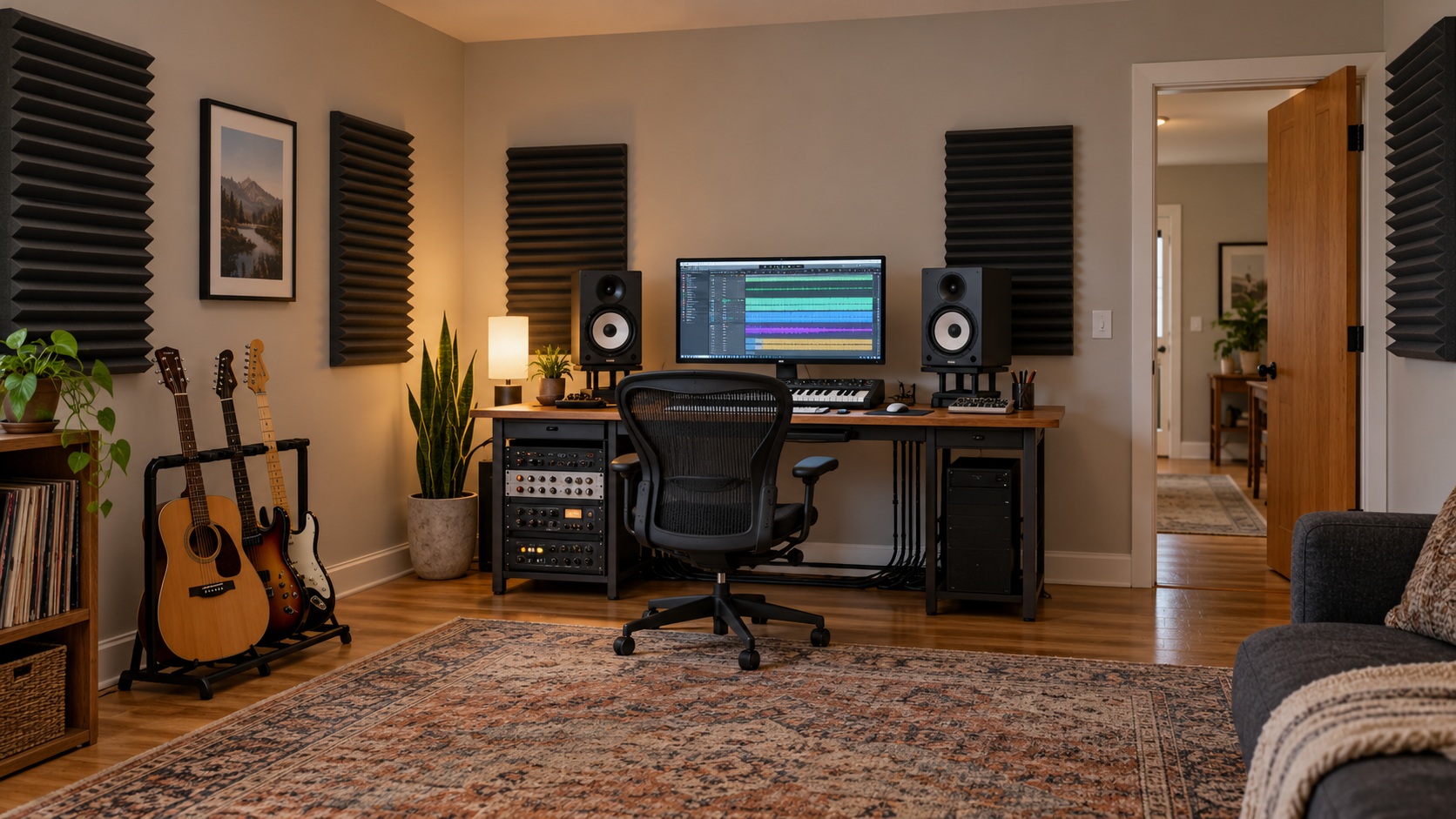
Use listening positions, source locations, and room assessment to guide placement. Do not cover outlets, controls, service panels, vents, or emergency devices because a reflection point happens to fall nearby. Adjust the treatment design or use an alternative arrangement reviewed for the room. An acoustic goal does not grant permission to interfere with another system.
Leave the manufacturer’s required space around equipment and heat sources, and obtain advice when treatment is proposed near luminaires, amplifiers, heaters, or electrical installations. There is no single clearance number that can be borrowed for every foam, appliance, and room. Keep access for inspection and maintenance. A panel that hides a problem behind an apparently finished wall makes ongoing management harder.
In a monitoring room, begin with the relationship between the loudspeakers and the listener. A nearby side wall can create an early reflected path distinct from the direct path. Auralex’s home-studio guidance discusses identifying such reflection positions. Use that acoustic reasoning alongside the room’s installation constraints rather than allowing a decorative grid to decide every panel location.
Symmetry may matter to the listening arrangement, but a door or service opening can make the two sides physically different. Do not conceal the opening to make the wall pattern look balanced. An acoustic specialist can help compare alternate positions, panel types, or room layouts when the obvious reflection point cannot accept treatment.
Keep a simple drawing showing proposed panel boundaries before applying adhesive. Include doors, services, equipment, and any reviewed clearances. Walk through the room with the drawing and check that the design still allows ordinary tasks such as accessing connections or opening a case. This is easier to change on paper than after permanent mounting.
Mounting Is Part of the Assembly
Follow the product’s attachment instructions and the building owner’s permissions. Adhesive compatibility, wall condition, surface preparation, cure, and removal requirements all matter. A bond that feels secure on one patch of painted wall may behave differently elsewhere. Test through the approved method and do not assume that using more adhesive compensates for an unsuitable substrate.
Ceiling elements require particular attention to secure support and the space’s systems. Do not suspend a large panel or cloud using improvised fasteners simply because foam is light. Consider the complete assembly, including backing, frames, and hardware. Obtain qualified installation design where needed and coordinate with responsible building personnel before drilling or attaching to an unknown ceiling.
Fabric coverings and decorative additions change the assembly. They can also obscure which product was originally installed. If a cover is proposed for appearance or durability, ask how it affects the acoustic behavior and the applicable fire evidence. Keep its identity and attachment details with the record. Do not describe the covered construction using only the bare foam’s documentation.
Provide a removal plan for rented studios. A treatment that damages the wall during removal can encourage users to leave old panels in place after their condition becomes questionable. Removable systems may be useful when appropriately specified, but they still need compatible products and secure attachment. Consider the whole tenancy rather than only the first afternoon’s installation.
Keep Escape and Building Functions Obvious
Do not conceal exit doors, signs, detection devices, or other emergency equipment within a dark continuous treatment. OSHA’s exit-route guidance explains the importance of clear routes and visible doors and signs in covered workplaces. The exact requirements for a studio need the applicable review, but disguising the way out is not a useful acoustic design move.
Check the room in its working configuration, not only when empty. Microphone stands, cables, instrument cases, and chairs can narrow a route that appeared clear during panel installation. Arrange storage and cable management accordingly. Keep doors operating as intended and do not use foam treatment to hold a door in a position that conflicts with the building’s approved arrangement.
Review ventilation as part of treatment planning. Blocking a grille can affect comfort, equipment conditions, and air movement. Do not create an improvised sound barrier inside a duct or around a ventilation opening. If the ventilation path creates an acoustic problem, involve an appropriate designer who can address both functions. The quietest apparent shortcut may produce a room that no longer works properly.
Inspect Changes, Dust, and Detachment
Keep a baseline record of the installed layout, products, report references, attachments, and relevant approvals. Photograph areas behind movable equipment as well as the principal wall. Mark replacements when a damaged panel is exchanged so a similar-looking substitute does not quietly break the specification. Keep enough information that the next tenant or facilities worker can identify what is present.
Inspect for loosening, damage, persistent dust accumulation, and material changes through a schedule appropriate to the product and use. Follow the manufacturer’s cleaning instructions. Avoid painting, spraying, or treating panels casually to restore appearance; added products can affect acoustic performance, material compatibility, or the evidence supporting the installation. Ask before changing the surface.
If foam is crumbling or attachment is failing, restrict the affected area as appropriate and obtain advice on removal or replacement. Do not pull a deteriorated ceiling panel down over occupied equipment or people. Plan containment and waste handling for the actual material and condition. A new installation should address the reason for failure rather than simply hide the old panel behind another layer.
Reassess after changes in equipment or room layout. A relocated amplifier, a new light, or more densely packed storage can alter the conditions around treatment. Compare those changes with the original assumptions. The installation record is useful only if someone updates it when the studio evolves. Assign responsibility rather than assuming the acoustic panels will remain suitable indefinitely.
Make the Quiet Room Legible
Use documented products and targeted treatment while preserving clear exits, services, and inspection access. Acoustic improvement should be measurable, and the installation’s material and fire assumptions should remain understandable to everyone responsible for the room.