Design Out the Unnecessary Processes
No classroom material makes a lesson risk-free. Foam can support useful work with shape, relief, pattern, and model building, but those learning goals rarely require children to copy industrial fabrication. A teacher can prepare large shapes in advance, choose age-appropriate labeled supplies, and organize an assembly lesson without introducing spray foam, thermal cutting, solvents, or airborne sanding dust. The key is to distinguish the creative decision a student should make from the processing operation that would otherwise stand between the student and that decision. Start with the lesson objective and the school’s approved materials and procedures. Then build a practical activity around the actual age group, room, supervision, and individual needs instead of assuming that a soft-looking sheet belongs in every classroom.
A: No. Design out unnecessary processes and manage the remaining activity through school procedures.
A: No. It concerns chronic-hazard evaluation and labeling, not blanket permission.
A: No. Composition, depth, spacing, revision, and interpretation can remain student decisions.
A: Not without an appropriate review of identity, suitability, and the intended process.
A: Keep unnecessary industrial processing out of the lesson and use approved prepared materials.
A: Provide an equivalent route to the same learning goal through normal support arrangements.
A: No. Coordinate room suitability and ventilation questions with responsible staff.
A: It reveals storage, debris, timing, and supervision needs before the class is busy.
A: The responsible school staff should review mounting, access, quantity, and building requirements.
A: Provide material information and relevant restrictions without presenting the object as universally harmless.
Choose the Learning Goal Before the Material
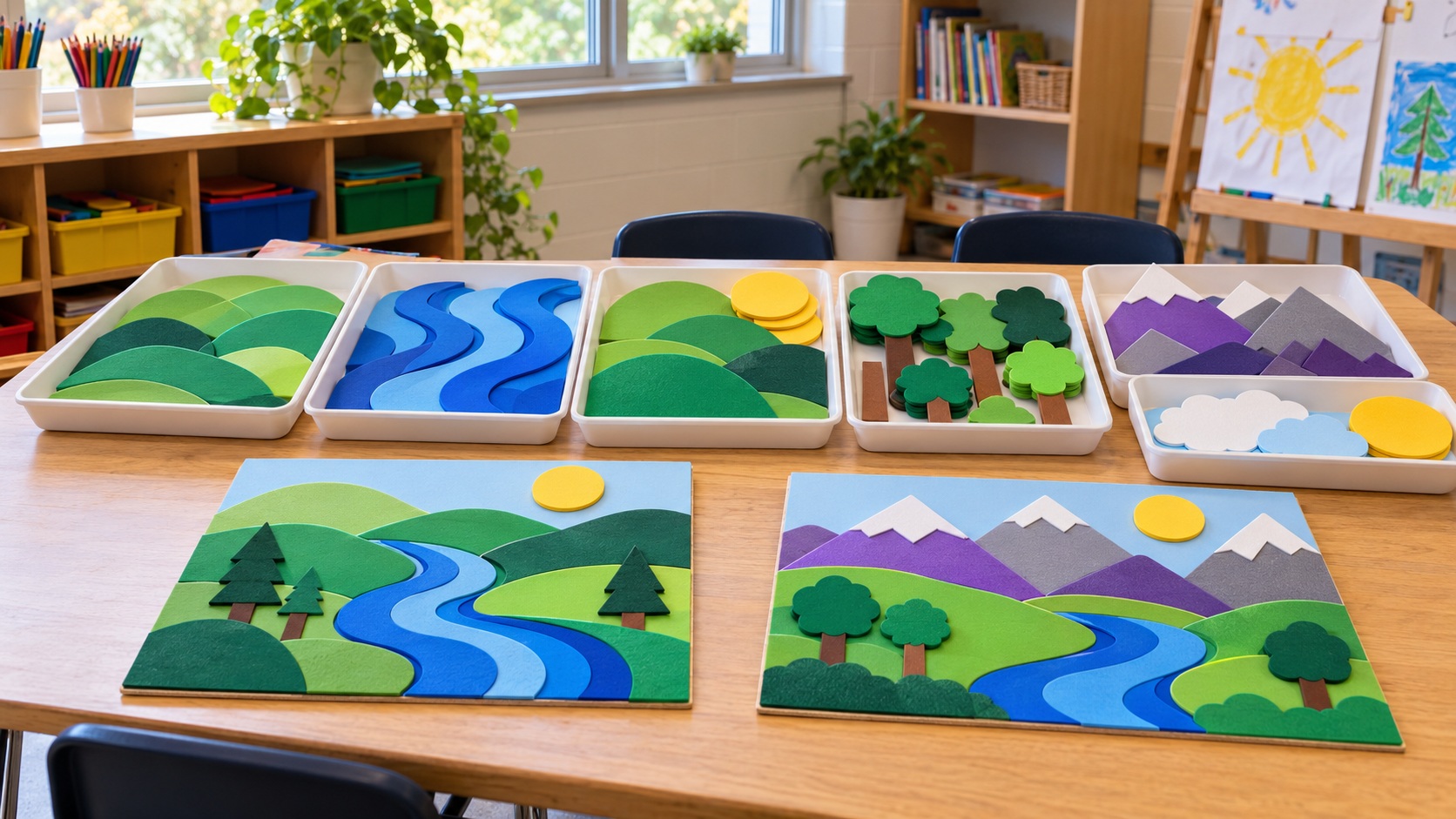
If students are learning foreground and background, they can build a relief from prepared layers rather than carving a thick block. If the lesson concerns repetition, repeated modules can be arranged and compared without power tools. A model-building activity can focus on scale and spatial relationships rather than perfect edges. Name the decision students must practice, then remove processes that add difficulty without serving that decision.
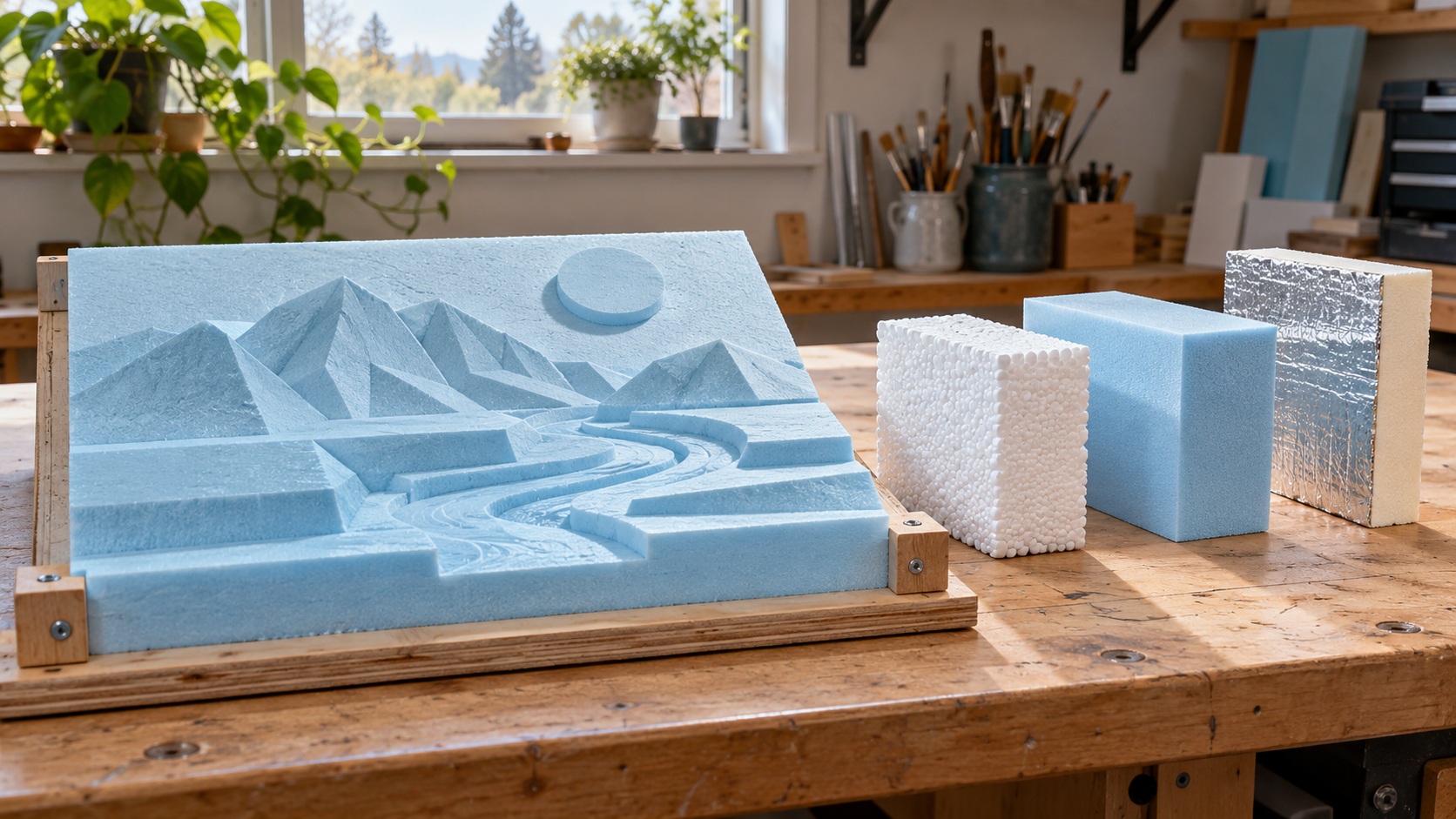
For example, a river-landscape lesson can use broad precut contours on a stable backing. Students choose where a channel passes, how land layers overlap, and which features remain visible from above. The teacher can discuss contour and depth using the assembly itself. Cutting, sanding, or heating the entire terrain is unnecessary when the learning evidence lies in the students’ arrangement and explanation.
A material substitution should preserve that evidence. Cardboard or other school-approved stock may serve the same goal when suitable foam is unavailable. Do not make an activity depend on using whatever industrial offcuts a volunteer delivers. The educational objective should survive a change in supply, and the teacher should be able to explain why the selected material and process fit the class.
Older students in a properly equipped specialist course may have different options, but age alone does not establish readiness for every tool or chemical. The school must assess equipment, training, facilities, supervision, and applicable procedures. A general classroom lesson should not quietly become a workshop operation because a few students have seen a fabrication video.
Read Labels as Selection Evidence
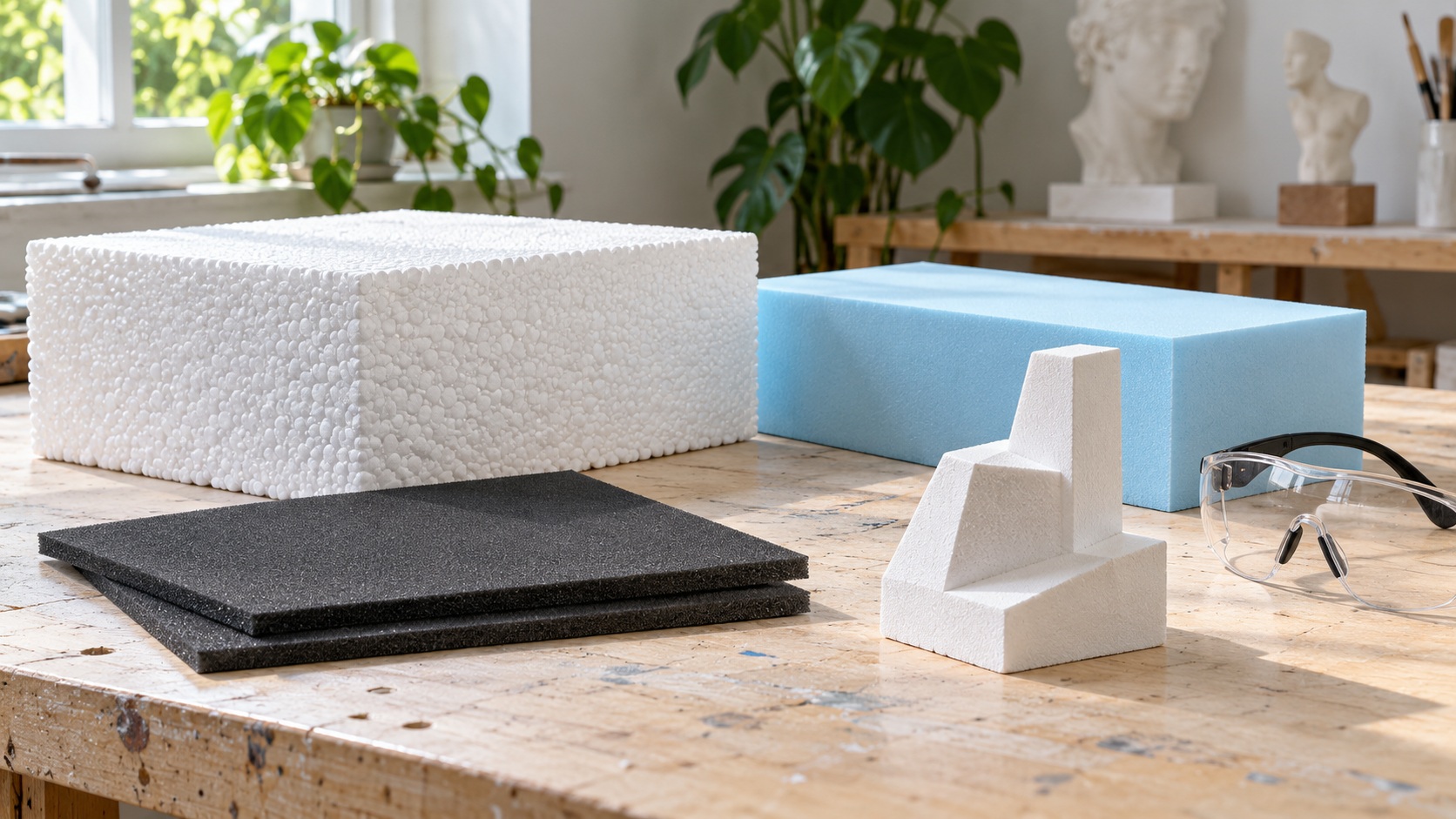
Use art materials intended for the relevant age and activity, following the school’s procurement process. The CPSC Art and Craft Safety Guide recommends avoiding unlabeled supplies and cautions against particular processes and products for younger children. Review the actual product and all associated materials, including glue and paint. The core sheet’s label does not evaluate everything later added to it.
The phrase conforms to ASTM D-4236 concerns evaluation and labeling for chronic hazards; it is not a blanket approval of every use. The CPSC art-materials guidance explains the labeling framework. Read age information and warnings rather than treating the conformance statement as a universal safety seal. Misuse, small parts, cutting tools, and the way an activity is organized still require attention.
Make Preparation a Separate Adult Task
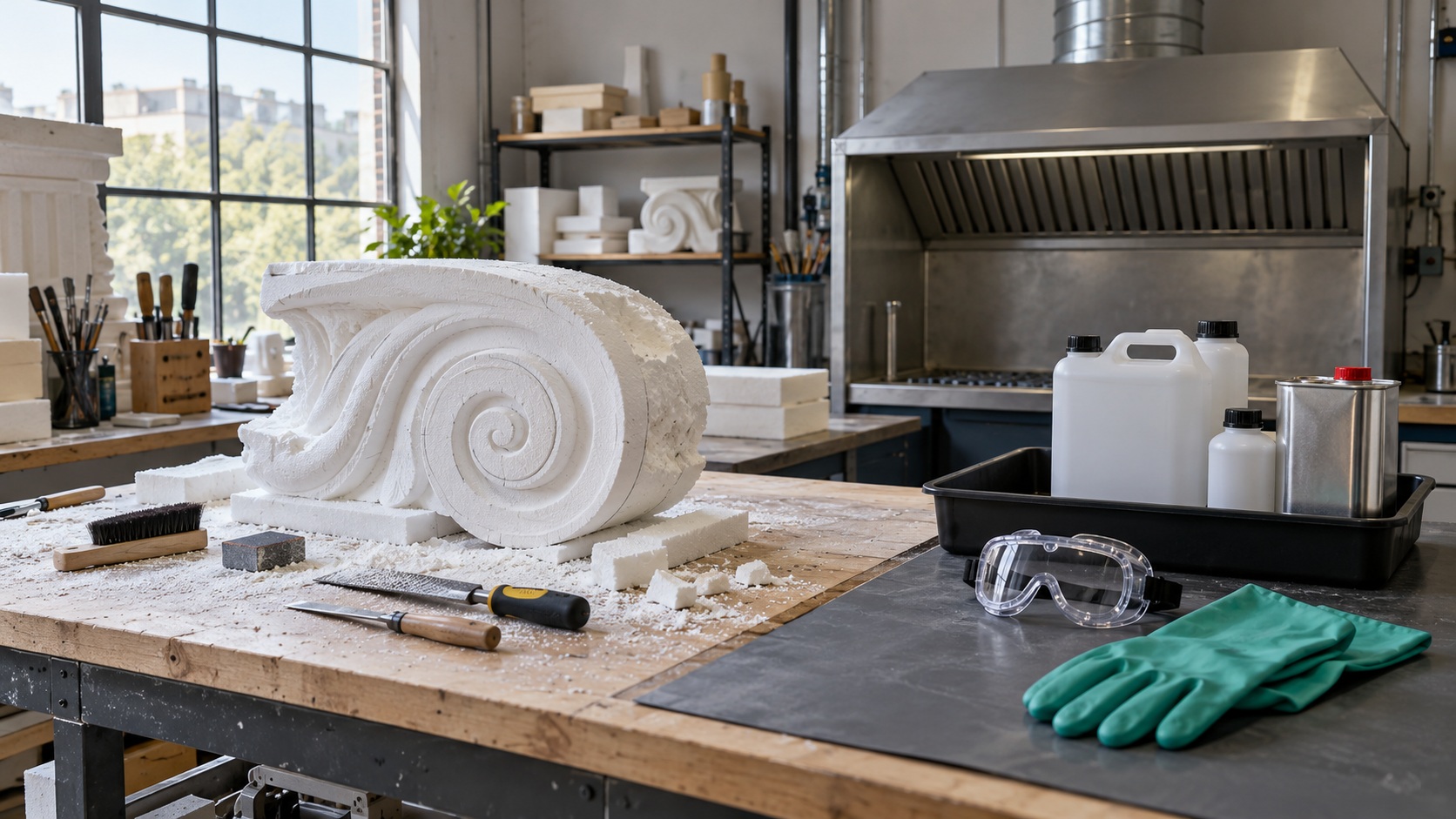
Prepare any necessary large cuts through the school’s approved adult process before the class arrives. The preparation location must itself be appropriate; moving a dusty or chemical task into an empty classroom does not solve the question of exposure or cleanup. Coordinate with the relevant staff and facilities personnel. Students should receive material that is ready for the planned activity, not be present while the teacher improvises a demanding fabrication stage.
Keep the prepared components large enough for the intended activity and participants. Avoid introducing loose beads or tiny decorative pieces merely to make a model look more realistic. Consider foreseeable mouthing, younger siblings at a public event, and pupils who need different materials. Use school guidance on small parts and individual support rather than assuming a uniform developmental profile across everyone in the room.
Build one complete example through the actual lesson sequence, including cleanup. This can reveal that an adhesive needs more time, a joint cannot support an upright element, or a tray is too small to contain the pieces. The trial should not be a polished artwork made through tools unavailable to students. It should demonstrate a feasible sequence with the same prepared materials and limits the class will receive.
Keep Student Agency in the Artwork
Prepared parts do not require identical outcomes. Offer choices in arrangement, spacing, layer order, color, and interpretation. A set of broad geometric shapes can produce many compositions without multiplying hazardous processes. Ask students to justify a change in silhouette or depth. That keeps the intellectual work with the student even when an adult has handled an unsuitable cutting operation beforehand.
Provide a meaningful alternative when a student cannot or should not use a particular material. A parallel set of card shapes can support the same compositional goal. Avoid turning the alternative into a lesser task or requiring disclosure of personal health information to classmates. Coordinate individual arrangements through the school’s normal support channels, and evaluate the artwork’s decisions rather than compliance with one material choice.
Do not require every student to create a freestanding structure if the joining method is unreliable or difficult for the group. A shallow relief on a broad backing may let everyone explore depth more successfully. Changing the format can preserve the lesson while reducing frustration and unnecessary repair. The goal is not to prove that children can reproduce a professional sculptor’s construction system.
Assessment can include a brief sketch, a spoken explanation, or photographs of a revised arrangement. A student who tests two layer orders and explains the difference has produced evidence of learning even if the final object is modest. This also reduces pressure to introduce a stronger adhesive or sharper tool merely to achieve a more impressive display piece.
Organize Supervision Around Real Movements
Set up the room so the teacher can see working areas and students can reach approved supplies without crowding. Preportion materials where appropriate and keep unrelated workshop products out of the activity. A complicated station system can create more unsupervised movement than the project needs. Choose a layout that the available adults can actually oversee rather than one that looks attractive in a lesson plan.
Explain a small number of concrete boundaries and demonstrate them. Show where materials stay, how tools are passed if tools are approved, and when a student should stop and ask. Include what happens when something breaks or glue spills. Direct supervision is not replaced by a poster or by calling a student experienced. Practice the routine briefly before the main activity creates distractions.
Assign adults to clear roles when several people assist. One may oversee materials while another supports a small group, but each should know who is responsible for stopping the whole activity. Unclear shared responsibility can leave a busy station unwatched even when several adults are physically present.
Write a short handover for a substitute teacher. Identify the approved materials, prepared components, alternative activity, and operations that are not part of the lesson. A well-prepared project can become a different process if a replacement adult improvises a way to cut missing pieces during class. Provide enough prepared stock or a workable non-cutting fallback.
Make demonstrations visible without requiring students to crowd around the teacher’s hands. Use a large sample or repeat the demonstration for small groups as appropriate. Ask pupils to show the routine using inactive materials before distributing supplies. This checks understanding more effectively than assuming everyone heard the first explanation.
Ventilation Is a School-Facilities Question
A teacher should not compensate for an unsuitable product by making an unsupported claim about the room’s airflow. EPA’s school source-control guidance recognizes that art materials and preparation areas can affect indoor air quality. Coordinate with facilities staff and select products and processes appropriate to the room. Do not disable a ventilation system or improvise exhaust into a corridor.
Consider other occupants and the next lesson. Work can affect people who are not participating, and a product’s drying or curing time may extend beyond the class period. A schedule that immediately returns the room to unrelated use must fit the actual materials. If it does not, choose another product or activity instead of assuming the short duration makes the exposure question disappear.
Keep dust-producing shaping out of an ordinary children’s foam-assembly lesson. The absence of an obvious cloud does not establish that an unassessed sanding task belongs in the room. Do not have students blow particles from their work or sweep fragments into the hallway. Choose preparation and cleanup methods that keep debris contained and fit school procedures.
Plan for Individual Needs Without Guessing
Before the activity, use the school’s established process to consider allergies, asthma, sensory needs, access, and any relevant accommodations. Do not diagnose a student or promise that a material cannot cause a reaction. Keep product identification available for the responsible staff. A parent or school health professional may need the exact product name, not the broad reassurance that it is ordinary craft foam.
Texture and smell can affect participation even when a student is not operating a tool. Offer a way to inspect or decline a material without touching it, and allow an equivalent alternative. Adjust the task so a pupil can make the intended artistic decisions with a comfortable grip or accessible working height. These arrangements should be prepared before the room is busy, not negotiated as a public exception during the lesson.
For an unexpected reaction, spill, or injury, stop the activity and follow school procedures and product first-aid directions. Know how to contact the responsible school personnel. Do not improvise chemical cleanup on skin or continue because only one student is affected. Keep the remaining group supervised while help is obtained.
After an incident or near miss, review the task rather than blaming attention alone. Was a supply mistaken for another? Did a reaching route encourage contact? Was the demonstration difficult to see? A practical change in preparation, layout, or material may address the problem more reliably than repeating the same warning at greater volume.
Finish With Cleanup and an Appropriate Display
Provide a contained place for scraps and unfinished work so pack-up does not become a rush of loose pieces. Follow school routines for handwashing, table cleaning, waste, and storage. Keep food and drinks separate from the activity. Inspect the floor and shared surfaces before another group enters, and return unused products to their approved storage rather than leaving them with finished models.
Display decisions need the same care as the lesson. Do not attach work to heaters, lights, exits, or safety equipment, and seek the school’s approval for corridor or overhead installations. An individually small project can become a large collection when every pupil contributes. Mounting, total quantity, access, and the building’s fire arrangements are questions for the responsible staff.
When sending work home, provide relevant material information and any practical restrictions. A classroom artwork is not automatically a toy suitable for younger children. Explain fragile or small components and whether the piece is intended only for display. Keep the message proportionate, specific, and consistent with the products used rather than making an unqualified claim that everything is harmless.
Teach the Decision, Simplify the Process
A good foam lesson preserves student choice while removing unnecessary processing hazards. Use approved materials, feasible supervision, individual support, and a complete cleanup plan; do not promise an activity without risks.