A Durable Surface Needs More Than a Hard Shell
A coating can turn a fragile carved surface into a more serviceable sculpture, but it cannot correct every weakness beneath it. A hard layer may resist rubbing while cracking over a moving joint. A flexible film may tolerate bending yet remain vulnerable to a sharp impact. A beautifully painted shell may hide poor adhesion until a corner lifts. Choosing a coating therefore starts with the damage the sculpture must resist, not a general desire to make foam stronger. Identify whether the real problem is abrasion, accidental contact, weather exposure, fine surface loss, or an unstable assembly. Then build and test a compatible surface system that addresses that duty without sacrificing detail, creating uncontrolled process hazards, or implying structural and fire performance it has not demonstrated.
A: Define the expected damage and service conditions before choosing a system.
A: Not by itself. Seating requires appropriate assessment of the complete structure and intended use.
A: It reveals movement and layer transitions that an uninterrupted flat sample cannot.
A: Not necessarily; the bonding surface or compatibility may be the actual problem.
A: Follow the chosen system's documented requirements for the actual substrate.
A: Use the product's handling and cure guidance rather than touch alone.
A: Differences in profile, texture, and sheen can show even when color matches.
A: Review the joint's movement and design before repeating the same surface repair.
A: No. Different performance questions require relevant methods and evidence.
A: When the underlying design or exposure remains unsuitable and repeated repair no longer provides credible service.
Describe the Failure You Want to Prevent
Examine where damage occurs and how it begins. Repeated rubbing at a handhold calls for a different response from a crack along a large assembly joint. A puncture through a broad face is different again. Map those locations on the sculpture drawing and ask whether a coating is the correct intervention. A better grip, a protective setback, or a revised packing support may prevent damage more effectively than another surface layer. Coatings are most useful when the underlying shape and support already suit the job. They become expensive when used to compensate for a feature that remains too thin or a joint that continues to move.
Define durability as an observable requirement. Instead of asking for a tough finish, describe the expected contact, viewing distance, cleaning method, exposure, and number of handling cycles. Separate accidental contact from intentional interaction. A sculpture meant only for viewing should not quietly become seating because its shell feels hard. If people will climb, lean, sit, or apply significant force, the complete design needs appropriate assessment beyond surface treatment. A coating sample can answer a question about a finish; it cannot certify a large object’s structural behavior simply by surviving a few workshop knocks.
Choose a System That Fits the Substrate
Identify the foam before selecting primer, filler, reinforcement, coating, and paint. Compatibility is a relationship between specific products and processes, not a property of every item called foam coat. Check the manufacturer’s substrate list and preparation requirements, including any limits on temperature, moisture, application amount, or topcoating. If the chosen finish has no documented use on the selected core, obtain guidance or test a suitable alternative before committing the sculpture. A product familiar from timber, plaster, or vehicle work may not behave the same way on a cellular plastic. Keep product identities together so later repairs do not rely on broad category names.
Water based scenic coatings can provide a useful route for some foam projects, while reactive resin systems and specialist sprayed shells serve other applications. These are not interchangeable choices. Their hardness, flexibility, thickness, application equipment, cure behavior, and process controls differ. The desired surface should lead the selection, and the workshop must be capable of meeting the required procedures. Avoid choosing an industrial system solely because a finished sample seems impressive. The sample does not reveal everything needed to apply it correctly, nor whether its stiffness is appropriate for a sculpture with flexible or weak underlying features.
Manufacturer instructions can contain details that alter the result. Rosco’s FoamCoat product guidance calls for clean, dry foam and discusses thin successive applications over fine detail. Those are product-specific directions, not a recipe for all coatings. Follow the instructions for the chosen system, including mixing and any permitted dilution. Adding water or another ingredient to make application easier can change deposited thickness and performance. Do not assume an improvised modification remains covered by the original data. A repeatable system needs a documented sequence, not merely a product name written on the lid.
Separate surface protection from fire and exterior-use claims. A hard shell is not automatically a fire barrier, and a paint that tolerates occasional moisture does not necessarily create a long term outdoor assembly. Obtain relevant evidence for the actual use and follow venue or project requirements. Do not combine the strongest claims from several different products and assign the result to the whole sculpture. A primer, coating, and topcoat may each have useful characteristics while their untested combination remains uncertain. Where performance is consequential, involve the supplier and an appropriately qualified reviewer before fabrication begins.
Prepare the Surface and Resolve the Joints
A coating cannot adhere reliably through loose dust, fragments, or an unstable surface. Use preparation methods suitable for the core and selected products, avoiding cleaners or solvents whose compatibility has not been established. Inspect carved recesses and corners where debris can remain after the broad faces look clean. Resolve loose components before coating. A shell that spans an opening may hide it temporarily without creating a dependable connection. Keep the prepared work protected from contamination while waiting for application. A neighboring sanding or painting operation can undo careful preparation if the sculpture sits uncovered beside it.
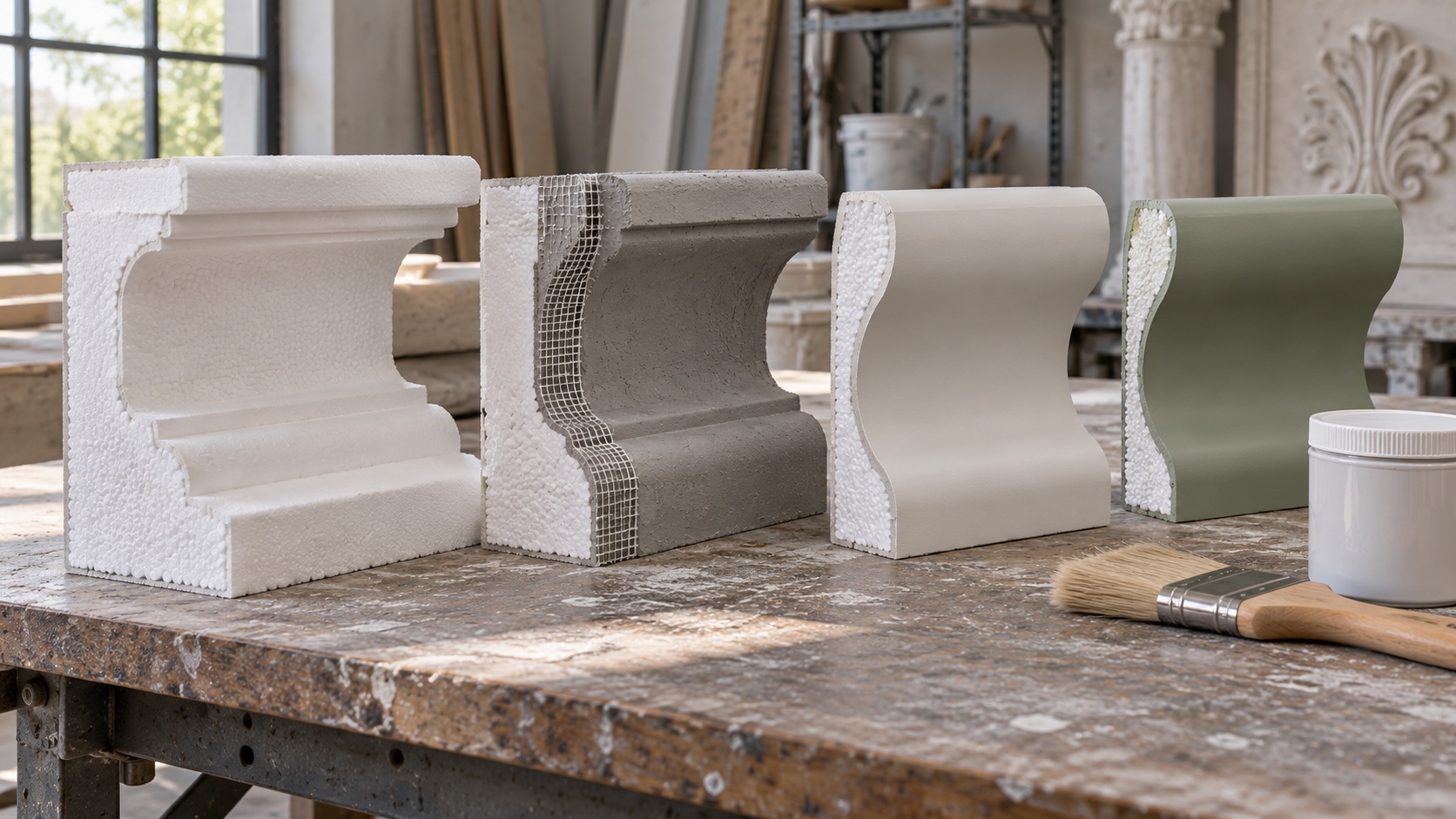
Decide how each joint is intended to behave. A permanent rigid seam, a removable module boundary, and a flexible transition should not receive the same treatment by habit. Reinforcement may spread stress in a suitable system, but its termination, overlap, and application still need to follow the design and product guidance. Do not cover an intended disassembly line with continuous reinforcement unless destructive removal is acceptable. Conversely, do not assume a thin decorative film can hold an unstable seam together. The support and connection beneath the finish must do their assigned work before the surface system can perform consistently.
Allow for the geometry the coating will occupy. Narrow channels may close, fine lettering may soften, and fitted parts may stop fitting. The problem is especially apparent at corners and recesses where application can accumulate. Make a representative detail sample before finalizing the carving. Measure critical clearances after the complete system is applied, not only on bare foam. Where a thin visual edge is necessary, the design may need a different material or a separate replaceable element. A finish cannot simultaneously be arbitrarily thick for protection and invisible to every small feature it covers.
Control Thickness and Cure as Carefully as Color
Uneven application can leave a sculpture with very different protection from one area to another. Thin spots may expose the core; heavy areas can obscure detail or take longer to dry or cure. Use the manufacturer’s specified methods for checking application and maintain a record of the sequence. Complex shapes deserve particular attention because the most visible face is often easier to reach than the underside or back. Do not interpret a uniform color as proof of uniform thickness. Lighting and opacity can conceal a weakly covered edge that matters during handling.
Reactive products introduce hazards associated with their ingredients and cure. Mixed epoxy can generate heat, particularly when retained in a mass, as described in WEST SYSTEM’s uncontrolled-cure guidance. Some polyurethane coating chemistries involve isocyanates; OSHA’s overview identifies important exposure concerns. Use the actual safety data, application instructions, and suitable workplace controls. A mask chosen casually or a door left open is not a universal solution. If the required process cannot be supported, select another system or use a properly equipped specialist rather than improvising around the requirements.
Test the Complete Surface Against the Actual Duty
A useful coupon includes the features most likely to fail: an outside corner, a recess, a joint, and any reinforcement transition. Make it from the actual stock and apply the complete primer-to-topcoat sequence. Allow the required drying or cure before judging it. Keep one sample as a reference and use another for appropriate evaluation. A flat panel can be useful for color and general adhesion observations, but it does not represent all the pressures and thickness changes on a three dimensional object. Test design should reflect the questions raised by the sculpture, not only the convenience of making a square sample.
Distinguish qualitative studio trials from standardized performance tests. An ordinary handling trial can reveal obvious scuffing or a vulnerable edge, but it does not create a certified impact rating, weather life, or fire classification. Define what you observed and the limits of the observation. If the installation requires a particular performance claim, obtain applicable documentation and qualified testing or review. Avoid publishing an improvised test as proof that an object is suitable for unlimited public use. A good trial reduces uncertainty about a particular design decision without pretending to answer questions it was not equipped to examine.
Inspect where failure occurs. A cleanly detached film suggests a different problem from a patch that remains bonded to torn foam. Cracking within the shell differs from cracking caused by movement of the core or joint. Photograph the damaged areas and record the preparation and conditions. Then change the responsible variable deliberately. More coating may not solve poor adhesion, and a harder shell may worsen a flexible transition. Repeating the same application without diagnosing the failure can produce a heavier object whose weak point remains unchanged. A smaller revised sample is usually cheaper than another complete resurfacing.
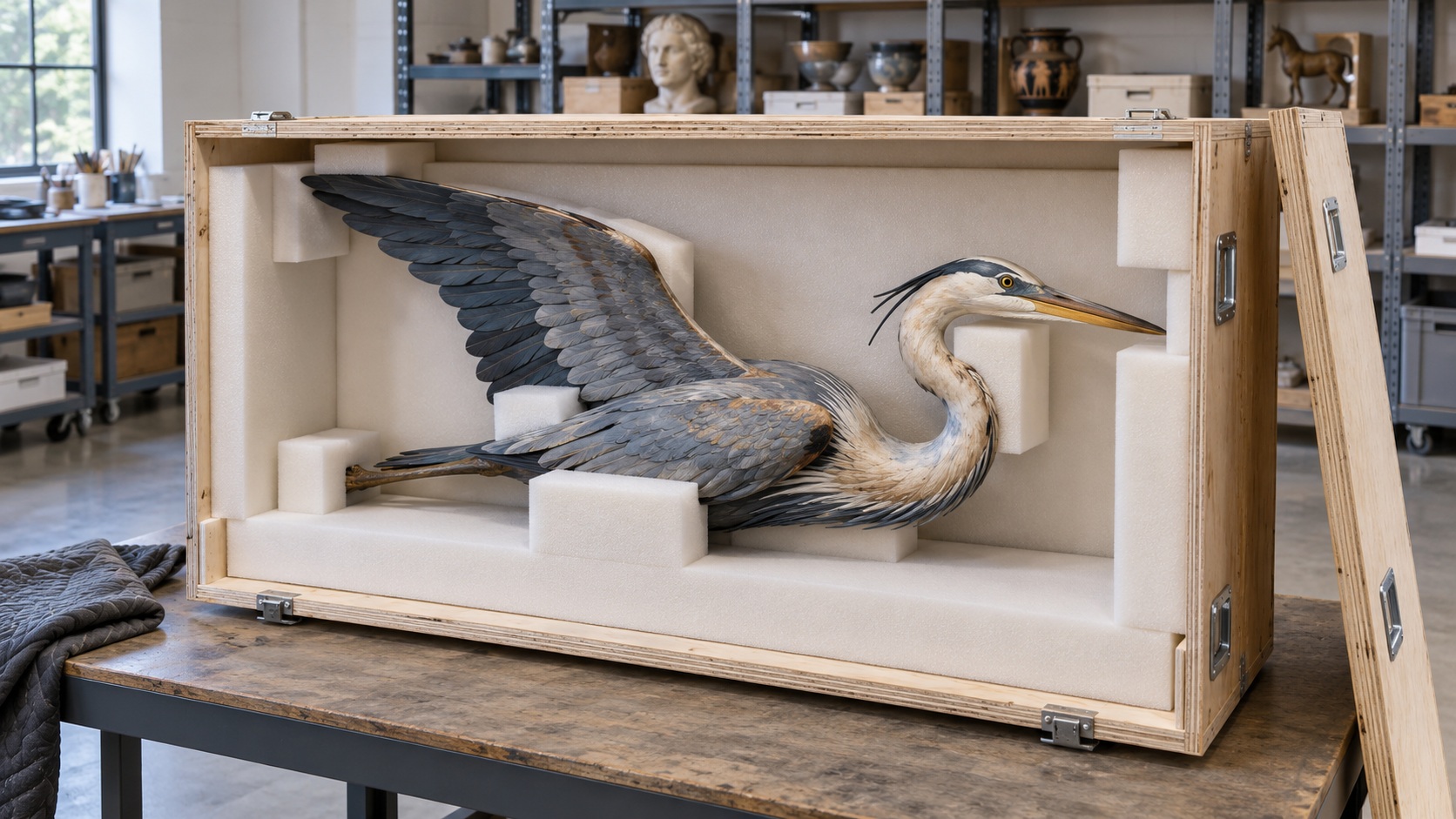
Include the intended cleaning and packing methods in the evaluation. A finish that looks good after handling may still mark under prolonged wrapping pressure or react poorly to a cleaner. Follow the product’s guidance for contact and cleaning, and test proposed methods appropriately on the sample. Check any appearance change after the surface has rested, not just immediately after wiping. Consider sheen as well as color: a patch of altered gloss can be conspicuous under display lights even when pigment remains intact. The full duty includes what happens between exhibitions, not only what visitors do in front of the object.
Make Repairs Compatible and Traceable
Keep a record of the accepted system, including product names, batch information where useful, preparation, application sequence, and relevant conditions. Save a small reference sample if practical. A future repairer should be able to identify the layers without scraping through the sculpture to guess. Mark which joints remain removable and which surfaces have special restrictions. The maintenance record should also state what the coating is not intended to do. That prevents a durable-looking object from accumulating new uses that exceed the design simply because later staff see a solid finish and assume the underlying structure is equally robust.
Repair the cause before matching the color. If a support moves, fix the support through the appropriate process. If packing pressure repeatedly damages one edge, change the packing. Remove or stabilize unsound material as required by the selected repair method, and follow compatibility and cure instructions. Do not bury an active crack under a cosmetic stripe. After the repair, inspect the transition under the lighting in which the sculpture will be seen. Keep changes in thickness and texture controlled so the repaired area does not become a new pressure point or an obvious ridge beside the original finish.
Review whether repeated repair still makes sense. A frequently replaced corner may deserve a replaceable guard or redesigned module. A coating that cannot tolerate the actual environment may need a different system rather than endless touch-ups. Consider the cost of labor, downtime, added mass, and eventual dismantling alongside the price of the next container. Coatings extend service most effectively when the sculpture’s design, handling, and environment cooperate with them. They are one component of durability, not a permanent exemption from maintenance or a guarantee that every lightweight shape can perform any role.
Protect the Surface Without Overpromising the Sculpture
The right coating addresses a defined failure mode through compatible materials, controlled application, and representative testing. Keep the load path, detail, process controls, and repair plan visible in the decision, and a tougher surface can deliver a genuinely longer service life.