Large Visual Scale Without Solid-Material Mass
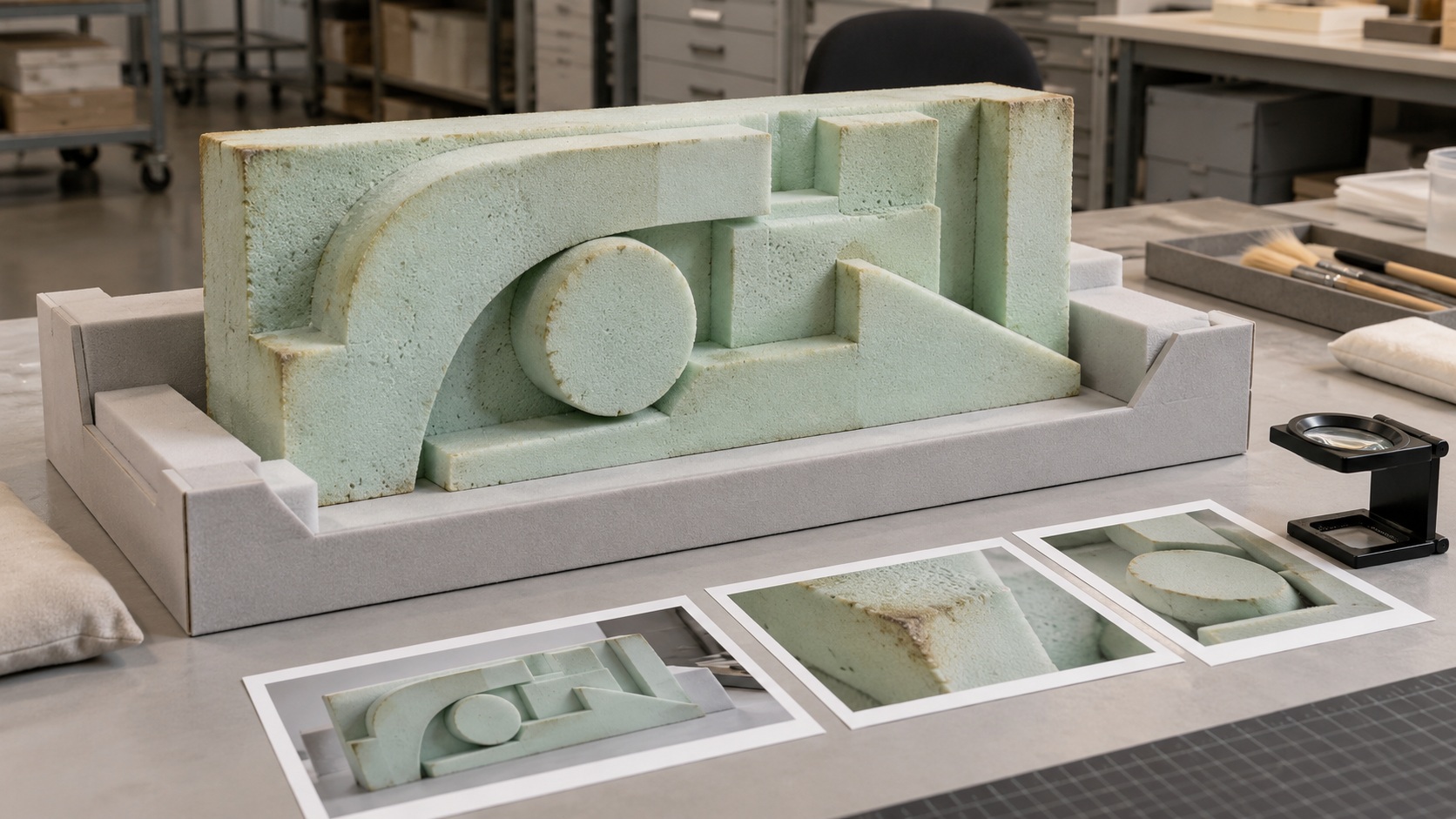
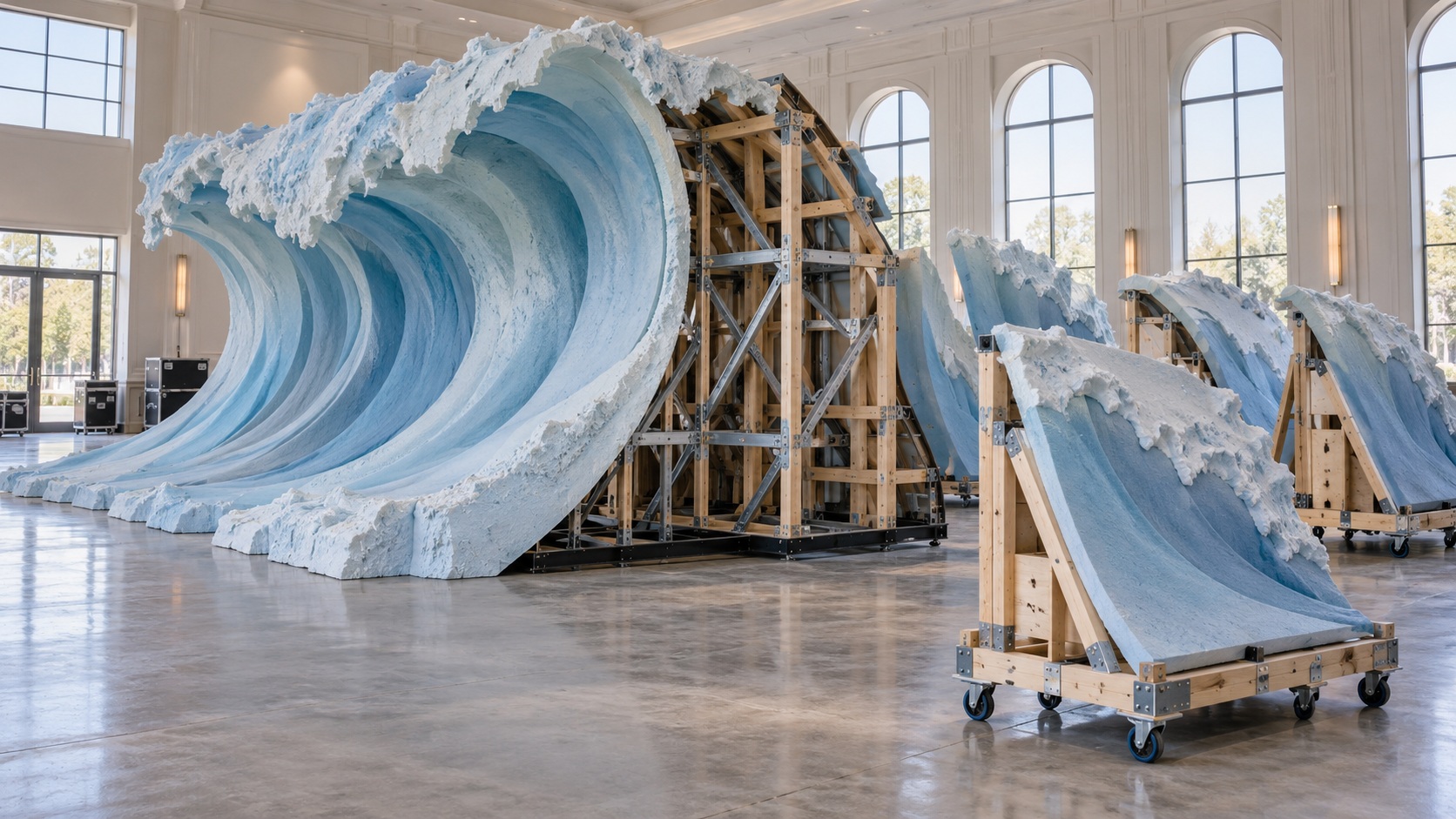
Foam lets event designers build a large visual object without filling its entire volume with a heavy solid material. Oversized forms can become practical to fabricate, move, and change when the scenic body is lightweight. The advantage is real, but the event does not experience the bare foam body alone. Frames, bases, coatings, ballast, cases, lifting arrangements, and installation labor all remain part of the build. A low core weight can simplify one operation while leaving another almost unchanged. The most useful way to assess foam at event scale is to separate visual volume from structural duty and logistics. Then ask which tasks actually become easier, which loads still need professional design, and how the large object will behave within a working venue full of people and equipment.
A: No. Geometry, connections, handling units, and the intended operation still need assessment.
A: Its area, height, contact exposure, and environment can create consequential loads.
A: No. Smaller parts reduce some handling problems but add joints and assembly work.
A: Only after review of the new configuration by the responsible qualified designer.
A: Finishes, frames, bases, packing, installation, maintenance, and removal.
A: A landmark or photo object changes where visitors stop and queue.
A: No. A consequential connection or stability issue needs appropriate review and repair.
A: Documented configurations, recoverable infrastructure, sound parts, and a practical storage route.
A: No. Compare complete alternatives and actual operations using an appropriate method.
A: Recorded improvements in the real handling, setup, transport, or repeated use of the assembly.
Separate the Visual Body from the Whole Build
Begin the weight estimate with components rather than a single optimistic number. Record the foam body, surface system, internal frame, mounting hardware, base, accessories, and packing. Note what travels together and what is assembled on site. A large carved body may be easy to handle on its own but awkward after a heavy base is attached. Conversely, delivering the base separately may reduce one lifting task while adding an assembly operation. Compare the actual options with the installation crew. The useful figure is the mass and geometry of each handling unit, not just the total weight printed on a fabrication proposal.
Surface area can become a major cost driver even when the core remains light. A large sculpture requires more preparation, reinforcement where specified, coating, paint, inspection, and packing contact protection. Fine texture across a huge surface can consume much more labor than carving the broad shape. Match detail to audience distance and lighting rather than applying a small-model finish standard everywhere. Identify the faces visitors will actually see and the surfaces that need special protection. That prioritization can preserve the visual impact while making the complete lightweight build more economical and easier to maintain.
Keep structure independent where the design calls for it. A frame or base can carry consequential loads while foam describes the visible form. Do not let a low weight estimate substitute for structural design, particularly for overhead elements, tall objects, suspended components, or installations exposed to weather. Lifting and rigging arrangements need appropriate assessment and competent personnel. A decorative foam projection should not become a lifting point simply because it is easy to grasp. Make the permitted handling and attachment locations clear in drawings and photographs before the external skin hides the construction.
Use Modules to Solve Real Handling Problems
Module boundaries should respond to transport, doorways, equipment capacity, assembly reach, and the visual composition. Splitting a sculpture into many small pieces is not automatically efficient. Each split creates connections, identification, packing, and alignment work. Too few modules can produce oversized handling units; too many can turn a simple volume into a long installation puzzle. Test the chosen split with a scaled layout and an assembly sequence. Place seams where the form or finish can accommodate them, while keeping necessary connections accessible. The best module size is the one that works across the whole route, not just on the workshop floor.
Give the crew an unambiguous orientation system. Identify front, rear, upper, lower, and matching interfaces in a way that remains readable during setup without appearing in the public view. Pair identifiers with an illustrated packing and assembly list. Similar curved pieces can look interchangeable until a final gap reveals they were installed in the wrong order. A trial assembly in the shop is useful for finding those ambiguities. Record the sequence and the tools required, including any temporary supports. Do not assume the same people who built the object will be the people assembling it at the event.
Protect connections from the finish process. Coating can cover access holes, change clearances, or bond a joint intended to separate. Check module fit after the complete finish system is applied and cured as required. If a seam needs on-site scenic dressing, define the work, materials, cure requirements, and removal method. Avoid a plan that depends on applying an unfamiliar wet coating in an uncontrolled loading area minutes before opening. A discreet intentional seam may serve a touring object better than an apparently seamless finish that must be destroyed and rebuilt at every stop.
Plan packing around the module’s support points. Cases should restrain the part without loading delicate decorative edges. Provide handling space and a way to remove the part without dragging it across the support. Empty cases also need a location during the event; a lightweight scenic build can still generate a large storage volume. Include that space in the venue plan. If cases are reused for several events, keep their internal arrangement consistent with the module identifiers. A damaged or rearranged support can undo the handling advantage gained by dividing the object carefully in the first place.
Keep Low Weight Separate from Stability
An object can be light yet present a large surface to air movement. Outdoors, its shape, area, height, site exposure, support, and anchorage all need appropriate evaluation. Indoors, accidental contact and air currents can still matter for some forms. There is no universal ballast amount or wind-speed limit that applies to every foam sculpture. Obtain the design limits and operating requirements for the actual assembly from the responsible qualified professionals. Do not adjust a base or add a large decorative panel on site without checking the consequences for the support system.
The Institution of Structural Engineers’ guidance on demountable structures emphasizes competent design, erection, inspection, and weather planning for event structures. Its principles are relevant when a foam scenic body forms part of such an assembly. Keep the distinction clear: the decorative material and the system supporting it have different duties. Adding foam cladding can alter the exposure and loading of a previously designed frame. Consult its designer rather than assuming a lightweight addition is structurally irrelevant. Any operational weather plan must be specific enough for event staff to act before the design limits are exceeded.
Design for the Crowd Around the Sculpture
A large scenic object can become a landmark, meeting point, or photo attraction. That usefulness changes how people occupy the surrounding space. Consider where visitors stop, where companions wait, and whether a queue could develop. The sculpture’s footprint is not the whole footprint of the activity it creates. A narrow space beside an entrance may be a poor location for a photogenic object even if the base physically fits. Coordinate placement with the event’s site and crowd planning rather than treating decoration as the final layer added after circulation has already been fixed.
The HSE guidance on crowd controls considers arrival, circulation, and departure as connected phases of an event. Apply that wider view when positioning scenery: avoid obstructing routes, keep agreed access clear, and review the effect of stopping behavior. The appropriate arrangements depend on the actual audience and venue. A large form should not encourage climbing unless that use has been deliberately designed and assessed. If it is viewing-only, its placement and operating arrangements should support that purpose rather than inviting an action the object cannot accommodate.
Review the audience’s likely contact with the lower parts of the work. Bags, pushchairs, mobility devices, cleaning equipment, and routine foot traffic can reach areas that a drawing treats as empty foreground. Keep projections and base treatments compatible with the planned routes and access needs. Avoid relying on a tiny warning label to correct an inherently confusing arrangement. Staff should know the intended interaction, how to report damage, and which changes require the object to be taken out of use pending review. Public-facing scenery benefits from a clear operating role just as much as it benefits from a convincing finish.
Coordinate Trades and Handover Information
Event setup brings several teams into the same space. Scenic builders, riggers, electricians, lighting staff, cleaners, and venue managers may each make changes that affect the object. Establish who controls the final configuration and how changes are reviewed. A cable added through a foam cavity or a light placed behind a decorative shell should not be treated as invisible to the scenic plan. Fire precautions, electrical suitability, access, and heat exposure need the responsible specialists. Keep material information and relevant performance evidence available for the venue’s review without claiming that ordinary paint or a generic treatment makes the body fireproof.
Handover should describe the installed assembly, not merely the fabrication. Provide the final layout, module arrangement, approved support details, handling points, operating restrictions, inspection needs, and contacts. Note any on-site changes and have consequential differences reviewed appropriately. Include photographs that show connections before covers close and the final public-facing arrangement. The event team needs a record it can use during the run, when the fabricator may have left. A complete handover also establishes what the next crew should expect at removal and which components must remain intact for reuse.
Use an inspection routine that fits the event’s exposure and activity. It should address the mounting arrangement, movement, damaged surface areas, loose accessories, and changed surroundings. The qualified designer or responsible supplier should define consequential checks where required. Do not let a visual touch-up conceal a structural concern. If a crowd pattern, weather condition, or nearby equipment changes, reassess rather than relying only on the opening inspection. The object participates in a dynamic event, and its original configuration can be altered by ordinary operational decisions made for reasons unrelated to sculpture.
Include recovery time and replacement options in the production plan. A modular decorative body can allow one damaged part to be replaced while the frame remains, but only if access, spare stock, and approval arrangements exist. A generic promise of quick repair is not enough when a particular component controls the opening schedule. Identify which failures can receive an approved cosmetic repair and which require specialist intervention or withdrawal from use. That distinction protects both the event and the reusable asset. It also gives the client a realistic understanding of what a lightweight scenic system can and cannot recover from on site.
Measure the Advantage Across Several Uses
Foam may provide its strongest event value when a visual body can be adapted around reusable infrastructure. Standard bases, frames, connections, and packing can support changing themes without being rebuilt each time. Keep the new scenic design within the infrastructure’s documented capacity and operating limits. Reuse is not permission to add arbitrary area or height to an old frame. Record each configuration so later teams understand what was actually assessed. A reusable system becomes dependable through controlled variation, not through treating every available piece as a universal support for the next idea.
Compare the claimed savings with records from fabrication, transport, setup, maintenance, and strike. Count crew time, handling units, vehicle volume, coating consumption, and repair work using consistent methods. Do not invent percentage savings from the density difference between bare foam and another solid material. A hollow alternative or a rented asset may change the comparison substantially. The most useful result may be specific rather than numerical: one doorway became passable, a module could be handled with available equipment, or a base survived for the next event. Those observed improvements can guide future design without overstating the environmental or financial benefit.
At strike, keep the reuse plan practical. Preserve module identifiers, inspect the parts, update the condition record, and pack them on their intended supports. Confirm that the next destination can receive the volume, not only the weight. Separate recoverable infrastructure from a retired decorative body and check actual local acceptance before claiming its coated foam will be recycled. Lightweight construction can make a large event image possible, but responsible scale also includes deciding how much material is needed and where it will go afterward. The best build leaves useful components and reliable knowledge, not just a memorable opening photograph.
Make Lightness an Operational Advantage
Foam earns its place at event scale when lower scenic mass improves real handling and reuse. Account for the complete build, obtain appropriate structural review, and connect the visual ambition with crowd, weather, and crew requirements.