Durability Begins Beneath the Paint
A foam sculpture can look substantial while containing a surprisingly small amount of solid material. Its volume comes largely from cells, and those cells respond differently to pressure, sunlight, movement, and the coatings wrapped around them. A broken corner after delivery is not the same problem as a surface that slowly powders in storage. Nor does a crack necessarily mean that the foam itself was defective. A joint, mounting plate, incompatible finish, or unsupported projection may have concentrated forces where the design could not absorb them. Understanding why a sculpture failed means following the damage back through the whole construction, rather than buying a harder foam and hoping the next version lasts longer. Durability is an agreement between the intended service life, the shape, the internal support, the surface system, and the people who handle the finished work.
A: No. Geometry, support, interfaces, exposure, and handling may dominate the outcome.
A: Only a specifically designed assembly should assign structural work to its skin.
A: No. A finish can hide compression, weak bonds, or deterioration underneath.
A: Capture the untouched damage, its position, nearby supports, and any loose fragments.
A: It preserves evidence of the original stock for later comparisons and compatibility trials.
A: Not for every artwork; original surface and artist intent can limit treatment.
A: Include its packing, lifting, transport configuration, and repeated installation demands.
A: No. The material system, climate, construction, and maintenance schedule must be specified.
A: Recurring failure or widespread core weakness calls for reassessment before another patch.
A: Material references, construction images, handling directions, a condition baseline, and maintenance responsibilities.
Read the Failure Before Choosing a Repair
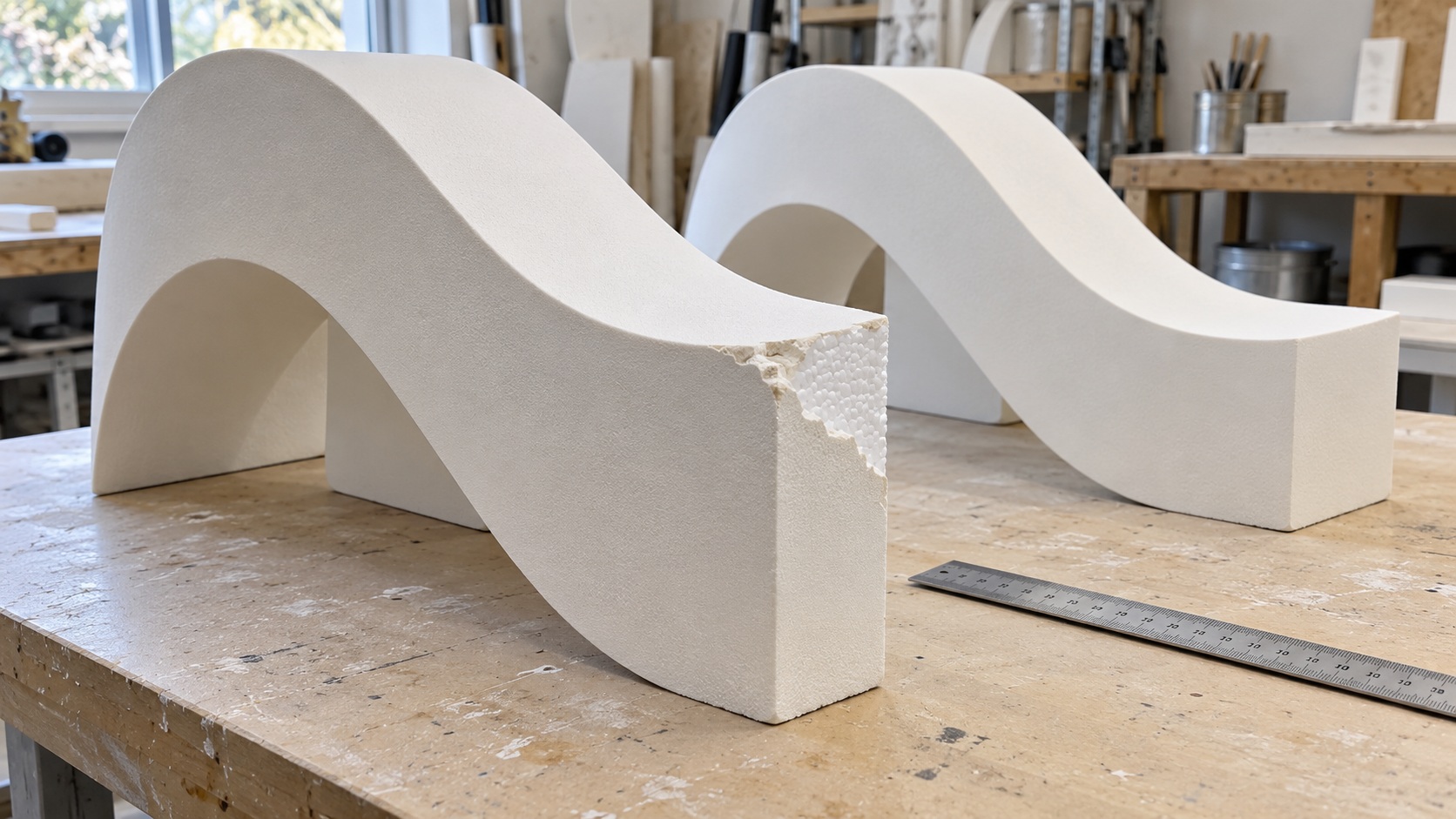
Start with the location and character of the damage. A clean break across a narrow neck suggests bending or impact. A compressed footprint beneath a mounting washer points toward a concentrated load. A crack that follows every block joint may implicate bonding or movement between layers. Widespread crumbling, tackiness, or unexpected color change deserves a different investigation, particularly when the object has not been recently handled. Photographs taken before moving the sculpture help separate the original failure from damage caused during recovery.
Make a simple map of the structure: foam type, block seams, adhesive, armature, skin, paint, and attachments. Mark where force enters and leaves. A sculpture resting on three small feet may carry almost its entire weight through a few vulnerable regions, even if the rest of its enormous body is barely stressed. Repairs should respond to that map. Filling a visible crack without changing the load path can restore the photograph while leaving the original reason for failure untouched. For an artwork with collection value, seek a conservator before exploratory cutting or coating.
Foam Names Do Not Predict Every Property
Expanded polystyrene, extruded polystyrene, polyurethane, polyethylene, and flexible upholstery foams are not interchangeable versions of one material. Their cell structures, surface behavior, and responses to processing differ. Even two boards sold under the same broad polymer name can have different densities, manufacturing histories, and intended uses. A builder who records only the color of the board leaves the next person with little useful information when a replacement or compatible repair is needed.
Density describes mass per volume; it does not alone establish bending strength, impact resistance, or long-term dimensional stability. A denser grade might hold a carved edge better yet still be a poor choice for a thin projecting finger. Product data may describe a particular compressive test, with a specified deformation, rather than permission to use the board as a structural beam. Read the test conditions and the intended application before treating a number as a design allowance.
Keep an offcut from the actual purchase, not merely a sample of a similar product. Date it and record the supplier reference. When an adhesive or finish behaves unexpectedly, the retained material makes it possible to compare the original surface with a newly exposed one. Such a sample also helps distinguish a batch problem from a construction problem. It is inexpensive evidence that becomes especially valuable after a product line changes or a supplier stops carrying the grade.
Geometry Can Defeat a Stronger Grade
A broad torso and a thin wrist do not experience the same stresses. Long projections act as levers: an accidental push near the tip can produce a much larger demand at the root. Deep carved recesses can remove the material needed to carry that demand. Round transitions generally distribute a change in section more gently than abrupt internal corners, although appearance and fabrication constraints will determine what is possible. During design review, inspect the silhouette for places that invite someone to lift, lean, hook a strap, or grab.
Consider a large decorative leaf attached to a central stem. Adding thickness at its outer edge may increase weight without helping the vulnerable connection much. Extending a support from the stem into the leaf, widening the root, or dividing the leaf into a replaceable component may address the mechanism more effectively. The best intervention depends on the sculpture, but the reasoning is consistent: reinforce where the force must travel, not simply where the surface looks thin. Have qualified professionals assess suspended, public, or load-bearing assemblies.
The Skin and Core Have to Work Together
A hard surface can resist small abrasions while concealing a weak bond beneath it. If the core dents, a brittle skin may bridge the depression briefly and then crack. If the coating adheres unevenly, a local impact can start a detached patch that grows during later handling. Thick application is not automatically a cure. It adds mass, changes the balance of projecting pieces, and may create its own curing or shrinkage issues. The complete stack needs evaluation, including primer, reinforcement, base coat, and decorative paint.
Build a representative mockup before coating the main sculpture. Include a block joint, an outside corner, a curved transition, and the actual attachment detail. Flat color swatches reveal appearance but cannot reveal every construction weakness. Let each layer reach its specified condition before proceeding, then examine the specimen under the kind of contact the piece will encounter. A touring prop and a protected gallery object deserve different handling trials. Record what was tested rather than describing the result as universally durable.
Compatibility also belongs in the specification. Do not assume that a solvent-bearing adhesive or finish can touch exposed foam because it works on a different plastic. Follow the manufacturers’ instructions and test the exact combination on expendable stock. Inspect immediately and again after the stated cure period. Softening, recession, persistent tack, or edge lifting are reasons to stop and ask the supplier for guidance. An initially attractive finish should not be allowed to conceal a material interaction that continues underneath.
Outdoor Exposure Changes the Assignment
Sun, precipitation, temperature changes, and wind expose weaknesses that a calm indoor display may never reveal. A coating can look intact from the front while water enters at an unsealed mounting hole or the underside of a seam. Horizontal recesses may hold water, and feet standing directly on a wet surface can remain damp after the rest of the object dries. Review the complete exterior, including backs and service openings. Plan how incidental water leaves the assembly instead of relying entirely on a perfect painted envelope.
The Canadian Conservation Institute explains that plastics have varied deterioration mechanisms and environmental sensitivities in its guidance on caring for plastics and rubbers. That is a reason to identify the actual material, not a basis for assigning every foam the same outdoor lifespan. A manufacturer-approved exterior coating may reduce exposure, but it does not establish that an arbitrary foam sculpture will last indefinitely. Set an inspection interval, document the installation conditions, and budget for renewal where the finish is intended to be maintained.
Handling Damage Is Often Designed In
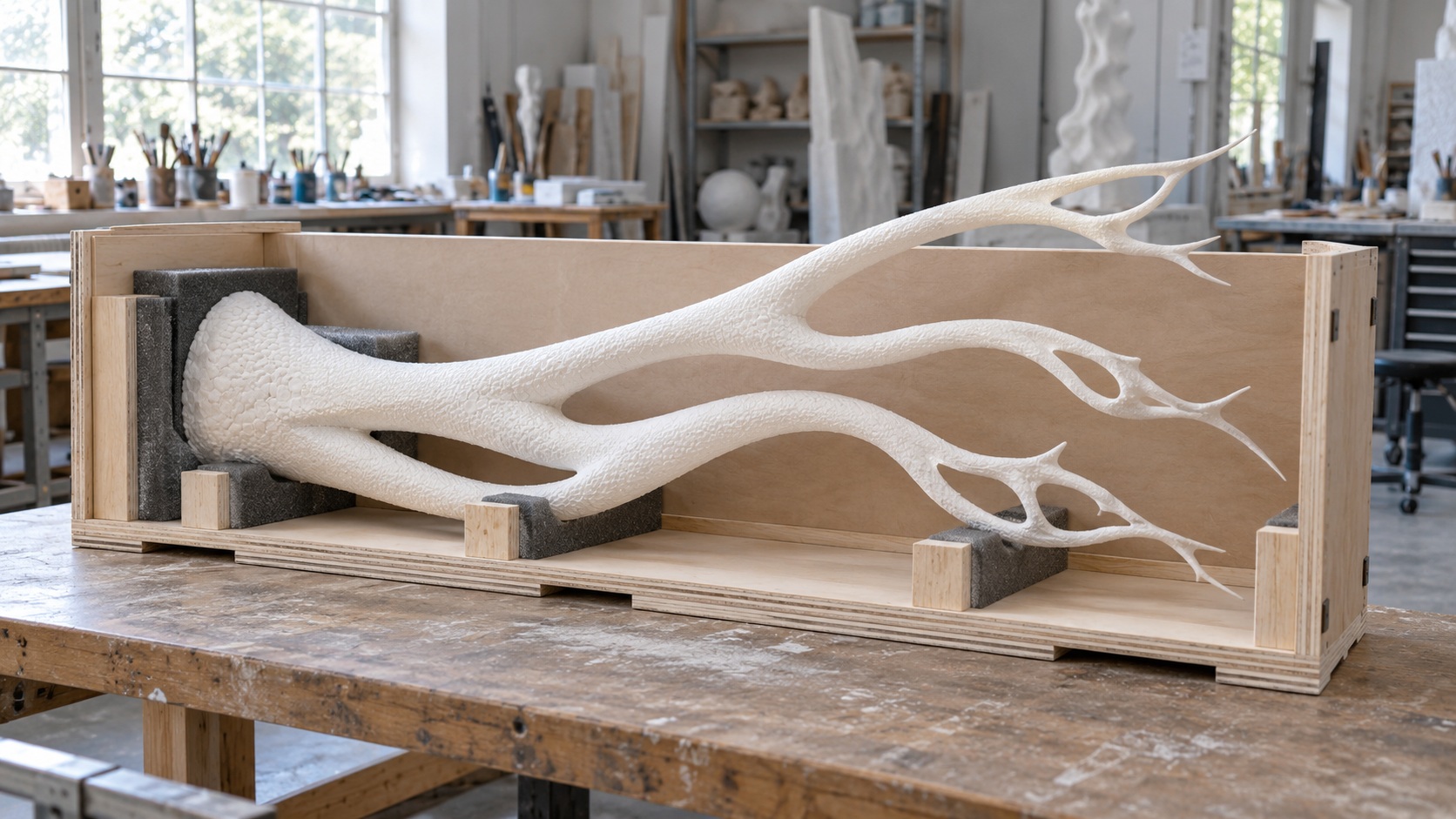
Shipping rarely resembles the gentle two-person lift imagined in the studio. A crate may be tilted, a doorway may be narrower than expected, and a helper may reach for the most convenient projection. Mark deliberate lifting points and make them physically useful. An armature that supports the object in display may not provide a suitable lifting arrangement. Identify which components can be detached before transport and where the remaining assembly must be supported. A few minutes of rehearsal with the real route can expose an impossible move before the finished surface is involved.
Packaging should restrain movement through robust regions, not squeeze fragile ornament until it cannot move. A tight strap across a curved coated surface can create a narrow pressure band. Soft padding can also compress unevenly, transferring force onto a hidden high spot. Use a fitted support arrangement and inspect its contact areas. Test the empty crate’s access and closure, then conduct a controlled trial with the object or a suitable mockup. Avoid improvising restraints after the sculpture is already standing in an undersized container.
Repeated moves deserve records. Log chips, seam openings, and loose fittings after each installation and before each pack-out. If the same location needs touch-up every trip, treat that repetition as design information. A removable tip, a changed packing orientation, or a larger access opening may cost less than endless cosmetic repair. Let the person who packs the work contribute to the next design review; they often know exactly where the construction is least forgiving.
Separate Repairable Wear From End-of-Life Change
Paint abrasion at a handling edge may be a manageable maintenance issue. Progressive loss of cohesion throughout the core is not simply a larger paint problem. Before applying a consolidant, adhesive, or replacement skin, determine whether the surrounding material can accept the intervention. An adhesive stronger than the remaining foam may merely move the next break farther into the sculpture. Original surface texture and artist intent also matter: a treatment that changes softness or sheen can alter the work even when it holds the pieces together.
Durability planning therefore includes an end-of-life decision. For temporary scenery, replacing a damaged module may be appropriate. For an original artwork, retaining fragments, documenting change, and consulting the artist or estate may be more important than restoring an unbroken outline immediately. State which parts are consumable, which finishes may be renewed, and which interventions require approval. A clear maintenance agreement prevents a well-meaning owner from discovering too late that an ordinary-looking repaint erased evidence or made later conservation more difficult.
Specify a Life, Not a Promise
Write the intended use in concrete terms: a six-week indoor exhibition, a traveling installation with twelve pack-outs, or an exterior seasonal display with monthly inspections. Add the expected contact, access restrictions, storage arrangement, and acceptable visible wear. These details let a fabricator propose a coherent system and give an owner something meaningful to check. A claim that a piece is simply permanent cannot do that work.
Finally, hand over the material record with the sculpture. Include construction photographs, coating references, cure instructions, lifting diagrams, retained-sample locations, and a short condition baseline. None of this prevents every accident. It does make diagnosis faster and reduces the chance that a small defect becomes a major loss through an incompatible repair. The useful measure of durability is not whether a sculpture can survive an unspecified test once, but whether its design and care plan match the life it was commissioned to lead.
Commissioning also benefits from a witness sample that travels with the paperwork rather than with the object. If a later finish revision is proposed, the sample offers a place to examine adhesion and appearance without experimenting on the sculpture. Keep its storage conditions documented so differences between the sample and the displayed work remain interpretable. This modest addition turns an otherwise vague future maintenance discussion into a comparison grounded in the original construction.
Make the Weak Point Understandable
A lasting foam sculpture has identifiable supports, compatible layers, realistic exposure limits, and a documented care plan. Find the weakest mechanism early, then design the object and its handling around that knowledge.