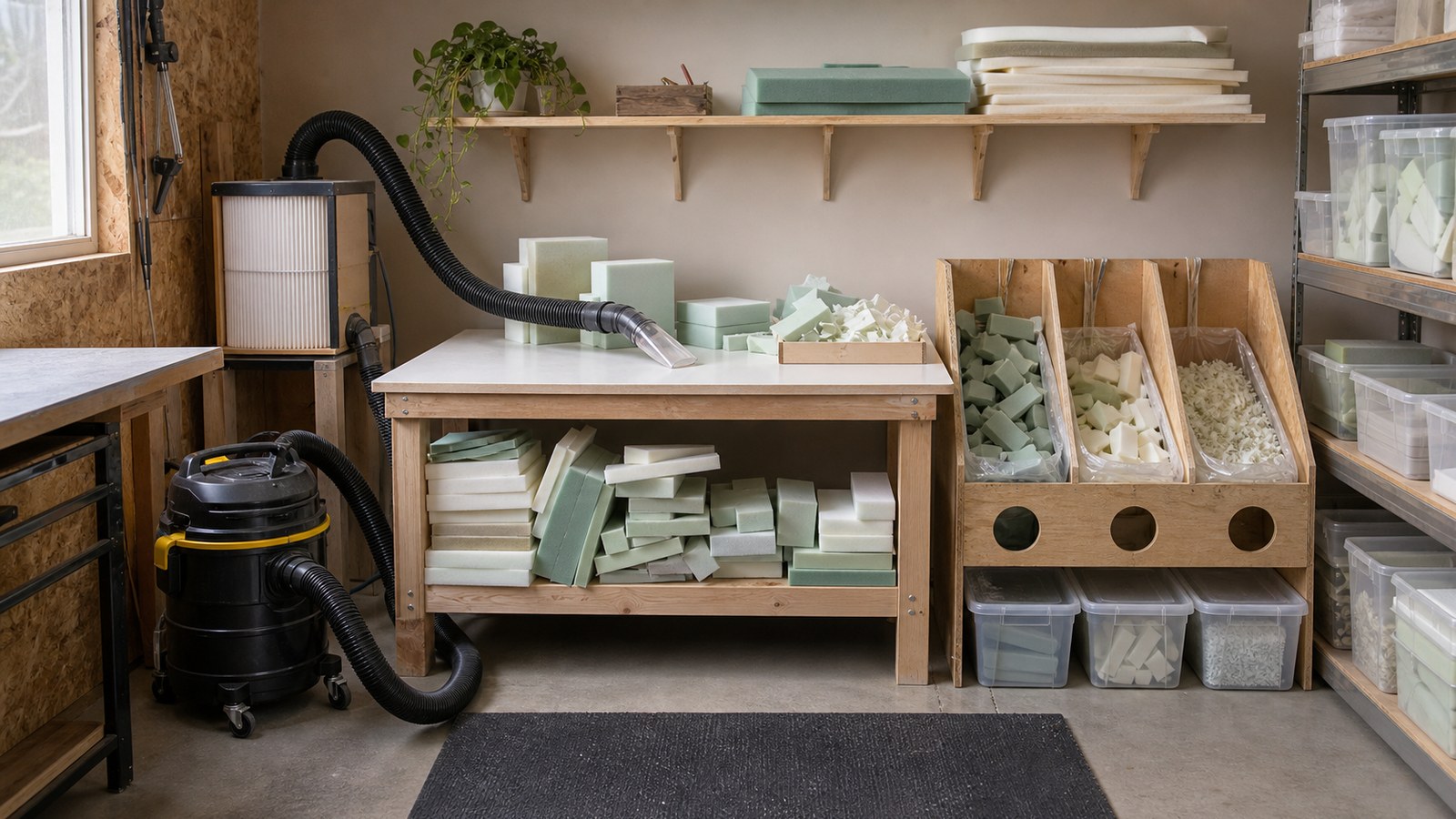
Foam finishes sit at the intersection of chemistry, craftsmanship, and illusion. Whether used in scenic fabrication, prop making, upholstery detailing, cosplay builds, soft architectural elements, or experimental art, foam surfaces are prized for their flexibility, texture control, and lightweight durability. Yet these same properties make foam finishes uniquely vulnerable during cleaning, stripping, or refinishing. What removes paint from wood or metal can melt, scar, or permanently weaken foam in seconds. As awareness grows around safety, sustainability, and material longevity, many makers are turning toward citrus-based cleaners, mild soaps, and “gentler” stripping methods. But are these solutions truly safe, or simply safer-sounding? Understanding the reality behind foam-compatible cleaners requires moving beyond marketing labels and into the science of polymers, solvents, surfactants, and surface tension. Citruses, soaps, and water-based solutions can indeed play an important role in foam-safe workflows, but only when their limitations, chemistry, and application techniques are fully understood. This article explores what actually works, what merely claims to work, and where reality checks are essential when choosing safer strippers and cleaners for foam finishes.
A: No. Always verify via SDS or manufacturer disclosure.
A: Yes, when properly sealed and maintained.
A: Many are, but testing on scrap foam is essential.
A: Yes, if they include UV-stable chemistry.
A: Moderately—often enough for scenic use.
A: Yes, they typically bond better during touch-ups.
A: Prices are becoming comparable as adoption increases.
A: Usually simpler than PFAS-containing products.
A: Review SDS sheets and request written confirmation.
A: Not always—encapsulation can be a safer option.
Understanding Foam Finishes and Their Vulnerabilities
Foam is not a single material but a category that includes polyurethane, polystyrene, EVA, latex, polyethylene, neoprene, and hybrid formulations. Each foam type contains trapped gas cells that give it flexibility and bulk, but these cells are surrounded by polymer walls that can be chemically sensitive. Foam finishes—whether paints, sealers, skins, or coatings—sit atop this delicate structure and rely on adhesion without chemical aggression.
Traditional paint strippers often use aggressive solvents such as methylene chloride, acetone, toluene, or MEK. These substances dissolve polymer chains, which is effective for removing cured coatings from hard substrates but catastrophic for foam. Even brief exposure can cause softening, collapse, bubbling, or irreversible surface pitting. Foam-safe cleaning and stripping therefore must rely on mechanical action, mild chemical interaction, or slow emulsification rather than outright dissolution.
This fundamental constraint is why “safer” solutions are not simply a preference but a necessity. The goal is not speed at all costs but controlled interaction that preserves both foam integrity and the underlying structure of the piece.
The Appeal of Citrus-Based Cleaners
Citrus-based cleaners are often marketed as natural, non-toxic, and environmentally friendly. Most rely on d-limonene, a solvent derived from citrus peels, which has strong grease-cutting abilities and a pleasant scent. For foam artists and fabricators, citrus cleaners appear to offer an attractive middle ground: stronger than soap, less aggressive than industrial solvents.
In practice, citrus cleaners can be effective for removing surface contaminants such as oils, uncured residues, adhesive tack, and light overspray on sealed foam finishes. When diluted properly and applied with restraint, they can loosen grime without attacking the foam substrate. This makes them useful in surface prep stages prior to repainting or resealing.
However, d-limonene is still a solvent. It does not magically become foam-safe because it smells like oranges. On certain foams, especially open-cell polyurethane or unsealed latex foam, citrus cleaners can cause swelling, softening, or long-term embrittlement. Prolonged contact or repeated use can compromise adhesion layers, especially if the foam finish relies on flexible acrylics or rubberized coatings. The key reality check is that citrus cleaners are conditionally safe, not universally safe. They work best on sealed foam surfaces, at low concentrations, with brief contact times, and thorough water-based neutralization afterward.
Mild Soaps and Surfactant-Based Cleaning
Soaps and detergents occupy a different chemical category entirely. Rather than dissolving materials, surfactants lower surface tension and allow water to lift and carry away contaminants. For foam finishes, this mechanism is often far safer than solvent action.
Mild dish soaps, specialty scenic cleaners, and pH-neutral detergents can effectively remove dirt, skin oils, dust accumulation, and light residues without disrupting foam structure. When combined with warm (not hot) water and gentle agitation, soaps are ideal for routine maintenance and pre-refinish cleaning.
The strength of soap lies in its predictability. It does not penetrate polymer chains, and its effects are largely mechanical rather than chemical. This makes it particularly well-suited for EVA foam, sealed polyurethane foam, and latex-based finishes that have cured properly.
That said, soap is not a stripper. It will not remove cured paints, hardened adhesives, or thick seal layers. Attempting to force soap to do a stripper’s job often leads to excessive scrubbing, which can damage textures, open foam cells, or create uneven surfaces. Understanding the role of soap as a cleaner rather than a remover is essential for maintaining foam integrity.
Water-Based Degreasers and Their Limits
Water-based degreasers often sit between soaps and citrus cleaners in perceived strength. Many are marketed as biodegradable, non-toxic, and safe for multiple surfaces. They typically combine surfactants with mild alkaline agents to break down oils more effectively than soap alone.
On foam finishes, water-based degreasers can be useful for removing stubborn surface contamination, particularly in shop environments where silicones, mold releases, or airborne lubricants are present. When properly diluted and rinsed, they can outperform soap without the solvent risks of citrus cleaners.
However, alkaline formulations can pose risks of their own. Extended exposure can weaken certain foam skins, dull flexible paints, or interfere with future coating adhesion if residues are not fully rinsed. As with all foam-safe methods, dilution, dwell time, and testing are non-negotiable steps.
Mechanical Assistance: The Often-Ignored Partner
One of the most overlooked aspects of safer stripping and cleaning is mechanical action. Brushes, sponges, cloths, and controlled abrasion often do more work than chemicals when dealing with foam finishes.
Soft-bristle brushes and microfiber cloths allow cleaners to work effectively without excessive chemical strength. Gentle abrasion can lift softened coatings after prolonged soaking with mild solutions, achieving results that harsh solvents would deliver instantly but destructively.
For partial stripping or surface correction, mechanical methods paired with patience often outperform aggressive chemicals. This approach aligns with foam’s strengths rather than fighting its weaknesses.
The Myth of “Foam-Safe Paint Strippers”
A common search term in foam fabrication circles is “foam-safe paint stripper.” In reality, no true universal paint stripper exists that removes cured coatings while leaving foam untouched. Products labeled as such typically rely on slow emulsification, gel-based surfactants, or softened citrus blends that work only on certain paint types and thicknesses.
These products may succeed in softening acrylics or latex paints over long periods, but results are inconsistent and highly dependent on foam type, sealers used, and environmental conditions. Expecting stripper-like performance without foam damage often leads to disappointment or accidental destruction.
The reality check here is critical: stripping foam finishes is fundamentally different from stripping rigid surfaces. Recoating, resurfacing, or mechanically removing finishes is often safer than attempting chemical stripping.
Health, Ventilation, and Long-Term Safety
One advantage of citrus cleaners and soaps is reduced acute toxicity compared to industrial solvents. This improves working conditions, especially in small studios or home workshops. However, “safer” does not mean risk-free.
Citrus solvents can cause skin irritation with prolonged exposure, and their vapors, while less harsh, can still affect sensitive individuals. Soaps and degreasers can dry skin and cause eye irritation. Proper ventilation, gloves, and eye protection remain best practices regardless of chemical strength.
Long-term safety also includes foam longevity. Chemicals that appear harmless in the moment may contribute to gradual breakdown, discoloration, or loss of elasticity months later. Testing over time, not just immediately after cleaning, is essential when evaluating new products.
Testing Protocols: The Professional Standard
Professionals never apply a new cleaner or stripper directly to a finished piece without testing. Small, hidden test patches reveal how foam reacts not only immediately but after drying and curing. Observing changes in softness, color, adhesion, and surface texture provides invaluable data.
Testing also includes rinse effectiveness. Residual citrus oils or surfactants can interfere with repainting if not fully removed. Water-based neutralization and complete drying are integral parts of any foam-safe cleaning process. Adopting a disciplined testing protocol transforms safer cleaners from risky experiments into reliable tools.
When Rebuilding Is Better Than Stripping
In many cases, attempting to strip a foam finish is more work and risk than rebuilding the surface. Light sanding, re-sealing, or applying a new flexible coating over the existing finish can yield better results with less damage.
Foam fabrication rewards forward-thinking design. Choosing finishes that can be refreshed rather than removed simplifies future maintenance and aligns with the limitations of foam-safe chemistry. This reality check reframes the problem. Instead of asking how to strip foam finishes safely, the better question is often how to design finishes that never need stripping at all.
Sustainability and Environmental Considerations
Citrus cleaners and soaps appeal not only for safety but for sustainability. Reduced reliance on chlorinated solvents and volatile organics benefits both users and the environment. Yet sustainability also includes waste reduction and product lifespan.
Destroying foam through improper stripping negates any environmental advantage gained from using “green” cleaners. True sustainability lies in preserving materials, extending lifespan, and minimizing rework through informed chemical choices.
Choosing the Right Tool for the Right Task
Safer strippers and cleaners for foam finishes are not a single product category but a spectrum of tools, each with specific strengths and limitations. Citruses excel at greasy residue removal but demand caution. Soaps provide gentle, predictable cleaning but lack stripping power. Water-based degreasers offer a middle path but require careful rinsing and testing.
Understanding what each solution can and cannot do empowers makers to work with foam rather than against it. This mindset reduces damage, improves finish quality, and elevates professional standards across foam-based disciplines.
Final Reality Check: Knowledge Beats Chemistry
No cleaner or stripper replaces understanding. Foam finishes respond best to informed, deliberate processes that respect their chemical and physical nature. Marketing terms like “natural,” “eco,” or “foam-safe” are starting points, not guarantees. The safest stripper is often patience. The safest cleaner is often restraint. And the safest workflow is one built on testing, observation, and acceptance of foam’s unique constraints. By embracing citruses, soaps, and realistic expectations—not miracles—fabricators, artists, and builders can maintain foam finishes that are clean, resilient, and long-lasting without sacrificing safety or quality.