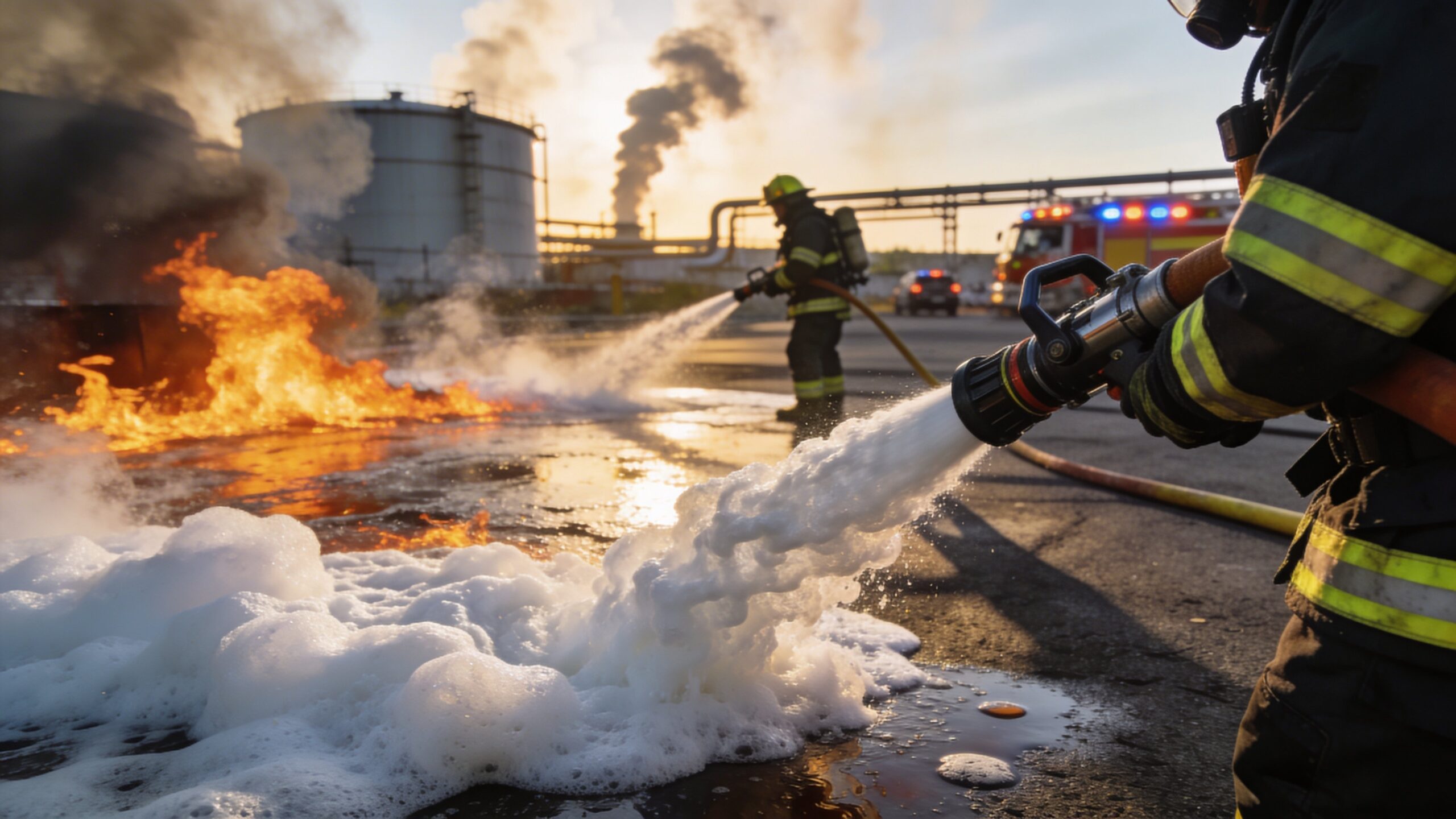
Fire is one of humanity’s oldest threats—unpredictable, destructive, and capable of overwhelming even the most prepared environments. Yet among the most effective tools used to control and extinguish fires is something that appears deceptively simple: foam. Fire suppression foam is not the soft material you might associate with packaging or insulation. Instead, it is a highly engineered firefighting agent designed to smother flames, prevent re-ignition, and protect both people and property. Understanding how foam works in fire suppression reveals a fascinating intersection of chemistry, physics, and real-world emergency response. From airports and oil refineries to fire trucks and industrial plants, foam plays a critical role in saving lives every day.
A: It is ideal for flammable liquid fires such as gasoline and oil.
A: Water can spread fuel fires, while foam suppresses them safely.
A: Modern foams are designed to be safe when used properly.
A: Yes, it suppresses vapors that could reignite.
A: New fluorine-free foams are more eco-conscious.
A: It can remain effective for extended periods depending on conditions.
A: It is mainly used in industrial and high-risk environments.
A: It is generally non-damaging but requires cleanup.
A: Yes, especially high-expansion foam for enclosed spaces.
A: Fire departments, airports, and industrial facilities.
The Science Behind Fire Suppression Foam
At its core, fire suppression foam is a mixture of water, foam concentrate, and air. When combined through specialized equipment, these elements create a blanket of bubbles that spreads across the surface of a fire. Unlike plain water, which primarily cools flames, foam introduces a multi-layered approach to extinguishing fire. The bubbles in the foam form a stable structure that floats on top of flammable liquids. This is particularly important in Class B fires, which involve fuels like gasoline, oil, and solvents. Because these liquids are lighter than water, spraying water alone can spread the fire. Foam, however, creates a barrier that separates the fuel from oxygen, effectively suffocating the flames. In addition to smothering the fire, foam also cools the fuel surface and suppresses the release of flammable vapors. This dual action—oxygen exclusion and vapor suppression—is what makes foam so powerful in firefighting applications.
Types of Fire Suppression Foam
Not all fire suppression foams are created equal. Different environments and fire risks require specific formulations, each tailored for optimal performance under certain conditions. Aqueous Film-Forming Foam, commonly known as AFFF, is one of the most widely used types. It forms a thin film over flammable liquids, rapidly cutting off oxygen and preventing vapor release. This makes it especially effective in fuel fires at airports and industrial facilities. Alcohol-Resistant AFFF is designed for fires involving polar solvents such as alcohols. These fuels can break down standard foam, but alcohol-resistant formulations create a protective polymer layer that maintains foam integrity.
Protein-based foams, derived from natural sources, offer excellent heat resistance and durability. They are often used in large-scale industrial fires where long-lasting coverage is critical. High-expansion foam, on the other hand, produces large volumes of light foam that can fill enclosed spaces such as warehouses or ship holds. This type is particularly useful for flooding areas where direct access to the fire is limited. Each type of foam is engineered with a specific purpose, ensuring that firefighters have the right tool for every scenario.
How Foam Extinguishes Fire
To understand how foam saves lives, it helps to look at the fundamental requirements of fire itself. Fire needs three elements to sustain itself: heat, fuel, and oxygen. This is often referred to as the fire triangle. Foam disrupts this triangle in multiple ways. First, it forms a blanket that blocks oxygen from reaching the fuel. Without oxygen, combustion cannot continue. Second, the water content in the foam absorbs heat, lowering the temperature of the fuel below its ignition point. Third, the foam prevents flammable vapors from escaping, which stops the fire from reigniting. This comprehensive approach is what sets foam apart from other firefighting methods. Instead of addressing just one aspect of the fire triangle, foam tackles all three simultaneously.
Where Fire Suppression Foam is Used
Fire suppression foam is used in a wide range of environments, each with unique risks and challenges. Airports are among the most prominent users, where aircraft fuel fires require rapid and effective response. Specialized firefighting vehicles are equipped with foam systems capable of covering large areas in seconds. Industrial facilities, particularly those dealing with petroleum products, rely heavily on foam systems. Storage tanks, refineries, and chemical plants often have fixed foam suppression systems that can be activated instantly in the event of a fire.
Marine environments also benefit from foam-based firefighting. Ships and offshore platforms use foam to combat fires in confined spaces where traditional methods may be less effective. Even municipal fire departments carry foam concentrates for use in vehicle fires and hazardous material incidents. This versatility makes foam an essential tool across multiple industries.
The Role of Foam in Saving Lives
The true value of fire suppression foam lies in its ability to protect human life. Fires involving flammable liquids can escalate rapidly, producing intense heat and toxic smoke. In such situations, every second counts. Foam allows firefighters to gain control of a fire quickly, reducing the risk of explosions and limiting the spread of flames. By suppressing vapors, foam also minimizes the release of harmful gases, creating a safer environment for both emergency responders and civilians.
In large-scale incidents, foam can be used to create protective barriers, shielding structures and evacuation routes from advancing flames. This strategic use of foam can mean the difference between a controlled situation and a catastrophic disaster.
Environmental and Safety Considerations
While fire suppression foam is highly effective, it is not without its challenges. Some traditional foam formulations, particularly those containing per- and polyfluoroalkyl substances (PFAS), have raised environmental concerns due to their persistence in the environment. In response, the firefighting industry has been developing more environmentally friendly alternatives. Fluorine-free foams are gaining popularity, offering effective fire suppression while reducing environmental impact.
Proper handling and disposal of foam are also critical. Training and regulations ensure that foam is used responsibly, balancing the need for fire protection with environmental stewardship.
Advances in Foam Technology
Innovation continues to drive improvements in fire suppression foam. Modern formulations are designed to be more efficient, requiring less concentrate while delivering equal or better performance. Advancements in delivery systems have also enhanced foam application. Precision nozzles and proportioning equipment ensure that foam is mixed correctly and applied effectively, maximizing its impact during firefighting operations. Research into biodegradable and non-toxic foams is ongoing, promising a future where fire suppression can be both highly effective and environmentally sustainable.
Training and Proper Use
The effectiveness of fire suppression foam depends not only on the product itself but also on how it is used. Firefighters undergo extensive training to understand foam types, application techniques, and safety protocols. Applying foam correctly involves controlling the flow rate, angle, and pattern to ensure optimal coverage. Improper application can reduce effectiveness or even spread the fire in certain situations. Training also emphasizes safety, as firefighters must be aware of potential hazards such as chemical exposure and slippery surfaces created by foam.
The Future of Fire Suppression Foam
As industries evolve and new materials are introduced, the challenges of firefighting continue to change. Fire suppression foam will remain a critical component of fire protection strategies, adapting to meet these new demands. Emerging technologies, including smart firefighting systems and automated foam deployment, are poised to enhance response times and effectiveness. These innovations will further improve the ability to protect lives and property in high-risk environments. The shift toward sustainable solutions will also shape the future of foam, ensuring that environmental considerations are integrated into fire safety practices.
Why Foam Remains Essential
Despite advances in firefighting technology, foam remains one of the most reliable and effective methods for combating certain types of fires. Its ability to suppress vapors, cool surfaces, and block oxygen makes it indispensable in scenarios where water alone is insufficient. From preventing catastrophic explosions to enabling safe evacuations, foam plays a vital role in modern fire protection. It is a tool that embodies both simplicity and sophistication, delivering life-saving performance when it matters most.
Conclusion: A Silent Protector in Emergencies
Fire suppression foam may not always be visible to the public, but its impact is profound. Behind every successful response to a fuel fire or industrial blaze, there is often a layer of foam working quietly to control the situation. By understanding what foam is and how it functions, we gain a deeper appreciation for the science and strategy behind firefighting. More importantly, we recognize the critical role it plays in saving lives, protecting communities, and preventing disasters. In a world where fire remains an ever-present risk, fire suppression foam stands as a powerful ally—one that continues to evolve, improve, and safeguard the future.