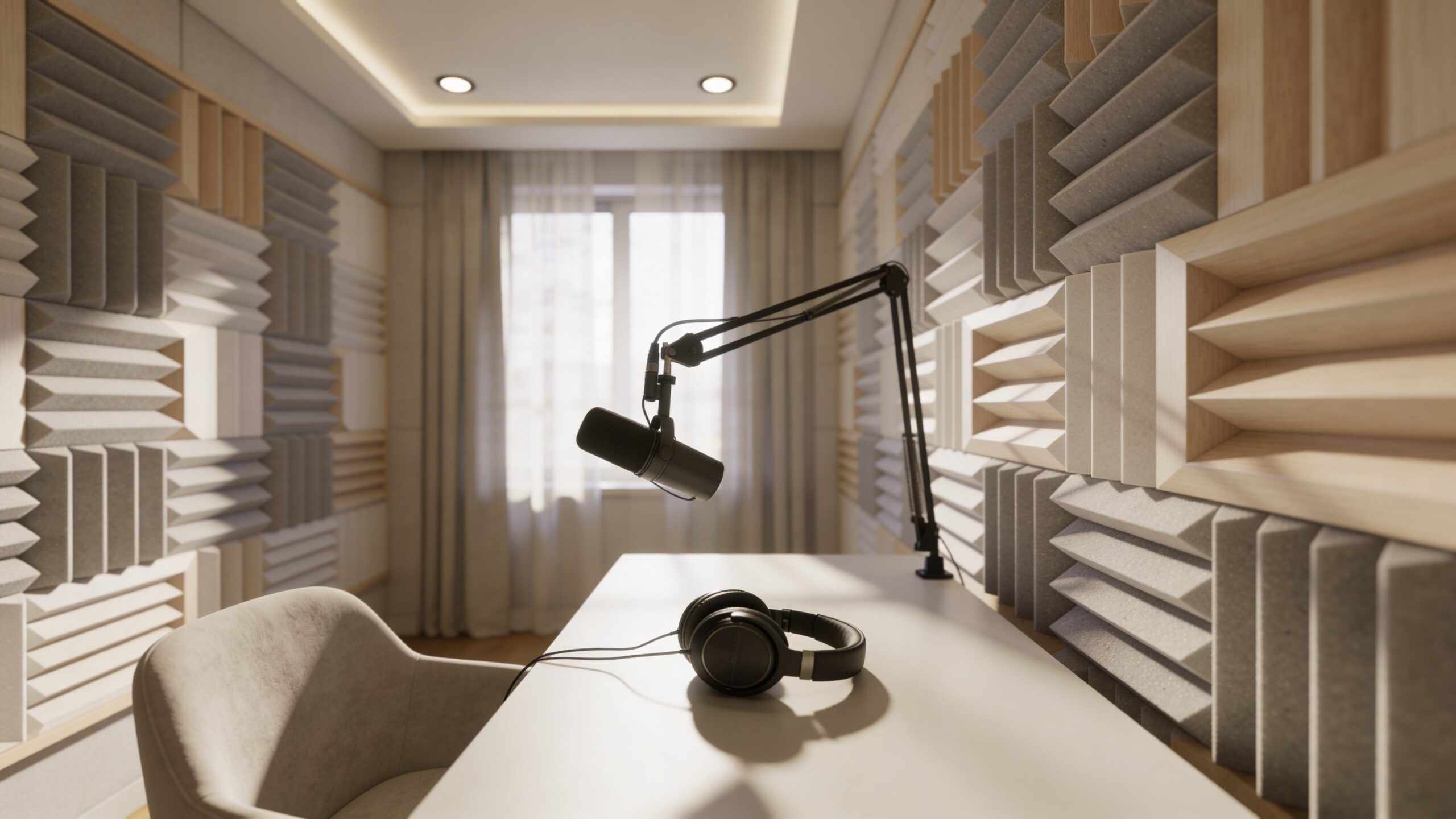
Foam soundproofing is one of the most misunderstood topics in home improvement, studio design, and workspace acoustics. It is sold everywhere, photographed beautifully, and often presented as a miracle cure for noisy rooms. Scroll through social media or browse online marketplaces and you will quickly find dramatic wall setups covered in pyramid foam, wedge panels, and sleek black tiles that promise a quieter, cleaner, more professional space. That image has shaped what many people think soundproofing looks like. But the truth is more nuanced. Foam can absolutely improve a room, yet it often improves a different problem than people expect. At its core, foam soundproofing usually refers to lightweight acoustic foam designed to absorb certain sound reflections inside a room. That is very different from blocking sound from entering or leaving a room. The distinction matters because many buyers expect foam to stop barking dogs, loud neighbors, traffic rumble, or TV noise from leaking through a wall. In most cases, it will not. Foam is useful, but its usefulness comes from controlling echo, reverb, and harsh reflections rather than acting like a true barrier. Understanding that difference is the key to making smart decisions, avoiding disappointment, and creating rooms that actually sound better.
A: Not in the way most people expect. Foam mainly reduces echo and reflected sound inside a room.
A: Usually not by itself. Sound leakage needs mass, sealing, insulation, and better room construction.
A: Yes, if your goal is clearer sound, less room harshness, and better recordings in a reflective space.
A: Start near first reflection points, close recording zones, and surfaces that create obvious echo or flutter.
A: Generally yes. Thicker panels usually absorb more effectively than thin decorative options.
A: Standard foam panels are usually weak against deep bass. Low frequencies need deeper and denser solutions.
A: It can help a lot, but the best studios also use bass control, room layout strategy, and other acoustic treatments.
A: Yes, many people mount panels on boards or use removable methods instead of gluing directly to walls.
A: Because foam improves the room’s internal reflections, which changes clarity without truly blocking incoming sound.
A: Expecting foam to do the job of real structural soundproofing when it is actually an acoustic treatment product.
Why Foam Soundproofing Became So Popular
Foam became popular because it is accessible, visually recognizable, and easy to install. It looks technical. It feels like something used in real studios. It is also lightweight, inexpensive compared with major construction upgrades, and simple enough for renters, creators, podcasters, gamers, and musicians to apply without special tools. In an era where people build content spaces at home, acoustic foam became the shortcut image for “serious audio setup.” That popularity created a problem. Foam was marketed not just as acoustic treatment, but often as broad “soundproofing.” Those words are not interchangeable. Acoustic treatment improves the sound quality within a room. Soundproofing reduces sound transmission between spaces. Foam is generally much better at the first job than the second. The confusion grew because many people noticed some improvement after installing foam and assumed that meant the room had become soundproof. In reality, they were often hearing fewer reflections and less ringing, not less sound leakage through walls, doors, ceilings, or floors.
What Foam Soundproofing Actually Does
Foam works by absorbing part of the sound energy that hits it, especially in the mid and high frequency range. When sound waves bounce around a hard room with drywall, glass, bare floors, and flat ceilings, they create reflections that build echo and smear clarity. Foam helps reduce those reflections. In a podcast room, that can mean less boxy voice tone. In a gaming setup, it can mean less slapback from walls. In a music practice room, it can make the room sound less harsh and less fatiguing.
This is why foam is often valuable for recording, streaming, editing, voiceover work, and listening spaces. It changes how a room responds to sound once that sound is already inside the room. It can make speech easier to understand, reduce flutter echo between parallel walls, and improve the sense of control in small untreated spaces. Those are meaningful benefits. They are just not the same as stopping noise from escaping a room or entering from outside.
What Foam Soundproofing Does Not Do Well
Foam is not dense enough to serve as a serious sound barrier. True soundproofing relies on principles like mass, decoupling, damping, airtight sealing, and structural isolation. Heavy drywall, insulated wall cavities, resilient channels, specialty damping compounds, solid-core doors, sealed gaps, and upgraded windows do far more to reduce sound transmission than decorative foam panels.
This is where many myths begin. If you place foam on a shared apartment wall, it may slightly change the sound character in your room, but it will not meaningfully stop bass from next door. If you line a bedroom door with thin foam, it may make the door look treated, but sound will still leak through air gaps around the frame and through the door itself if the assembly is lightweight. Foam may soften some high-frequency reflections, yet low-frequency energy from subwoofers, traffic, or impact noise will still travel through the structure with little resistance.
The Biggest Myth: Foam Makes a Room Soundproof
This is the headline myth, and it causes more wasted money than almost anything else in beginner acoustic treatment. People hear the word “soundproofing” and imagine silence. They picture a room becoming sealed off from the outside world. Foam rarely delivers that result on its own. The disappointment is not because foam is useless. It is because it is often used for the wrong target.
Imagine clapping in an empty room with bare walls. The room sounds sharp, reflective, and lively. Add foam to key reflection points and the clap becomes drier, shorter, and less bright. That is acoustic improvement. Now imagine your neighbor playing loud music next door. Add the same foam to your wall and the music is still clearly audible. That is the limit. Foam changes room response far more than it changes transmission loss. Once people understand that, foam becomes easier to evaluate honestly and use strategically.
Real Benefits of Foam Soundproofing
Foam does provide real, practical value when expectations are realistic. One of the biggest benefits is improved speech clarity. In small offices, home studios, recording corners, and meeting rooms, untreated reflections can make voices sound hollow, distant, or messy. Foam can reduce that reflected energy and help direct sound feel more focused. For creators who record frequently, that can make a room sound more polished without expensive renovations.
Another real benefit is comfort. Rooms with too much reflection feel noisy even when they are not especially loud. A hard room can turn every conversation, keyboard click, or speaker playback into a more aggressive experience. Foam can make such spaces feel calmer, softer, and easier to work in for long stretches. It may also help with microphone performance by reducing the amount of room sound captured in recordings. In that sense, foam is often less about isolation and more about refinement.
Where Foam Works Best
Foam tends to perform best in smaller rooms where reflections are a clear issue and the goal is better interior sound. Think podcast booths, video call spaces, voiceover corners, editing rooms, rehearsal spaces for certain instruments, content studios, and hobby music rooms. In these spaces, the room itself often causes more audible problems than outside noise does. A few strategically placed panels can make a surprising difference in perceived clarity and dryness. It can also work well when combined with other treatments. Foam is not an all-or-nothing product. It is one tool in a broader acoustic strategy. For example, a room might use rugs for floor reflections, curtains for some softening, bookshelves for diffusion, bass traps for low-end control, and foam for taming mid/high reflections at key points. In a layered setup like that, foam becomes much more useful because it is solving the specific problem it handles best instead of being asked to do everything.
Where Foam Often Falls Short
Foam often disappoints in apartments, bedrooms, and shared-wall situations where the main complaint is outside noise or sound leakage. If the problem is your neighbor’s TV, footsteps from above, traffic through thin windows, or your own speakers bothering someone in the next room, foam will usually not address the root cause. Those problems are mostly structural. They involve how sound moves through walls, floors, ceilings, gaps, and building assemblies.
It also falls short when buyers over-cover a room without understanding placement. Too much foam in the wrong areas can make a room feel oddly dull or unbalanced while still leaving the most serious issues unresolved. A room can end up less lively but not truly controlled. That is why thoughtful placement matters more than blindly covering every wall. Foam is not wallpaper for silence. It is targeted treatment for reflections.
Thickness, Shape, and Quality Matter
Not all foam is equal. Thickness affects performance, especially how low in the frequency range a panel can absorb effectively. Thin decorative foam may have limited practical value beyond taming very bright reflections. Thicker acoustic foam generally performs better, though even thick foam has limits compared with denser and deeper acoustic products. Shape matters less than many people think. Wedges, pyramids, and egg-crate patterns can look impressive, but the material thickness, density, and placement usually matter more than the pattern itself.
Quality matters too. Poor-quality foam may crumble, discolor, smell unpleasant, or perform inconsistently. Better products tend to have more reliable structure and longer service life. Fire safety is another consideration, especially in enclosed rooms or commercial environments. Buyers often focus only on looks, but acoustic foam should be evaluated as a functional material, not just a decorative panel.
Smarter Alternatives When You Need True Soundproofing
If the real goal is stopping noise transmission, it helps to shift attention away from foam and toward construction principles. Adding mass to walls, sealing air leaks, upgrading doors, using insulated assemblies, improving windows, and mechanically separating surfaces are far more effective routes. Even simple fixes like door sweeps, acoustic sealant, and weatherstripping can outperform foam in leakage control because sound loves gaps.
For low-frequency noise, the challenge becomes even greater. Bass travels through structures easily and requires serious measures to control. This is why many people fail when they try to solve loud music problems with lightweight wall foam alone. In such cases, the right answer may involve wall upgrades, floor isolation, speaker repositioning, volume control, or room layout changes. Foam can still be part of the interior acoustic picture, but it should not be mistaken for the main barrier solution.
How to Use Foam the Right Way
The smartest way to use foam is to identify the actual problem first. If your room sounds echoey on calls, hollow on recordings, or harsh when you speak or play music, foam could help. Start with first reflection points, nearby wall surfaces, and problem zones where sound repeatedly bounces. Use enough treatment to make a difference, but not so much that the room becomes unnaturally dead. Listen before and after. Record test samples. Adjust based on results rather than aesthetics alone. It also helps to combine foam with better room habits. Softer furnishings, strategic furniture placement, rugs, thick curtains, bookshelves, and careful speaker positioning can all improve perceived sound. In many rooms, the best results come from treating acoustics as a system. Foam is then part of a more intelligent approach rather than a standalone miracle purchase.
Foam Soundproofing for Content Creators and Home Offices
For creators, streamers, podcasters, and remote workers, foam can be especially appealing because it improves perceived professionalism quickly. A better-sounding room can make a microphone seem more expensive than it is. Voices come across with less splash, less room tone, and more focus. That matters in competitive digital spaces where audio quality shapes trust, watch time, and overall production value.
In home offices, foam can also support concentration by reducing internal liveliness. It may not stop your dog from barking in the next room, but it can make your own room sound less sharp and distracting during meetings. That is a more modest promise, yet it is still a real one. Many successful workspace upgrades come not from full soundproofing, but from better acoustic comfort.
The Verdict: Benefits Are Real, But the Myths Are Loud
Foam soundproofing is neither scam nor magic. It is a legitimate acoustic treatment that has been oversold through bad labeling and unrealistic expectations. Its real strength is improving how sound behaves inside a room. It can reduce echo, soften harsh reflections, improve clarity, and make small spaces feel more controlled and professional. Those are meaningful, measurable benefits for the right user. The myth is that foam alone can soundproof a room in the way most people imagine. It usually cannot. When buyers understand that difference, they make better choices, spend more wisely, and build rooms that actually perform better. Foam belongs in the conversation, but only as part of an honest one. Used correctly, it is a practical acoustic tool. Used as a substitute for real isolation, it becomes a frustrating myth wrapped in a familiar shape.