Memory Foam and Gel Describe Different Features
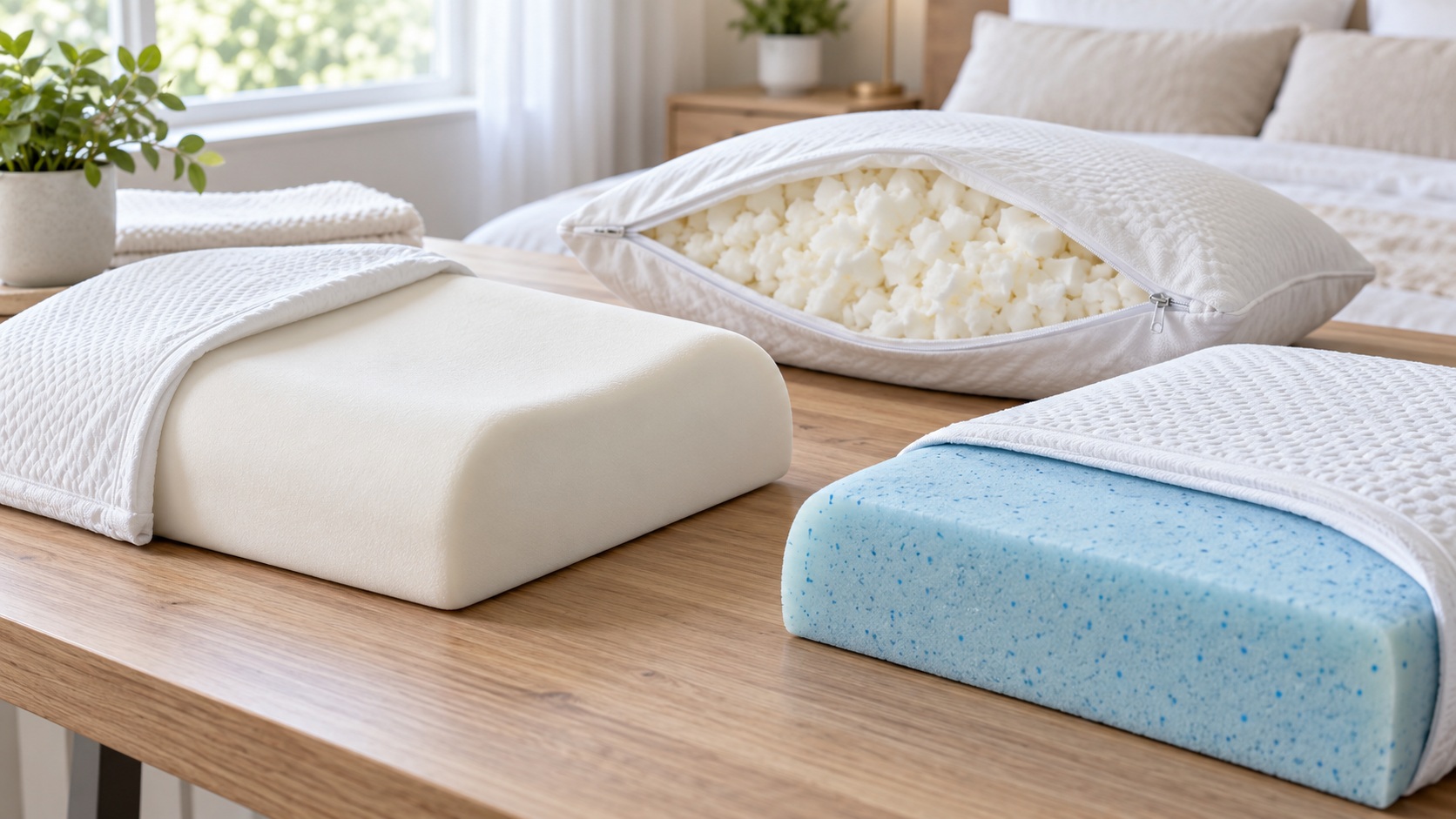
Memory foam and gel foam are not always competing pillow categories. Memory foam describes a viscoelastic material response, while gel may be incorporated into that foam, placed in a separate layer, or used in another part of the pillow. A gel pillow can therefore also be a memory foam pillow. To compare products meaningfully, look past the front label and examine the core, shape, fill arrangement, cover, and claimed thermal mechanism. The best match depends on how the complete pillow feels and fits your ordinary setup, not on whether a single ingredient sounds more advanced. No construction guarantees a particular sleep outcome for every person, and cooling language deserves the same scrutiny as firmness or support claims.
A: Yes. Gel can be incorporated into or layered with memory foam.
A: No. Assess the specific mechanism, evidence, bedding, and room conditions.
A: No. Formulation, core geometry, fill structure, and covers create different experiences.
A: No. Check actual profile information rather than size names.
A: No. These are distinct properties.
A: Do not alter a solid core without manufacturer support; choose intended adjustability or another profile.
A: Use fill compatible with the product and its instructions.
A: No. Read the insert's specific care directions.
A: No. Certification has a defined scope and does not guarantee personal comfort.
A: Compare complete construction, useful loft, response, cover, care, and substantiated claims in your ordinary setup.
What Memory Foam Actually Contributes
Viscoelastic foam combines deformation under load with a response that depends on time. A pillow can gradually conform where the head rests and recover after the load is removed. The speed and degree of that response vary by formulation and conditions. The Polyurethane Foam Association’s technical discussion of viscoelastic foam explains why temperature and test conditions matter when comparing firmness and recovery.
This does not mean every memory foam pillow feels like the same slow-moving block. The core can be molded, cut, perforated, layered, or divided into pieces. A cover and any blended fill also change what the sleeper experiences. Compare the entire construction and its intended use rather than expecting the words memory foam to predict one precise sensation.
Notice whether the response suits how you move. Some people prefer a surface that holds a contour; others dislike waiting for a shape to change when they reposition. Neither preference establishes that the other design is defective. Describe the experience in practical terms when comparing products: how readily it changes shape, how much it compresses, and whether it remains comfortable in the positions you normally use.
A Solid Core Gives Shape a Larger Role
A solid foam core tends to preserve a more defined geometry than loose fill. It may be a simple rounded slab or have contours intended to create different support regions. The unloaded outline matters, but so does what happens after the head compresses it. A tall-looking pillow can settle substantially, while another with a similar listed height may resist compression more strongly.
Read dimensions carefully and check whether different sizes change only length and width or also profile. Queen and king labels do not by themselves establish useful sleeping height. A large pillow can be too high, too low, too firm, or too slow to respond for a particular setup. Ask for actual profile information and use any fit guidance provided by the manufacturer without treating it as a medical prescription.
Contoured designs can offer more than one orientation, but follow the instructions for the specific model. Do not assume the tallest ridge should always sit under the neck or that any sculpted outline will suit every position. Test the product as intended and evaluate ordinary comfort. Persistent discomfort or a health concern deserves appropriate professional advice rather than a promise that a particular contour will correct it.
A solid core may also be less easily adjusted at home. Do not cut, drill, or reshape a purchased pillow to alter its loft unless the manufacturer explicitly supports that modification. Alteration can damage layers, create debris, change care, and affect return eligibility. If the profile is wrong, an intended adjustable product or another model is usually a clearer option than an improvised surgery on the core.
Shredded Fill Changes Adjustability and Feel
A shredded or cut-piece pillow allows pieces to move relative to one another, sometimes with added fiber or another material. The result is a different structure from an uninterrupted foam slab. A zippered adjustable model may permit fill removal or addition, but the exact blend and instructions matter. A sealed filled pillow should not be assumed adjustable simply because its contents are in pieces.
Coop’s replacement-fill information illustrates how a brand can specify different fill blends for particular pillows, including gel-infused memory foam in one option. Match replacement material to the intended product rather than treating every bag of shredded foam as equivalent. The amount, shape, blend, and distribution of fill all influence the result.
Gel Can Be Infused, Layered, or Part of a Blend
Ask where the gel is and what it is intended to do. Gel-infused foam may incorporate it within the cellular material, while another pillow uses a distinct gel-containing layer nearer the surface. A shredded blend can include gel-infused pieces. These constructions are not interchangeable, and the blue color of a sample is not evidence of a defined thermal performance level.
Tempur-Pedic’s Dual Cooling pillow description is one product-specific example of cooling gel layers combined with the brand’s foam material. It shows why memory foam versus gel can be a false choice: both features can exist in one pillow. A manufacturer’s description identifies the intended construction, but comparative performance still needs an appropriate basis.
Look for an explanation of the mechanism rather than a dramatic graphic. A cool initial surface sensation, a heat-absorbing component, greater air movement, and moisture management describe different effects. A product can address one without proving another. Ask what was measured, under which conditions, and whether the claim concerns the whole pillow, the cover, or a sample of material.
Cooling Is a System Question
A pillow receives heat from a person and exchanges it with its surroundings. An unpowered material does not create unlimited cooling simply because it includes gel. Its effect depends on heat storage, transfer, contact, and the rest of the bedding environment. Avoid treating a cool hand touch in a showroom as proof of a sustained overnight temperature difference.
Some products use phase-change materials, which absorb or release heat as they change state within a designed temperature range. That is different from assuming every gel inclusion has the same behavior. The word gel alone does not establish that a phase-change mechanism is present. Read the specific product information and do not combine separate marketing technologies into a claim the manufacturer did not make.
Covers and pillowcases can influence contact feel and the movement of heat and moisture. Adding a thick protector or an unsuitable outer layer can change the experience of a specialized cover. Follow care and use instructions, but evaluate the combination you will actually sleep on. A pillow tested without your usual bedding is not necessarily the same system you will use at home.
Room conditions and personal preferences also affect the comparison. A product that feels comfortable in one room may not produce the same impression in a warmer room with different bedding. This does not make every claim meaningless, but it does make universal promises questionable. Prefer evidence describing a defined comparison over unsupported statements that a pillow stays cold indefinitely.
When comparing temperature claims, keep other changes limited. If you switch pillow, protector, sheets, and room settings together, you may like the outcome without knowing which change mattered. That can be fine for personal comfort, but it cannot support a confident claim that the gel alone caused the difference. Useful notes describe the whole setup rather than awarding one ingredient all the credit.
Loft and Compression Matter More Than a Category Winner
Loft is the pillow’s height, but listed unloaded height is not the height under the head. Compression depends on the material, fill amount, construction, and load. Consider the relationship with your mattress as well: the body and shoulder can settle differently on different surfaces. A pillow that worked on one bed may feel different after the mattress changes, even if the pillow itself is unchanged.
Do not confuse density with firmness. The Polyurethane Foam Association’s performance guidance distinguishes these properties. Nor should support be reduced to a high number on either scale. Evaluate whether the product maintains a comfortable useful shape in your normal positions rather than assuming that denser, taller, or harder automatically means better.
Adjust in Small, Reversible Steps
If the product is designed for fill adjustment, follow its instructions and change a modest amount at a time. Keep removed fill clean, contained, and identifiable so the change can be reversed. Distribute the remaining fill as directed rather than letting it form one lump. Do not leave loose foam where children or others could access it as play material.
Use the same ordinary pillowcase and sleep environment while checking the result. Compare more than a moment of hand pressure, but do not treat discomfort as something you must endure to complete a self-imposed test. Contact the seller about fit and product concerns, and seek appropriate medical advice for persistent symptoms. A consumer comparison cannot diagnose posture, pain, breathing, or another medical condition.
Keep return terms visible during experimentation. Pillow policies can differ from a brand’s mattress trial, and washing, alteration, missing accessories, or other conditions may matter. Verify the actual purchase terms before removing tags or making changes beyond the product’s intended adjustment. An attractive mattress guarantee elsewhere on the website does not establish an equivalent pillow offer.
If two sleepers prefer different feels, compare separate pillows rather than searching for a household-wide category winner. Head size, positions, bedding, movement, and preferences can differ. A useful purchase decision acknowledges those differences. The technology label is a starting point for understanding the object, not a vote that one person must win for everyone.
Care Is Part of the Technology
Read care instructions separately for the cover and insert. A removable washable cover does not make the foam core machine washable. Tempur-Pedic’s pillow-care guidance specifically cautions against washing or submerging inserts unless their own instructions allow it. Treat that as a reminder to identify the model, not as a rule copied onto every brand.
Avoid adding heat, solvents, fragrances, or other treatments to change a pillow’s feel or smell without manufacturer approval. Follow the prescribed cleaning and drying method, and stop using damaged or persistently concerning products while obtaining advice. An improvised cleaning method can alter foam, gel layers, coatings, or the cover even when the pillow initially looks unchanged.
Read Certifications and Durability Claims Precisely
A certification can address specified materials or emissions without promising that the whole pillow will fit your body, remain cool all night, or last a fixed number of years. CertiPUR-US explains its foam-focused program in its official FAQ. Check the actual certification and participating supplier rather than treating a logo as approval of every component and performance claim.
Inspect how the pillow changes in ordinary use. Persistent flattening, displaced fill, damaged seams, degraded foam, or separated layers may affect usefulness. Review care, adjustment, warranty, and replacement guidance with the seller. Avoid a universal replacement calendar that ignores the product and its condition, but do not keep using an item that no longer performs its intended function simply because a warranty period remains.
Finally, compare what you are paying for. Adjustable construction, cover quality, profile options, manufacturing consistency, care requirements, and usable return terms can matter alongside a gel feature. A higher price does not prove superior thermal performance, and the absence of gel does not make a pillow obsolete. Choose the complete design that fits your preferences with evidence proportionate to the claims being made.
Compare Construction Before the Label
Memory foam describes response; gel describes a possible added component. Fit, loft under load, fill arrangement, cover, care, and credible thermal evidence explain the pillow more clearly than a simple memory-versus-gel contest.