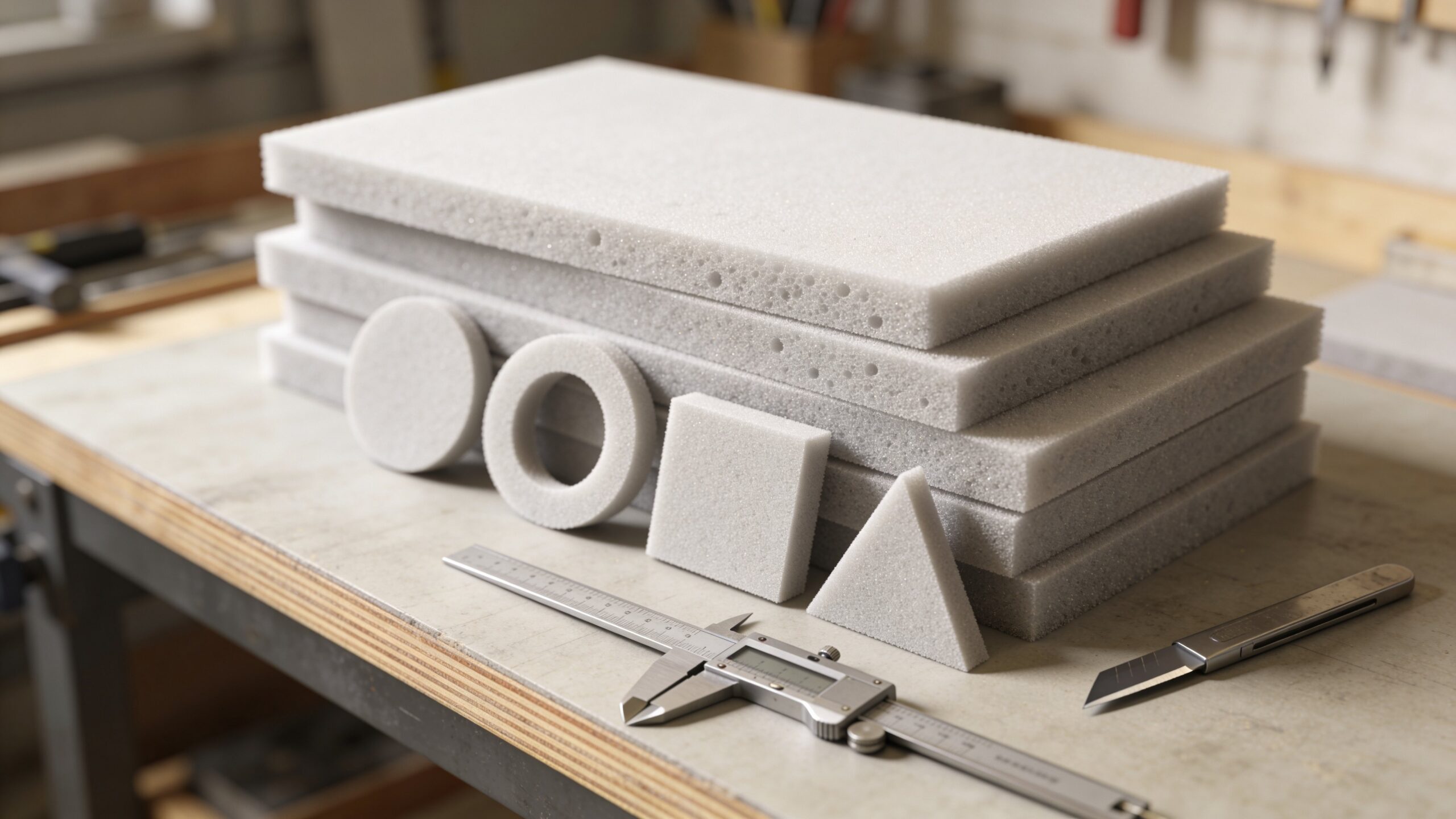
Understanding Foam Rubber Sheet
Foam rubber sheet is a flexible, lightweight sheet material made from rubber or rubber-like polymers that have been expanded into a cellular structure. Instead of being solid all the way through, foam rubber contains thousands of tiny air pockets, giving it softness, compressibility, cushioning ability, and shock absorption. These air-filled cells are what make the material feel springy, resilient, and useful across so many industries. At its simplest, foam rubber sheet is rubber transformed into a soft, workable sheet form. It can be thin and flexible like craft foam, thick and supportive like padding, dense and durable like industrial gasket material, or soft and plush like upholstery cushioning. Because it can be cut, layered, glued, shaped, and installed in many ways, foam rubber sheet has become a go-to material for everything from packaging delicate products to sealing doors, lining tool drawers, making costumes, sound dampening rooms, and protecting equipment.
A: Foam rubber sheet is a flexible rubber-based sheet filled with tiny air cells that provide cushioning, compression, insulation, and sealing ability.
A: It is used for padding, gaskets, seals, packaging, vibration control, insulation, sound dampening, crafts, upholstery, and protective liners.
A: Open-cell foam is softer and breathable, while closed-cell foam is firmer, more water-resistant, and better for seals and outdoor use.
A: Closed-cell foam rubber is water-resistant, but not every foam rubber sheet is waterproof; open-cell foam can absorb moisture.
A: EPDM foam rubber is often a strong outdoor choice because it resists weather, ozone, UV exposure, and temperature changes.
A: Yes, most sheets can be cut with sharp scissors, utility knives, rotary cutters, or templates depending on thickness and density.
A: Contact cement, rubber adhesive, spray adhesive, and pressure-sensitive adhesive backing can work, but always test first for compatibility.
A: Yes, foam rubber sheet can reduce rattling and vibration when placed between machines, appliances, speakers, panels, or hard surfaces.
A: Yes, it is excellent for custom packaging inserts, protective pads, dividers, and liners for fragile or valuable products.
A: Match thickness to the gap, pressure, and cushioning requirement; thicker foam adds more padding, but firmness and compression matter too.
Why Foam Rubber Sheet Is So Useful
The real power of foam rubber sheet comes from its balance of softness and structure. It can compress under pressure, then return to its original form when the pressure is removed. This makes it valuable for cushioning, impact protection, vibration control, and comfort applications. Unlike many rigid materials, foam rubber can adapt to uneven surfaces, wrap around shapes, and fill small gaps. Another reason foam rubber sheet is so widely used is that it comes in many formulas. Some versions are soft and open-celled, allowing air and moisture to pass through. Others are closed-cell, meaning the tiny cells are sealed off from each other, making the sheet more resistant to water, air, dust, and some chemicals. This range gives designers, builders, makers, and manufacturers options for very different jobs while still working with the same basic category of material.
Open-Cell vs. Closed-Cell Foam Rubber Sheet
One of the most important things to understand about foam rubber sheet is the difference between open-cell and closed-cell foam. Open-cell foam has interconnected air pockets, which makes it softer, more breathable, and easier to compress. It is often used for comfort, padding, upholstery, sound absorption, and light cushioning. Because air can move through it, open-cell foam tends to feel plusher and more flexible.
Closed-cell foam has sealed air pockets, which makes it firmer, more water-resistant, and better suited for sealing, insulation, flotation, gasketing, and outdoor use. It does not absorb water as easily as open-cell foam and usually provides better resistance to compression, weather, and repeated contact. If you need a foam rubber sheet for a gasket, weather strip, anti-vibration pad, or protective barrier, closed-cell foam is often the better choice.
Common Materials Used in Foam Rubber Sheets
Foam rubber sheets are not all made from the same base material. Neoprene foam rubber is popular because it offers a strong balance of flexibility, weather resistance, oil resistance, and durability. It is often used in gaskets, seals, industrial padding, wetsuit-style materials, and equipment protection. EPDM foam rubber is valued for outdoor applications because it resists weather, UV exposure, ozone, and temperature changes.
SBR foam rubber is often chosen for general-purpose cushioning and padding because it is cost-effective and versatile. Nitrile foam is useful when oil and fuel resistance are important, making it common in automotive, machinery, and industrial environments. Silicone foam rubber is used in higher-temperature or specialty sealing applications. Each material has its own personality, so the best foam rubber sheet depends on where it will be used, what it will touch, and how much stress it will experience.
Key Properties of Foam Rubber Sheet
The first major property of foam rubber sheet is compressibility. A good foam rubber sheet can absorb pressure and deform without cracking or breaking. This makes it excellent for cushioning fragile objects, reducing pressure points, and creating soft contact surfaces. Compressibility also helps foam rubber work as a seal because it can squeeze into gaps and form contact between surfaces.
Another key property is resilience. Resilience describes how well the foam bounces back after being compressed. High-resilience foam returns quickly and maintains its shape over repeated use, making it useful for pads, mats, handles, supports, and protective inserts. Lower-resilience foam may be better for slow cushioning or temporary packaging where the goal is to absorb force rather than spring back instantly.
Density, Thickness, and Firmness
Foam rubber sheet is often selected by thickness, density, and firmness. Thickness affects how much cushioning, insulation, or gap-filling ability the sheet provides. A thin sheet may work well for lining drawers, sealing small gaps, or adding grip. A thicker sheet may be better for floor pads, kneeling cushions, protective packaging, or vibration isolation. Density and firmness determine how the foam feels and performs under pressure. A low-density foam may be lighter, softer, and easier to compress, while a higher-density foam may feel firmer, last longer, and hold up better under repeated use. Choosing foam rubber sheet is not just about picking the thickest option. The best choice is the sheet that compresses the right amount for the job without flattening too easily or feeling too stiff.
Cushioning and Impact Protection
One of the most popular uses for foam rubber sheet is cushioning. The material absorbs energy when something presses, hits, or vibrates against it. This makes it useful for protecting electronics, tools, instruments, glass, ceramics, and other delicate products during shipping or storage. Foam rubber can be cut into inserts, pads, dividers, sleeves, or liners to keep objects from sliding and colliding.
In workshops and garages, foam rubber sheet is often used to line drawers, toolboxes, shelves, and work surfaces. It protects both the tools and the surface underneath them. In manufacturing, it can reduce damage during assembly, transport, or display. In homes, it can soften contact points behind furniture, under appliances, or along sharp corners. Anywhere impact is a concern, foam rubber sheet can act as a quiet, forgiving buffer.
Sealing, Gasketing, and Weather Protection
Closed-cell foam rubber sheet is especially useful for seals and gaskets. Because it compresses and fills gaps, it can help block air, dust, moisture, vibration, and light. It is commonly used around doors, windows, access panels, HVAC equipment, machinery, enclosures, and automotive parts. A foam rubber gasket can make a loose-fitting joint tighter, quieter, and more weather-resistant.
For outdoor uses, material choice matters. EPDM foam rubber is often preferred for weather seals because it handles sunlight, ozone, and temperature swings well. Neoprene foam is also useful when durability and moderate chemical resistance are needed. The goal is to select a foam rubber sheet that will not crumble, shrink, harden, or lose its seal after exposure to the environment.
Insulation and Temperature Control
Foam rubber sheet can also help with insulation. The air pockets inside the foam slow down heat transfer, which can help reduce temperature loss or gain. This makes foam rubber useful for pipe wraps, HVAC components, appliance seals, cooler padding, and thermal barriers. Closed-cell foam is usually better for insulation where moisture resistance is needed.
In addition to thermal insulation, foam rubber can reduce drafts and air leaks. A properly installed strip or sheet can help close gaps around doors, hatches, vents, and panels. This can improve comfort, reduce energy waste, and protect sensitive equipment from dust or moisture. For high-temperature environments, specialty materials such as silicone foam may be needed instead of general-purpose foam rubber.
Sound Dampening and Vibration Control
Foam rubber sheet can reduce noise in two major ways: by absorbing sound and by limiting vibration. Open-cell foam is better for absorbing airborne sound because its porous structure allows sound waves to enter and lose energy. This makes it useful for studios, offices, equipment rooms, and acoustic panels where echo reduction is important.
Closed-cell foam rubber is often better for vibration control and mechanical isolation. It can sit under machines, appliances, speakers, pumps, compressors, or electronics to reduce rattling and movement. A foam rubber pad between two hard surfaces can prevent buzzing, scraping, and impact noise. While foam rubber is not a complete soundproofing solution by itself, it is a practical part of many noise-control setups.
Comfort, Support, and Upholstery Uses
Foam rubber sheet is widely used in comfort applications because it provides softness without losing structure. It can be used in chair pads, benches, exercise mats, kneeling pads, mattress toppers, armrests, back supports, and protective padding. Open-cell foam is especially common in upholstery because it feels soft, breathable, and comfortable.
For comfort uses, the foam must match the pressure it will experience. A very soft foam may feel good at first but flatten quickly under body weight. A firmer foam may last longer but feel less plush. Many cushions use layered foam, combining a firmer base with a softer top layer. This creates both support and comfort, which is one reason foam rubber sheet is so valuable in furniture and ergonomic design.
Craft, Cosplay, DIY, and Creative Uses
Foam rubber sheet is also popular in creative work. Makers use it for costumes, cosplay armor, theatrical props, model scenery, display builds, custom organizers, and decorative panels. It can be cut with utility knives, scissors, dies, or CNC tools depending on thickness and density. Some types can be heat-shaped, engraved, textured, painted, or laminated.
For creative projects, foam rubber sheet offers a rare combination of light weight and visual flexibility. It can imitate leather, metal, stone, padding, armor, or mechanical parts with the right finishing techniques. EVA-style foam sheets are especially common in costume and prop work, while softer foam rubber sheets are used for padding and flexible details. The material allows beginners to build impressive shapes without needing heavy tools or expensive fabrication equipment.
Packaging and Product Protection
Foam rubber sheet is a trusted packaging material because it protects products while adding very little weight. It can be cut into custom profiles that hold items in place, preventing movement during transport. This is especially useful for cameras, tools, medical devices, electronics, collectibles, jewelry, laboratory equipment, and precision parts. The best packaging foam depends on the fragility, weight, and surface finish of the item being protected. Soft foam may prevent scratches on polished surfaces, while firmer foam may support heavier items. Closed-cell foam may be preferred when moisture resistance is important. For premium product presentation, foam rubber inserts can also make packaging feel more organized, professional, and intentional.
Automotive, Marine, and Industrial Uses
In automotive and industrial settings, foam rubber sheet is often used for seals, pads, vibration dampers, insulation, and protective liners. It can reduce rattles in panels, cushion parts, protect painted surfaces, line storage compartments, and create custom gaskets. Neoprene, nitrile, and EPDM foams are especially common in these environments because they offer better resistance to oil, weather, temperature, or wear than simple craft foams.
Marine uses often require closed-cell foam because water resistance is critical. Foam rubber sheet can be used around hatches, seats, lockers, electronics, and deck equipment. In industrial environments, it may be used beneath machinery, inside enclosures, along conveyor lines, or as a protective buffer between components. The key is selecting a foam that can survive the specific conditions of the job.
How to Cut and Work With Foam Rubber Sheet
Foam rubber sheet is usually easy to cut, but clean results require sharp tools and careful layout. Thin sheets can often be cut with scissors, while thicker sheets may need a sharp utility knife, straightedge, or specialty foam cutter. Multiple light passes usually create cleaner cuts than forcing one deep cut through the material. A fresh blade is important because dull tools can tear, drag, or compress the foam.
For accurate projects, mark the foam with chalk, pencil, or removable layout lines depending on the surface. When gluing foam rubber sheet, choose an adhesive compatible with the foam type. Contact cement, rubber adhesive, spray adhesive, pressure-sensitive adhesive backing, and specialty gasket adhesives are all common options. Always test adhesives first because some solvents can damage certain foams or make them stiff.
Choosing the Best Foam Rubber Sheet
To choose the right foam rubber sheet, start with the application. Ask whether the foam needs to cushion, seal, insulate, absorb sound, resist water, handle heat, withstand oil, or support weight. A craft project, a door seal, a vibration pad, and a packaging insert may all use foam rubber sheet, but they may require very different materials.
Next, consider the environment. Outdoor exposure, sunlight, moisture, chemicals, compression, movement, and temperature can all affect performance. Then choose thickness, density, firmness, and cell structure. A soft open-cell sheet may be perfect for comfort padding but wrong for a waterproof gasket. A closed-cell neoprene or EPDM sheet may be excellent for sealing but too firm for a plush cushion. Matching the sheet to the job is the difference between a temporary fix and a professional result.
Common Mistakes to Avoid
One common mistake is assuming all foam rubber sheets are the same. They may look similar online or on a shelf, but their performance can vary dramatically. A sheet designed for crafts may not survive outdoors. A soft upholstery foam may absorb water. A firm gasket foam may not feel comfortable as a cushion. The wrong foam can flatten, crack, crumble, absorb moisture, or fail to bond properly.
Another mistake is choosing thickness without considering compression. A foam seal needs to compress enough to close the gap, but not so much that it becomes permanently flattened. A cushion needs enough thickness to absorb pressure, but enough firmness to prevent bottoming out. For best results, foam rubber sheet should be selected as a performance material, not just a soft sheet.
Final Thoughts on Foam Rubber Sheet
Foam rubber sheet is one of those materials that seems simple until you realize how many problems it can solve. It can soften hard edges, protect fragile products, quiet noisy equipment, seal air gaps, support the body, insulate surfaces, organize tools, and unlock creative projects. Its value comes from its cellular structure, flexible feel, and wide range of material options. Whether you are building a custom gasket, lining a toolbox, packaging a delicate product, improving a workspace, designing a costume, or adding comfort to a surface, foam rubber sheet gives you a practical and adaptable starting point. Choose the right cell type, material, thickness, and firmness, and this humble sheet becomes one of the most useful problem-solving materials in any shop, studio, home, or industrial environment.