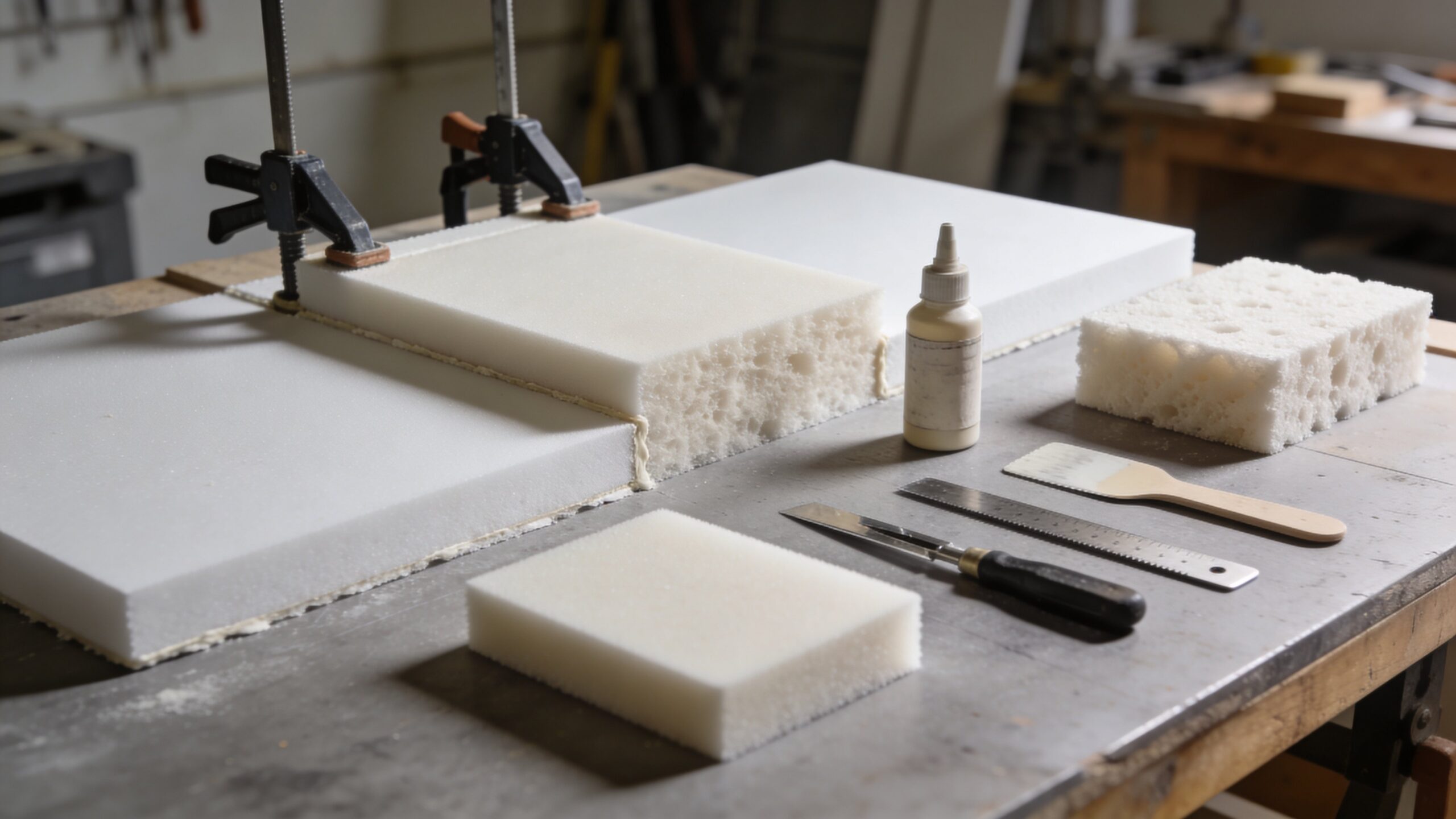
Understanding Foam Adhesive
Foam adhesive is a glue designed to bond foam without damaging its lightweight cellular structure. Foam may look simple, but it can be surprisingly difficult to glue because every foam type behaves differently. Some foam is soft and sponge-like, some is rigid and smooth, some bends easily, and some melts when exposed to the wrong chemicals. The best foam adhesive is not always the strongest glue available. It is the adhesive that matches the foam type, the surface being bonded, and the way the finished project will be used. A costume seam, cushion repair, insulation panel, display prop, and architectural model all need different bonding strategies.
A: It depends on the foam type. PVA and foam-safe construction adhesive work well for EPS/XPS, contact cement is excellent for EVA, and spray adhesive is ideal for upholstery foam.
A: Water-based PVA glue, foam-safe construction adhesive, and adhesives labeled safe for polystyrene are usually safer choices.
A: Yes, but low-temperature hot glue is safer because high heat can melt or deform some foam.
A: Contact cement is excellent for EVA foam and many flexible foam sheets, but it should be tested before use on sensitive foam.
A: Yes, foam-safe spray adhesive works well for upholstery foam, fabric bonding, acoustic panels, and large surfaces.
A: Use PVA glue, foam-safe construction adhesive, or compatible polyurethane glue with gentle pressure while it cures.
A: The adhesive likely contained solvents that attacked the foam, especially if it was EPS or XPS polystyrene.
A: Dry time varies. Some contact adhesives grab quickly, while PVA, construction adhesive, polyurethane glue, and epoxy may need hours or longer.
A: Use gentle, even pressure. Heavy clamping can dent or crush foam.
A: Yes. Scrap testing helps confirm the glue will bond without melting, staining, warping, or weakening the foam.
Why Foam Needs Special Glue
Foam contains tiny air pockets inside a polymer structure, which makes it lightweight, flexible, and easy to shape. That same structure also makes foam sensitive to certain adhesives. Some glues soak in too deeply, some peel away from slick surfaces, and some contain solvents that can shrink, pit, or melt the foam. This is why foam-safe adhesive matters. A proper foam glue creates a strong bond while preserving the surface, shape, and strength of the material. When the wrong adhesive is used, even a clean-looking project can fail later through cracking, peeling, warping, or softening at the seam.
Common Foam Types
EPS foam, also called expanded polystyrene or bead foam, is common in packaging, displays, props, and insulation. It is lightweight and inexpensive, but it is very sensitive to solvents. XPS foam, or extruded polystyrene, is denser and smoother, making it popular for insulation boards, models, terrain, signage, and carved props.
EVA foam is flexible, dense, and widely used for cosplay, costumes, padding, gym mats, and craft builds. Polyurethane foam is common in cushions, upholstery, mattresses, acoustic panels, and soft padding. Polyethylene and polypropylene foams are slick closed-cell foams often used for packaging, flotation, and specialty padding, but they can be harder to glue because many adhesives struggle to grip their surfaces.
Foam-Safe Adhesive Explained
A foam-safe adhesive is a glue that bonds foam without chemically attacking it. This is especially important for EPS and XPS foam because solvent-heavy adhesives can dissolve polystyrene. Foam-safe products may be labeled as safe for foam board, safe for polystyrene, water-based, or suitable for insulation foam.
Even when a product sounds safe, testing is still important. Apply the adhesive to a scrap piece of the same foam and wait through the drying or curing period. Look for melting, bubbling, shrinking, discoloration, softening, or poor adhesion before using the glue on the final project.
Best Glue for EPS Foam
EPS foam usually bonds best with water-based glue, foam-safe construction adhesive, PVA glue, or carefully selected low-temperature hot glue. PVA glue is inexpensive and safe for many EPS projects, but it dries slowly because foam does not absorb moisture the same way paper or wood does.
Foam-safe construction adhesive is often better for larger EPS builds, wall panels, displays, and foam-to-wood applications. It provides more grip and filling power than basic craft glue while avoiding the chemical damage caused by many solvent-based products.
Best Glue for XPS Foam
XPS foam works well with PVA glue, foam-safe construction adhesive, polyurethane glue, and some epoxy systems when compatibility is confirmed. Because XPS has a smoother surface than EPS, light sanding can sometimes improve the bond by giving the adhesive more texture to grip.
For carved XPS props, terrain, models, and signs, the adhesive should match the next finishing step. If the piece will be sanded, filled, sealed, or painted, avoid glue that leaves thick rubbery seams in visible areas. Thin, controlled application usually produces cleaner results.
Best Glue for EVA Foam
Contact cement is one of the best adhesives for EVA foam. It creates strong, flexible seams that are ideal for cosplay armor, costumes, foam mats, props, padding, and shaped foam sheets. It is applied to both surfaces, allowed to become tacky, and then pressed together for an instant bond. Because contact cement grabs quickly, alignment matters. Once the pieces touch, repositioning is difficult. For clean EVA work, dry-fit the parts first, mark registration points, and press the seam carefully from one end to the other to avoid crooked joins or trapped gaps.
Best Glue for Upholstery Foam
Upholstery foam usually needs an adhesive that stays flexible. Foam-safe spray adhesive is one of the most common choices because it covers large soft surfaces evenly without creating hard glue lines. It works well for cushions, fabric-backed foam, acoustic panels, padded panels, and upholstery repairs.
The key is to avoid oversaturating the foam. Too much spray adhesive can soak into open-cell foam, remain wet, or create stiff patches. Light, even coats with proper tack time usually create a better bond than one heavy application.
Best Glue for Foam Board
Foam board can refer to paper-faced craft board or rigid insulation foam board, so the right adhesive depends on the product. For paper-faced foam board, PVA glue, craft glue, double-sided adhesive sheets, and low-temperature hot glue can work well for lightweight projects.
For rigid insulation foam board, foam-safe construction adhesive is often the better choice. It is designed for larger panels and building-material applications. When attaching foam board to wood, drywall, concrete, or other surfaces, choose a product specifically labeled for foam board compatibility.
Spray Adhesive for Foam
Spray adhesive is useful when bonding large surfaces because it applies a thin, even layer of glue. It is popular for upholstery foam, fabric laminations, acoustic foam, craft foam, and lightweight panel projects. When used correctly, it creates a smooth bond without heavy glue lines.
However, not every spray adhesive is safe for every foam. Some sprays contain solvents that can damage polystyrene foam. Always check the label and test first, especially when working with EPS or XPS.
Contact Cement for Foam
Contact cement is a high-strength adhesive that works especially well with EVA foam and many flexible foam sheets. It creates an immediate bond after both coated surfaces become tacky. This makes it excellent for curved seams, armor pieces, costume parts, padding, and projects that need flexibility. The main challenge is precision. Contact cement is not forgiving once the surfaces meet. Good lighting, clean edges, registration marks, and careful pressure help create professional seams with fewer mistakes.
Hot Glue for Foam
Hot glue is fast, convenient, and useful for crafts, temporary holds, quick prototypes, and small foam details. Low-temperature hot glue is usually safer for delicate foam than high-temperature glue because it reduces the risk of melting or deformation.
The downside is that hot glue can create bulky seams and visible ridges. It may also soften in warm environments. For polished projects, hot glue is often best used as a quick tack method rather than the main structural adhesive.
PVA Glue for Foam
PVA glue is a safe water-based option for many foam projects, especially EPS, XPS, paper-faced foam board, and lightweight craft builds. It is easy to spread, low odor, affordable, and unlikely to melt sensitive foam surfaces.
Its biggest limitation is drying time. When PVA is trapped between two nonporous foam surfaces, moisture escapes slowly. For best results, use thin coats, apply even pressure, and allow more cure time than you would with paper or wood.
Polyurethane Glue for Foam
Polyurethane glue is strong, gap-filling, and useful for rigid foam laminations, foam-to-wood bonding, and structural foam assemblies. It cures with moisture and expands as it sets, which can help fill small gaps but can also push pieces apart. Because of that expansion, clamping and control are important. Use only the amount needed and hold the pieces in position while the glue cures. If too much adhesive is applied, the seam may foam outward and require trimming or cleanup.
Epoxy for Foam
Epoxy can be useful when bonding foam to hard materials such as wood, metal, plastic, fiberglass, or mounting hardware. It creates a strong bond and can be helpful in reinforced props, display bases, signs, and structural assemblies.
However, epoxy cures rigid, so it is not always ideal for flexible foam. It can also add weight and may be too hard for cushions, costumes, or bendable parts. For foam projects that flex, a flexible adhesive is usually a better match.
How to Prepare Foam for Gluing
Good bonding starts before the adhesive is opened. Foam surfaces should be clean, dry, and free of dust, loose particles, oils, and cutting debris. Poor surface prep is one of the most common reasons foam bonds fail.
Slick closed-cell foam may benefit from light scuff sanding, while crumbly foam may need loose particles removed before bonding. Dry-fitting the pieces first helps confirm that edges meet properly and that clamps, tape, weights, or pins can hold the joint without crushing the foam.
How to Bond Foam Step by Step
Start by identifying the foam and choosing a compatible adhesive. Cut the parts cleanly, dry-fit them, mark alignment points, and test the glue on scrap. Once compatibility is confirmed, apply the adhesive in thin, even layers according to the product directions.
Press the pieces together with steady, even pressure. Foam does not always need heavy clamping; too much force can leave dents. Let the adhesive cure fully before sanding, shaping, painting, transporting, or stressing the seam.
Bonding Foam to Wood
Foam can bond well to wood because wood gives many adhesives a porous surface to grip. Foam-safe construction adhesive, PVA glue, polyurethane glue, and epoxy may all work depending on the foam type and project strength requirements.
For large foam-to-wood bonds, spread pressure evenly with boards, weights, or gentle clamps. Avoid squeezing out all the adhesive or crushing the foam. If the project will hang, move, or carry weight, add mechanical reinforcement such as dowels, screws with washers, embedded blocks, or brackets.
Bonding Foam to Fabric
Foam-to-fabric bonding is common in upholstery, costumes, acoustic panels, padded walls, and craft projects. Foam-safe spray adhesive is often the cleanest option because it creates an even bond over a wide surface. Apply light coats and allow proper tack time before pressing the fabric into place. Too much adhesive can bleed through fabric, create stains, or leave stiff patches. Always test with a scrap piece of the same fabric if the finished surface will be visible.
Bonding Foam to Plastic or Metal
Foam can be more difficult to bond to plastic or metal because those surfaces are often smooth and nonporous. Epoxy, polyurethane adhesive, specialty contact adhesive, or foam-safe construction adhesive may work depending on the materials involved.
Surface preparation is critical. Metal should be clean and free of oil, while plastic may need scuff sanding or a bonding primer. Some plastics, especially polyethylene and polypropylene, are difficult to glue and may require specialty adhesives or mechanical fastening.
Flexible Bonds vs. Rigid Bonds
Flexible foam projects need flexible glue. Cushions, wearable foam, EVA armor, padding, and upholstery should be bonded with adhesives that can bend without cracking. Contact cement, upholstery adhesive, and foam-safe spray adhesive are often good choices.
Rigid foam projects can use stronger, harder adhesives when flexibility is not needed. Insulation panels, signs, models, sculptures, and display bases may benefit from construction adhesive, PVA glue, polyurethane glue, or epoxy. Matching the glue’s flexibility to the project’s movement is one of the most important decisions.
Common Foam Adhesive Mistakes
The most common mistake is using a solvent-based adhesive on sensitive foam without testing. This can cause instant melting, bubbling, or permanent surface damage. Another common issue is applying too much glue, which can slow curing, create lumps, or weaken the seam.
Poor pressure control is also a frequent problem. Foam needs good contact, but heavy clamping can crush it. Clean seams usually come from thin adhesive layers, accurate alignment, gentle pressure, and enough curing time.
Safety Tips for Foam Adhesive
Some foam adhesives are low odor and water-based, while others release strong fumes. Contact cement, spray adhesive, epoxy, and solvent-based products should be used with ventilation and appropriate protective gear. Always read the label before use.
Safety also includes avoiding heat and chemical reactions with unknown foam. Heating, melting, or solvent-testing foam can release unpleasant or unsafe vapors. Work in a clean area, protect your eyes and skin, and use a respirator when the adhesive or process requires it.
Final Thoughts
Foam adhesive is the foundation of strong, clean, professional foam work. Whether you are repairing cushions, building props, installing foam board, crafting cosplay armor, making displays, or laminating foam sheets, the right glue protects the material and strengthens the final result. The best bonding method is simple: identify the foam, choose a compatible adhesive, test first, prepare the surface, apply thin even coats, use gentle pressure, and allow full cure time. With the right approach, foam becomes easier to shape, join, finish, and trust.