The Soft Material That Changed Modern Life
Foam rubber is one of those materials that quietly supports modern life without asking for attention. It sits beneath us in sofas, mattresses, car seats, office chairs, kneeling pads, shoe soles, packaging inserts, acoustic panels, protective gear, and countless industrial components. Most people recognize its feel before they think about its chemistry. It is soft, springy, compressible, lightweight, and surprisingly durable. Those qualities make it one of the great comfort materials of the modern age. The history of foam rubber is a story of invention, industrial need, scientific curiosity, and everyday practicality. It began with natural latex and the search for a softer, lighter, more resilient form of rubber. Over time, it expanded into synthetic foam chemistry, mass production, furniture design, automotive engineering, insulation, sports equipment, medical cushioning, and modern sustainable material research. Foam rubber may seem ordinary now, but its invention helped reshape how people sit, sleep, travel, protect goods, build interiors, and design comfort into the objects around them.
A: Foam rubber is a flexible cellular material made by trapping gas bubbles inside rubber or rubber-like polymers.
A: It was developed to make rubber lighter, softer, more resilient, and better suited for cushions and mattresses.
A: Early foam rubber was commonly made from natural latex that was whipped into foam and cured.
A: It created smoother, more supportive sleep surfaces that could distribute pressure better than many older padding systems.
A: Not exactly. Traditional foam rubber refers to latex foam, but the phrase is often used broadly for many flexible foams.
A: Open-cell foam has connected cells that allow air to move through, making it softer and more breathable.
A: Closed-cell foam has sealed cells that resist water, improve insulation, and often provide buoyancy.
A: It is used in mattresses, furniture, vehicles, packaging, sports gear, acoustic panels, seals, insulation, and medical supports.
A: Synthetic foams offered wider performance options, scalable production, and formulas tailored for specific industries.
A: The future is focused on better performance, longer durability, recycling, bio-based ingredients, and more sustainable production.
What Is Foam Rubber?
Foam rubber is a cellular rubber or rubber-like material made by trapping gas bubbles inside a flexible structure. Instead of being a dense solid, it contains thousands or millions of tiny pockets. These pockets give foam rubber its softness, cushioning ability, light weight, and shock absorption. When pressure is applied, the cells compress. When the pressure is removed, the material rebounds toward its original shape. Foam rubber can be made from natural latex, synthetic latex, polyurethane, neoprene, nitrile, silicone, and other flexible polymers. Some foams are open-cell, meaning air can move through the interconnected cell structure. These foams tend to feel softer, more breathable, and more absorbent. Other foams are closed-cell, meaning each cell is sealed. Closed-cell foam usually resists water, insulates better, and provides buoyancy. The balance between softness, strength, density, and resilience depends on the material formula and manufacturing method.
Before Foam Rubber: The Age of Natural Rubber
Before foam rubber existed, natural rubber had already transformed industry. Rubber came from latex, the milky liquid harvested from rubber trees and certain other plants. Early rubber fascinated manufacturers because it stretched, flexed, and bounced in ways many natural materials could not. However, raw rubber had problems. It could become sticky in heat, stiff in cold, and unreliable over time.
The development of vulcanization in the 19th century made rubber much more useful. By treating rubber with sulfur and heat, manufacturers created a stronger and more stable material. Vulcanized rubber became essential for tires, belts, hoses, gaskets, footwear, and countless mechanical parts. Yet solid rubber was still heavy and firm. It could absorb some shock, but it did not offer the airy comfort needed for soft cushions, mattresses, and padded seating. Inventors needed a way to keep rubber’s elasticity while making it lighter, softer, and more adaptable.
The Invention of Foam Rubber
Foam rubber’s breakthrough came when researchers learned how to whip air into liquid latex and stabilize the resulting structure. The concept was simple but powerful: turn rubber into a foam by creating a controlled network of bubbles, then cure that foam so it would keep its shape. This approach produced a material that was much lighter than solid rubber while still remaining elastic and resilient.
Early foam rubber development is closely associated with latex foam research in the late 1920s and early 1930s. Researchers discovered that liquid latex could be mechanically frothed, poured into molds, gelled, and vulcanized. The result was a soft, springy material that could be shaped into cushions, mattresses, and seating pads. Compared with traditional stuffing materials like horsehair, cotton batting, kapok, or loose fibers, foam rubber offered more consistent support and better recovery after compression.
The Rise of Latex Foam Mattresses and Cushions
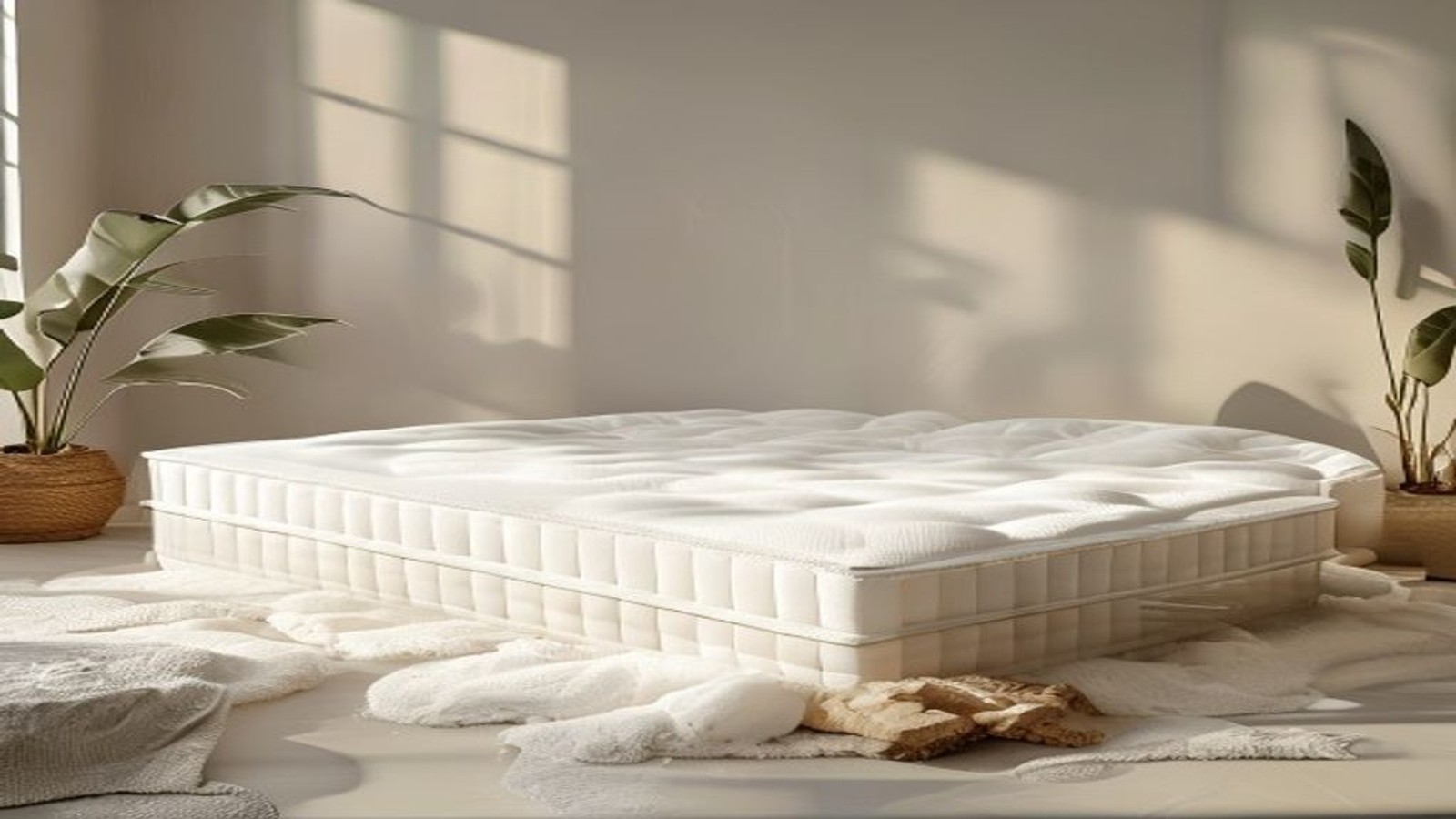
One of the first major uses of foam rubber was bedding. Latex foam mattresses offered a new kind of sleep surface. Instead of relying entirely on metal springs and packed stuffing, foam could distribute body weight across a continuous surface. It provided support without the sharp pressure points that could occur with older cushion systems. This made foam rubber feel modern, clean, and luxurious.
Furniture makers also saw the advantage. Sofas, armchairs, theater seats, and transport seating could be made more comfortable and more consistent. Foam rubber could be cut or molded into predictable shapes, which helped manufacturers standardize designs. It also reduced weight compared with many traditional padding systems. In homes, hotels, cinemas, vehicles, and public spaces, foam rubber helped redefine what comfortable seating could feel like.
Foam Rubber and the Modern Furniture Industry
The furniture industry quickly became one of foam rubber’s most important markets. Traditional upholstery often depended on springs, horsehair, cotton, wool, and layered fabrics. These materials could be comfortable, but they required skilled labor and could vary from piece to piece. Foam rubber introduced a more controlled and scalable way to build comfort.
Designers could choose foam density, thickness, firmness, and shape to create a specific seating experience. A chair could have firm support under the base, softer foam near the surface, and shaped bolsters along the sides. Sofas could become sleeker because thick layers of loose stuffing were no longer always necessary. This contributed to modern furniture profiles, especially after mid-century design trends embraced cleaner lines and simpler silhouettes.
World War II and Material Innovation
World War II accelerated research into rubber substitutes, synthetic polymers, and more efficient material production. Natural rubber supplies were strategically important, and shortages pushed scientists and manufacturers to explore alternatives. This period helped expand the knowledge base that would eventually support synthetic foam development.
Foam materials had potential value in military and industrial settings because they were lightweight, protective, and adaptable. Cushioning, insulation, flotation, vibration control, and protective packaging all mattered during wartime production. The demands of the era encouraged experimentation with new polymers and new manufacturing processes. After the war, many of these material advances moved into civilian markets, helping fuel the rapid growth of foam in consumer products.
The Arrival of Polyurethane Foam
A major turning point came with the rise of polyurethane foam. Polyurethane chemistry allowed manufacturers to produce flexible foams with a wide range of densities, firmness levels, and performance characteristics. Unlike natural latex foam, polyurethane foam could be formulated for many different applications and produced at large scale. Flexible polyurethane foam became especially important for mattresses, furniture, automotive seating, carpet underlay, packaging, and industrial cushioning. It could be soft and plush, firm and supportive, thin and flexible, or thick and shock-absorbing. This versatility made it one of the dominant foam materials of the modern world. Although many people still use the phrase “foam rubber” broadly, much of the foam in everyday cushions and furniture is actually polyurethane foam rather than traditional latex rubber foam.
Foam Rubber in the Automotive World
Automobiles played a major role in foam rubber’s expansion. As cars became more common, manufacturers needed seating materials that could provide comfort, durability, and design flexibility. Foam made it possible to create contoured seats that supported the body more effectively than older flat padding systems. It also helped reduce vibration and road fatigue.
Foam became important beyond the seat itself. It appeared in headrests, armrests, dashboards, door panels, seals, sound-deadening layers, insulation pads, and vibration-control components. Automotive foam had to meet demanding requirements for compression, temperature resistance, durability, flammability, and long-term performance. As vehicle interiors became more sophisticated, foam became an invisible foundation of comfort and safety.
Foam Rubber in Packaging and Protection
Foam rubber and related flexible foams transformed packaging by giving manufacturers a lightweight way to protect fragile objects. Electronics, glassware, tools, instruments, medical devices, and delicate components could be surrounded by custom-cut foam inserts. Instead of relying only on paper, straw, wood shavings, or loose packing materials, companies could use engineered foam to absorb shock and hold products securely in place.
Protective foam packaging became especially important as global shipping expanded. Products traveled farther, changed hands more often, and faced more vibration and impact during transport. Foam helped reduce breakage while keeping packages lighter. Today, foam inserts are common in camera cases, equipment cases, shipping boxes, presentation packaging, and industrial transport systems.
Foam Rubber in Homes and Everyday Comfort
Foam rubber entered the home in countless ways. It appeared in mattresses, pillows, seat cushions, pet beds, carpet padding, kitchen mats, sound panels, weatherstripping, exercise mats, play mats, and protective corner pads. Part of its success came from its ability to disappear into daily routines. People did not need to understand polymer chemistry to appreciate a softer chair, a quieter room, or a better night’s sleep.
The growth of foam also changed consumer expectations. Once people experienced lightweight cushions that rebounded after use, older padding could feel lumpy or outdated. Foam helped create the modern idea that comfort should be engineered. A mattress was no longer just a stuffed surface; it became a layered system of support, pressure relief, temperature control, and durability.
The Evolution of Foam Mattresses
Foam mattresses have continued to evolve from early latex foam to polyurethane foam, memory foam, gel-infused foam, hybrid foam-and-spring designs, and specialty layered systems. Memory foam, originally developed for high-performance pressure relief, became especially famous for its slow-response feel. It contours closely to the body and gradually returns to shape after pressure is removed.
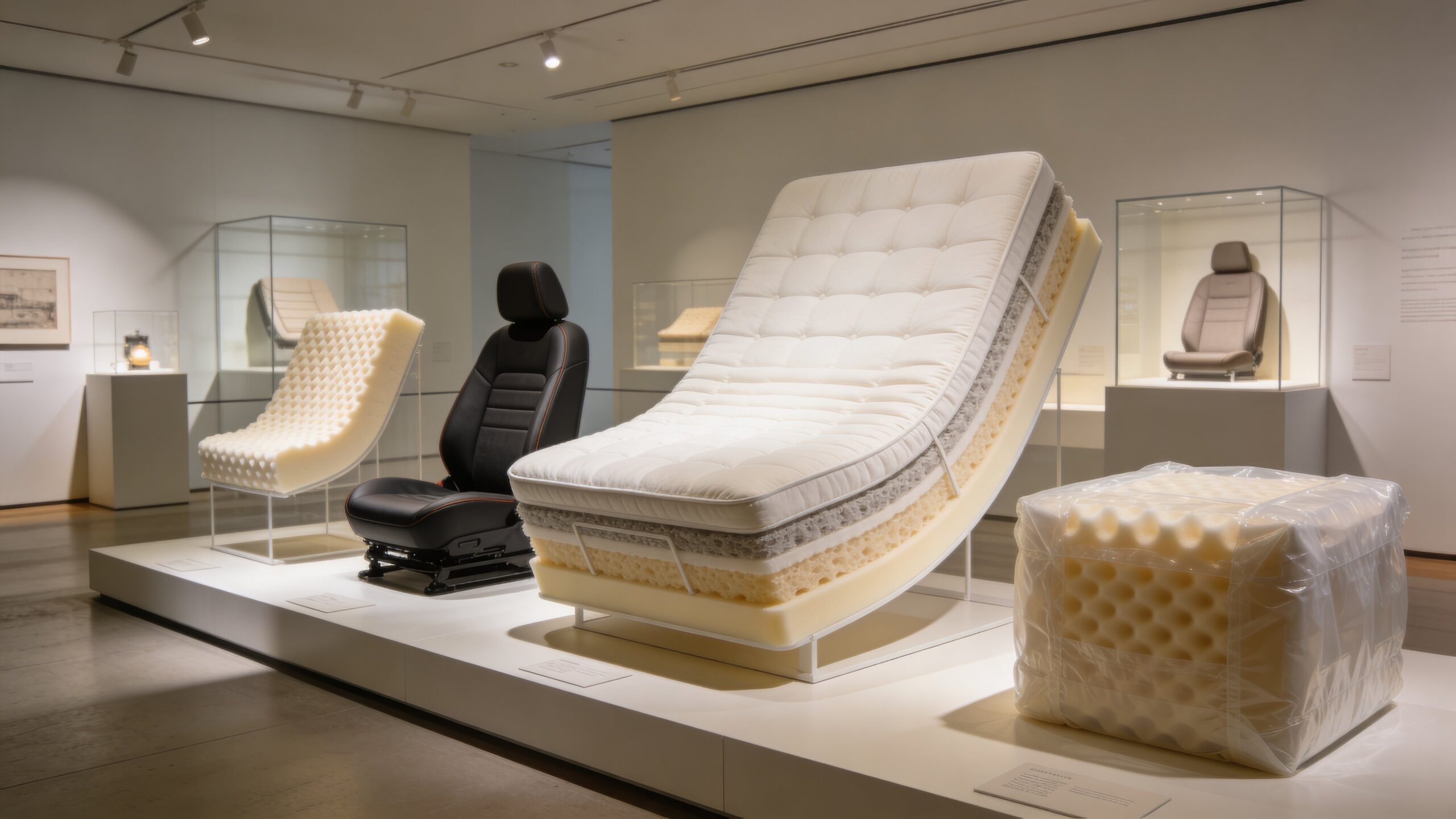
Modern foam mattresses often combine several foam types. A firm base layer provides structure, transitional layers add support, and comfort layers create softness and pressure relief. Some designs use latex for bounce and breathability, memory foam for contouring, and high-density polyurethane foam for stability. The mattress industry shows how far foam rubber history has come: from simple whipped latex to carefully engineered sleep systems built around body mechanics and comfort science.
Open-Cell and Closed-Cell Foam Development
The distinction between open-cell and closed-cell foam became increasingly important as foam technology matured. Open-cell foam is common in cushions, mattresses, acoustic panels, and soft padding. Its interconnected cells allow air movement, which can make the foam feel breathable and compressible. It is useful where comfort, softness, and airflow are priorities. Closed-cell foam is common in insulation, flotation devices, weather seals, protective padding, and moisture-resistant applications. Because its cells are sealed, it resists water more effectively and can provide better thermal insulation. Closed-cell foam is often used in camping pads, marine products, exercise mats, construction materials, and industrial gaskets. The ability to design cell structure gave foam manufacturers a powerful tool for matching materials to specific jobs.
Foam Rubber in Sports, Safety, and Medical Design
Foam rubber’s impact on sports and safety equipment is enormous. Helmets, pads, mats, guards, grips, flotation aids, and protective gear all depend on foam’s ability to absorb energy. The goal is not simply softness. The foam must compress in a controlled way, reduce impact forces, and maintain performance over repeated use.
Medical uses are equally important. Foam appears in wheelchair cushions, hospital mattresses, positioning supports, orthopedic products, prosthetic padding, and pressure-relief surfaces. In healthcare, foam can help distribute weight, reduce pressure points, and improve patient comfort. Specialized medical foams may be designed for hygiene, breathability, fluid resistance, or compatibility with protective covers.
Foam Rubber and Acoustic Control
Another modern use of foam rubber and flexible foam is sound management. Acoustic foam panels help reduce echoes and control reflections inside rooms. Recording studios, home theaters, offices, classrooms, podcast spaces, and industrial environments all use foam to improve sound quality or reduce noise.
Acoustic foam works by allowing sound waves to enter its cellular structure, where some of the energy is converted into tiny amounts of heat through friction and movement. The shape of the foam surface, such as wedges or pyramids, can also help scatter reflections. While foam is not a complete soundproofing solution by itself, it is a practical tool for improving interior acoustics.
Industrial Uses and Engineering Applications
Foam rubber is not only about comfort. It is also an engineering material. In industrial settings, foam can seal gaps, isolate vibration, absorb shock, protect components, resist weather, and control airflow or moisture. Gaskets, seals, pads, spacers, filters, grips, and insulation strips all rely on foam’s compressibility and resilience.
Different industries require different foam properties. Electronics may need anti-static foam. Construction may need insulation foam. Aerospace and transportation may need lightweight foam with strict performance standards. Marine products may need closed-cell flotation foam. Industrial designers choose foam based on density, compression set, temperature resistance, chemical compatibility, flame performance, and long-term durability.
The Environmental Challenge
As foam use expanded, environmental questions became more urgent. Many synthetic foams are petroleum-based and can be difficult to recycle. Foam products are often bulky, lightweight, and expensive to collect efficiently. Some older foam production methods also raised concerns about emissions, blowing agents, and chemical additives.
Modern foam development increasingly focuses on lower-emission production, improved durability, recycled content, bio-based ingredients, and more responsible end-of-life strategies. Manufacturers are exploring plant-based polyols, foam recycling methods, mechanical rebonding, cleaner blowing agents, and take-back programs. The environmental challenge is complex because foam provides real benefits in comfort, insulation, shipping protection, and energy savings, but it must be made and managed more responsibly.
Foam Rubber in Modern Design
Today, foam rubber and flexible foam materials are deeply embedded in product design. Designers use foam not just as hidden padding, but as a performance layer. In footwear, foam affects energy return, stability, and comfort. In furniture, it controls posture and softness. In packaging, it communicates quality while protecting the product. In architecture, foam can support insulation and acoustic goals. In vehicles, it contributes to comfort, safety, quietness, and interior style.
The modern design world values materials that can do more with less. Foam fits this demand because it can be lightweight, shaped, layered, textured, and tuned. A small change in density or cell structure can change how a product feels and performs. That makes foam one of the most adaptable materials in contemporary manufacturing.
The Future of Foam Rubber
The future of foam rubber will likely be shaped by sustainability, customization, and advanced performance. Manufacturers are already looking for ways to reduce petroleum dependence, improve recyclability, and create foams that last longer with fewer environmental costs. At the same time, digital manufacturing, computer modeling, and advanced chemistry may allow foams to be engineered with more precision than ever before.
Future foams may be lighter, stronger, more breathable, more recyclable, and more specialized. Mattresses may adapt better to individual sleepers. Vehicle foams may help reduce weight while improving safety. Packaging foams may become easier to reuse or recycle. Medical foams may improve pressure relief and hygiene. The story of foam rubber is still being written, and its next chapter will likely focus on smarter materials that balance comfort, performance, and responsibility.
Why Foam Rubber History Still Matters
Foam rubber history matters because it shows how a simple material idea can reshape everyday life. By trapping air inside flexible rubber-like structures, inventors created a new category of comfort and protection. That innovation changed furniture, bedding, transportation, packaging, healthcare, sports, construction, and industrial design. From early latex foam experiments to modern engineered polymers, foam rubber has become a hidden foundation of the modern world. It cushions our bodies, protects our belongings, quiets our spaces, supports our vehicles, and improves countless products we use every day. Its history is not only about chemistry; it is about the human desire for comfort, safety, efficiency, and better design.