Introduction: Where Digital Design Meets Foam Fabrication
Foam CNC cutting is the process of shaping foam materials with computer-controlled cutting equipment. Instead of relying only on hand tools, templates, or manual carving, CNC technology uses digital design files to guide a machine with remarkable accuracy. The result is clean, repeatable, highly detailed foam parts that can be used for displays, prototypes, packaging, props, molds, signage, architectural models, insulation forms, and large-scale creative builds. The term CNC stands for Computer Numerical Control. In simple terms, it means a computer tells the cutting machine exactly where to move, how fast to travel, and how deep to cut. For foam, that machine may use a hot wire, router bit, oscillating blade, knife, milling spindle, or other cutting tool depending on the material and the finished shape. The magic of foam CNC cutting is that it transforms a digital idea into a physical object with speed, symmetry, and precision.
A: It is the process of using a computer-controlled machine to cut, carve, or shape foam from a digital design file.
A: EPS, XPS, polyurethane, polyethylene, EVA, EPP, and other specialty foams can be cut depending on the machine and method.
A: No. Hot wire cutting melts through compatible foam, while CNC routing removes material with a rotating cutting bit.
A: It is used for signs, packaging inserts, prototypes, molds, props, displays, architectural models, insulation shapes, and art pieces.
A: Yes. Detail depends on foam density, tool type, machine accuracy, file quality, and finishing work.
A: Router cutting can create dust, while hot wire cutting creates less dust but may create fumes depending on the foam type.
A: Yes. Most foam should be sealed and primed first, especially if using paints or coatings that may contain solvents.
A: Yes. It is excellent for custom inserts that hold products securely and create a clean professional presentation.
A: Yes. Large foam forms can be cut in sections, assembled, coated, and finished for displays, props, and installations.
A: CNC cutting offers greater repeatability, cleaner symmetry, faster production, and more accurate results from digital designs.
Why Foam Is Perfect for CNC Cutting
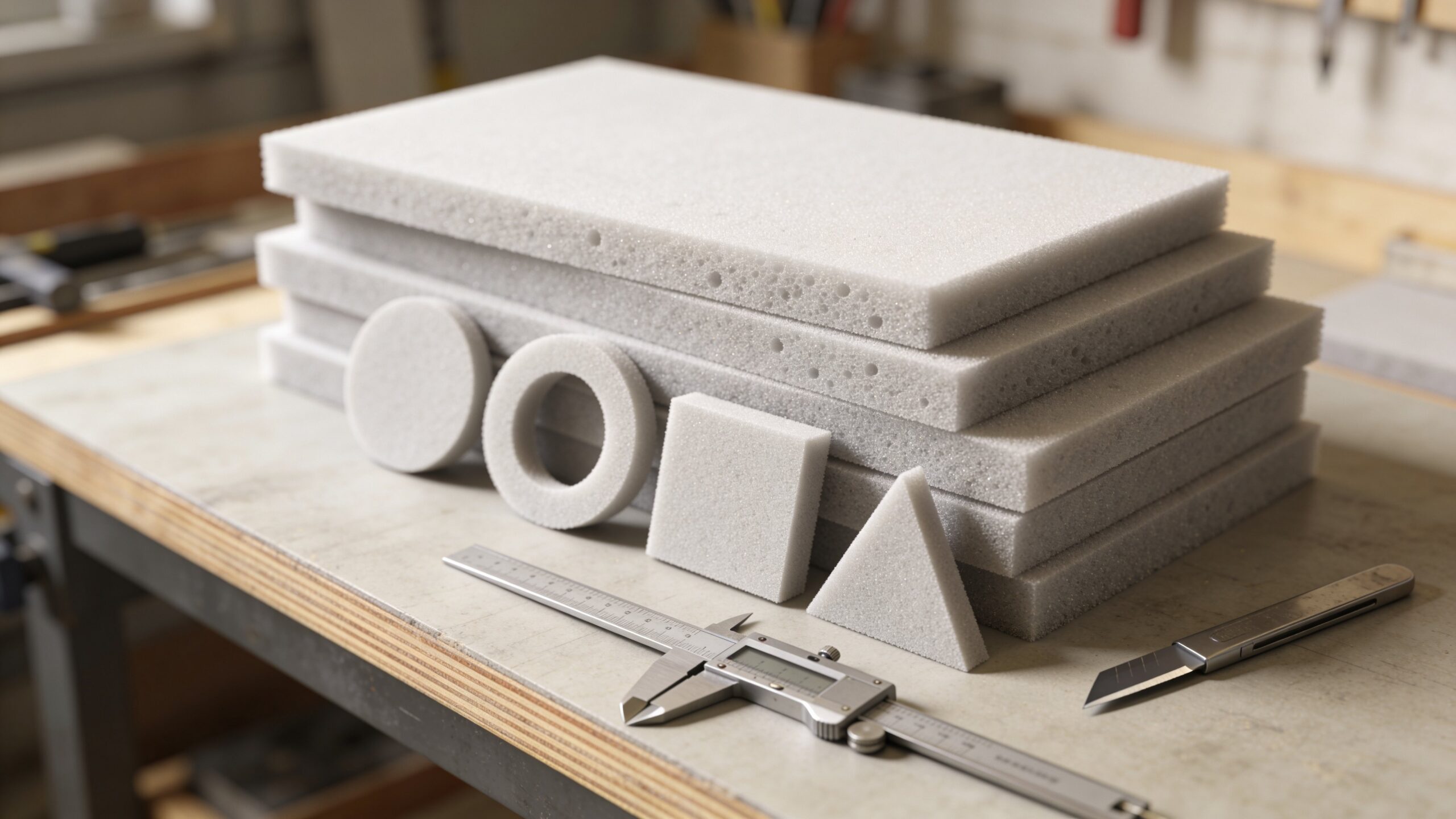
Foam is one of the most versatile materials in fabrication because it is lightweight, easy to shape, and available in many densities and structures. Expanded polystyrene, extruded polystyrene, polyurethane foam, EVA foam, polyethylene foam, and other specialty foams each offer different advantages. Some are excellent for large sculptural shapes, while others are better for protective packaging, detailed carving, or durable finished displays. CNC cutting works especially well with foam because the machine can move through the material with less resistance than wood, metal, or dense plastics. This allows fabricators to create large forms quickly while still achieving smooth curves, accurate dimensions, and consistent results. For businesses that need repeated parts, matching shapes, or polished presentation pieces, foam CNC cutting is often faster and more reliable than cutting by hand.
How Foam CNC Cutting Works
The process usually begins with a digital design. A designer creates a two-dimensional or three-dimensional file using CAD, vector software, or 3D modeling tools. This file defines the shape, dimensions, contours, and details of the final foam part. Once the design is complete, it is prepared for the CNC machine using CAM software, which converts the design into toolpaths the machine can follow.
After the toolpaths are generated, the foam block, sheet, or slab is placed on the cutting bed. The machine then follows the programmed path, removing or separating material according to the design. A hot-wire CNC cutter may glide through foam using heated wire, while a CNC router may carve the foam with a rotating bit. The finished piece may then be sanded, sealed, coated, painted, assembled, or used as a mold or pattern.
The Role of CAD and CAM Software
CAD software is where the idea takes shape. It allows designers to build accurate digital models, set measurements, create curves, adjust proportions, and test the look of a piece before anything is cut. For flat foam letters, packaging inserts, or panels, a two-dimensional design may be enough. For sculptural pieces, architectural forms, molds, and complex products, a three-dimensional model gives the machine the information it needs to cut multiple surfaces.
CAM software translates the design into machine instructions. It determines the cutting path, tool speed, depth, direction, and sequence. This step is critical because even a perfect design can produce poor results if the toolpath is not planned correctly. Foam is forgiving, but it still requires the right feed rate, cutting method, tool choice, and support strategy to prevent rough edges, melting, tearing, or inaccurate cuts.
Hot Wire CNC Cutting
Hot wire CNC cutting is one of the most common methods for shaping polystyrene foams such as EPS and XPS. The machine uses a thin heated wire that melts through the foam as it moves. This method is especially popular for smooth curves, large letters, wings, architectural profiles, crown molding shapes, theater props, and big display elements.
The advantage of hot wire cutting is its ability to create clean, sweeping forms without producing large amounts of dust. Because the wire melts the foam rather than grinding it away, the surface can be very smooth when the temperature and speed are properly controlled. However, hot wire cutting is not ideal for every foam type, and it works best with materials that respond predictably to heat.
CNC Router Foam Cutting
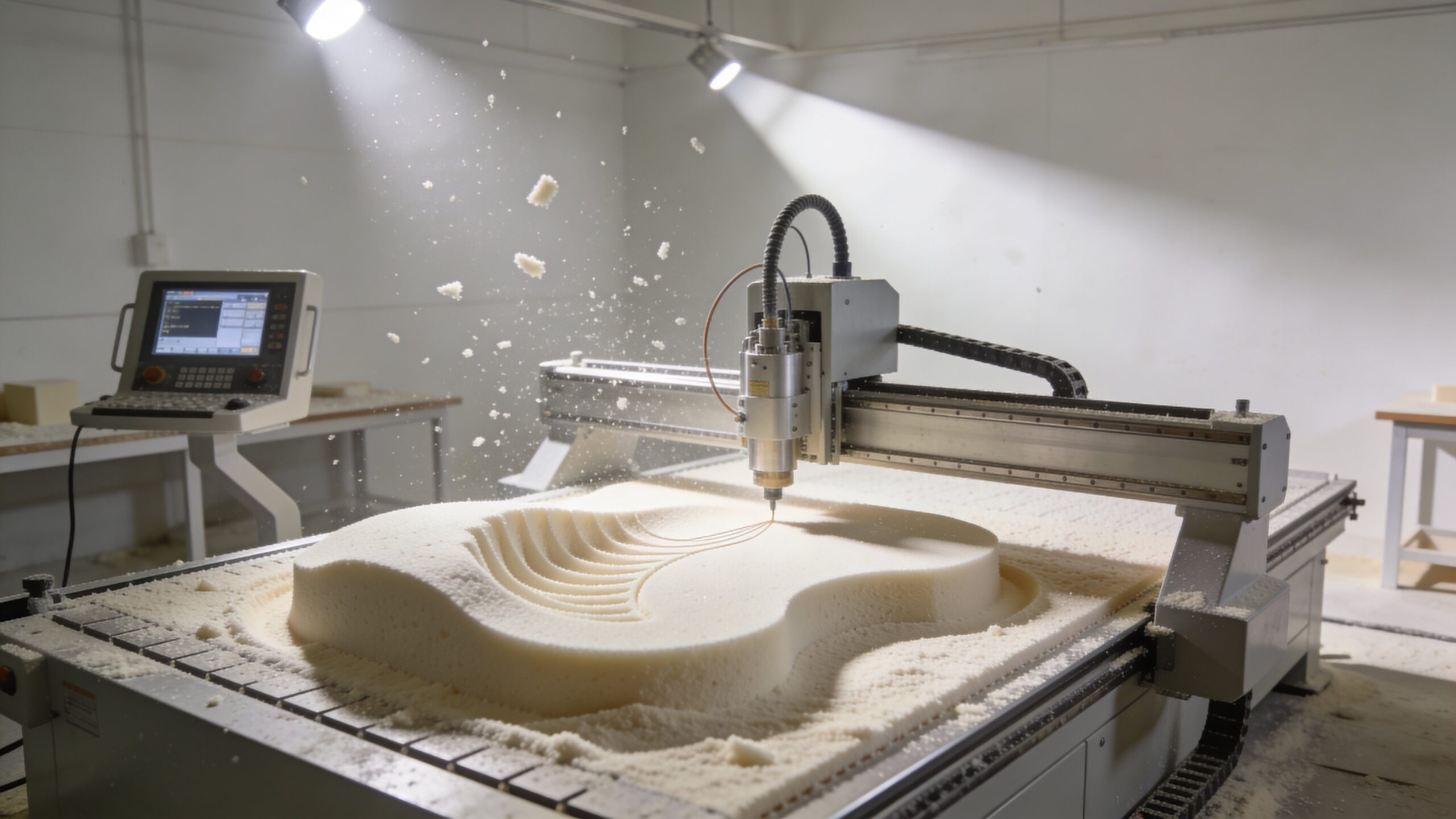
CNC routers use spinning bits to carve, shape, or engrave foam. This method is excellent for three-dimensional forms, relief carvings, molds, sculptural details, textured surfaces, and complex designs that require more than a simple profile cut. A router can remove material from different depths, making it useful for foam signage, product mockups, terrain models, art installations, and custom packaging.
Router cutting creates dust and requires careful tool selection. Foam can tear, fuzz, or melt if the bit is dull, the spindle speed is too high, or the feed rate is wrong. With the correct setup, however, CNC routing can produce crisp details, smooth surfaces, and repeatable results that are difficult to achieve by hand.
Knife and Oscillating Blade Cutting
Some CNC foam cutters use a knife or oscillating blade instead of heat or a router bit. This approach is useful for flexible foams, upholstery foam, polyethylene foam, EVA foam, gasket foam, and protective packaging materials. The blade slices through the material rather than melting or grinding it, which helps maintain clean edges and reduces dust.
Oscillating knives are especially valuable for packaging inserts because they can cut precise cavities for tools, electronics, medical equipment, instruments, collectibles, and fragile products. The machine can create a custom-fit layout that holds each item securely, giving packaging a professional appearance while improving protection during storage or transport.
Precision Shapes and Repeatability
One of the biggest benefits of foam CNC cutting is repeatability. Once a design is programmed, the same shape can be produced again and again with consistent dimensions. This is important for companies that need multiple display pieces, packaging inserts, architectural components, model parts, or production templates.
Hand cutting can be creative and effective, but it often depends on the skill and patience of the person doing the work. CNC cutting reduces variation. It does not get tired, drift off the line, or interpret measurements differently from one piece to the next. For professional projects where accuracy matters, that consistency can save time, reduce waste, and improve the final result.
Common Materials Used in Foam CNC Cutting
Expanded polystyrene, often called EPS, is widely used for large shapes, letters, props, displays, and sculptural forms. It is lightweight and affordable, making it a popular choice for big builds. Extruded polystyrene, or XPS, has a finer, denser cell structure and is often preferred when cleaner edges or smoother carving are needed. Polyurethane foam is commonly used for modeling, molds, prototypes, and sculptural work because it can be available in higher densities and machine cleanly. EVA foam is flexible, durable, and popular for costumes, protective padding, and specialty fabrication. Polyethylene foam is often used for protective packaging because it cushions well and can be cut into clean inserts. The right foam depends on the project’s purpose, durability needs, finish quality, and budget.
Applications in Signage and Displays
Foam CNC cutting is widely used in signage because it allows shops to create dimensional letters, logos, wall graphics, trade show displays, and branded installations. Foam signs are lightweight, easy to mount, and can be finished to look like metal, stone, wood, or high-end painted dimensional graphics. This makes them ideal for events, retail displays, stage design, and temporary installations.
For display builders, CNC foam cutting opens up creative possibilities. Large shapes can be produced without the heavy weight of solid materials. A giant product replica, oversized logo, themed environment, or sculptural backdrop can be built from foam, coated for durability, and finished with professional paint. The result can look dramatic while remaining easier to transport, install, and remove.
Applications in Prototyping and Product Design
Foam CNC cutting is also valuable in product development. Designers can create quick mockups, ergonomic models, scale prototypes, and form studies before committing to more expensive materials. Foam allows teams to test shape, size, proportion, and presentation early in the design process.
For industrial designers, this speed can be a major advantage. A digital model can be revised and cut again quickly, allowing multiple versions to be compared. The foam prototype may not have the strength of the final product, but it gives designers and clients something physical to evaluate. That hands-on review often reveals details that are hard to judge on a screen.
Applications in Packaging
Custom foam packaging is one of the most practical uses of CNC cutting. A CNC machine can cut foam inserts that match the exact shape of a product, tool, instrument, or component. This creates a secure fit that reduces movement and helps protect items from impact. Precision packaging also improves presentation. A cleanly cut foam insert gives products a polished, organized appearance. This is especially useful for high-value tools, electronics, medical devices, camera gear, collectibles, sales kits, and professional equipment cases. Instead of using generic cushioning, CNC-cut foam creates a tailored storage solution.
Applications in Architecture and Construction
Architectural firms use foam CNC cutting to create models, terrain forms, façade studies, decorative elements, and presentation pieces. Because foam is lightweight and easy to shape, it is ideal for visualizing buildings, landscapes, and large forms at scale. CNC technology allows these models to be produced with accurate contours and repeatable components.
In construction and specialty fabrication, foam may also be used for molds, forms, insulation shapes, decorative trim, and themed architectural elements. When coated properly, foam can become part of convincing faux stone, concrete, stucco, or wood effects. CNC cutting makes those forms more precise and easier to replicate across a project.
Surface Finishing After CNC Cutting
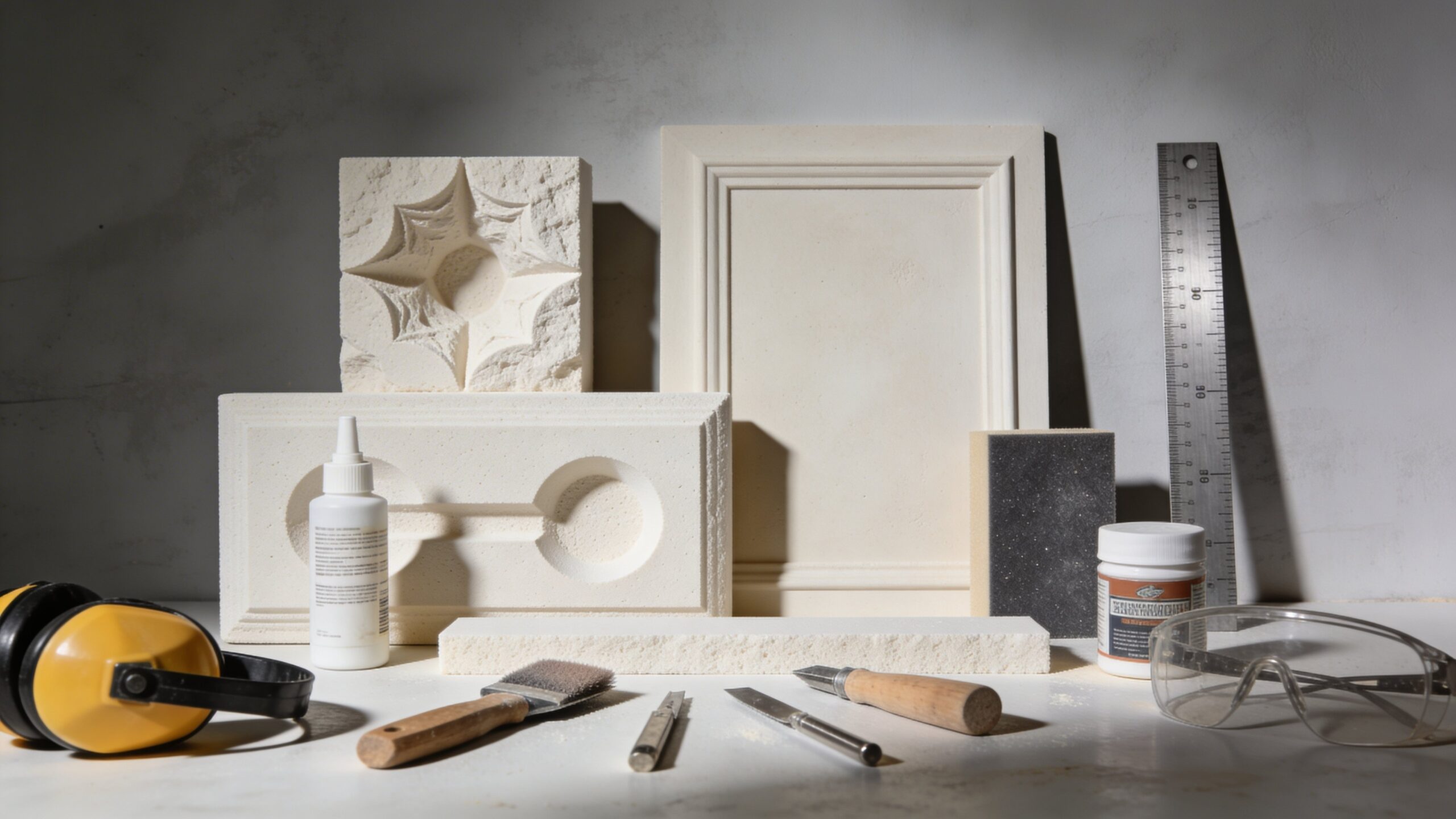
After foam is cut, finishing determines how professional the final piece looks. Some projects need only a clean raw foam insert, while others require sanding, sealing, hard coating, priming, and painting. Foam used for displays or props may be coated with acrylic sealers, epoxy, polyurea, elastomeric coatings, or other protective finishes.
Finishing also helps hide the material’s cell structure. EPS, for example, may show visible beads unless it is filled and coated. XPS and higher-density foams often produce smoother results but may still need sanding and priming. The final finish can transform foam from a lightweight core into something that appears polished, durable, and premium.
Accuracy, Tolerances, and Design Limits
Foam CNC cutting can be highly accurate, but the final tolerance depends on the foam type, machine quality, tool choice, software setup, and cutting method. Dense foam usually holds sharper details than very soft foam. A router may cut deep relief shapes, while a hot wire is better for continuous profiles and smooth curves.
Designers must also understand the limits of foam itself. Very thin features can break, sharp points may dent, and soft materials can compress under pressure. Good design accounts for the foam’s strength, density, and intended use. Precision does not only come from the machine; it also comes from designing shapes that the material can support.
Advantages of Foam CNC Cutting
Foam CNC cutting offers speed, accuracy, repeatability, creative flexibility, and material efficiency. It can produce shapes that would take much longer by hand, especially when the design includes curves, contours, mirrored parts, or repeated components. Digital files also make it easier to revise, scale, store, and reproduce designs later.
Another major advantage is lightweight construction. Foam can create large visual impact without the burden of heavy materials. This is why it appears in events, theater, museums, trade shows, packaging, prototyping, and architectural work. The combination of low weight and high customization makes CNC-cut foam one of the most useful fabrication solutions for precision shapes.
Challenges and Safety Considerations
Foam CNC cutting is powerful, but it requires proper safety practices. Routing foam can produce fine dust that should be collected with ventilation and dust extraction. Hot wire cutting can create fumes depending on the material being cut, so operators must know which foams are safe for that process and maintain good airflow.
Material choice is also important. Not every foam should be heated, routed, painted, or coated the same way. Some foams react poorly to solvents, certain adhesives, or high temperatures. A professional workflow includes testing, proper protective equipment, safe machine operation, and finishing products that are compatible with the foam.
The Future of Foam CNC Cutting
Foam CNC cutting continues to improve as software, machines, and materials become more accessible. Designers can now move from 3D modeling to physical fabrication faster than ever. Digital sculpting, 3D scanning, parametric design, and automated toolpath planning are making it easier to produce complex foam shapes with fewer manual steps. The future of foam CNC cutting is not only about speed. It is about creative control. Artists, designers, builders, packaging specialists, and manufacturers can use the same technology to solve very different problems. Whether the goal is a protective insert, a dramatic event centerpiece, a prototype, or a precision mold, CNC cutting turns foam into a material of serious possibility.
Conclusion: Precision, Creativity, and Lightweight Power
Foam CNC cutting is the technology behind many of the precise lightweight shapes seen in displays, packaging, signs, prototypes, models, props, and custom fabrication. By combining digital design with computer-controlled cutting, it brings accuracy and repeatability to a material that is already easy to shape and highly adaptable. At its best, foam CNC cutting is both technical and creative. It allows complex ideas to become physical objects with clean lines, smooth curves, and professional results. For anyone interested in modern fabrication, product design, event production, or custom builds, foam CNC cutting is one of the most exciting ways to turn digital imagination into precise real-world form.