Understanding Foam Upholstery in Modern Furniture
Foam upholstery is the layer of padded material that gives furniture its softness, support, and structure beneath the outer fabric or leather covering. When people sink into a sofa, settle into a reading chair, or lean back against a padded headboard, they are usually feeling the effect of upholstery foam at work. It is one of the most important hidden elements in furniture design because it shapes how a piece feels, how it performs over time, and how inviting it appears in a room. While fabric and color may capture attention first, foam is often what determines whether a chair feels luxurious, firm, cozy, or supportive.
A: It is used to cushion and shape furniture such as sofas, chairs, ottomans, benches, and headboards.
A: Foam affects comfort, support, durability, and the overall shape of upholstered furniture.
A: Not necessarily. The best comfort usually comes from a balance of softness and support.
A: Density refers to how much material is packed into the foam and often influences durability and longevity.
A: Yes. Differences in foam type, firmness, and layering can make seating feel completely different.
A: Polyurethane foam and high-resilience foam are among the most commonly used options.
A: Absolutely. Foam helps create everything from sharp modern lines to soft, rounded, lounge-style forms.
A: Lower-quality or poorly matched foam can lose shape and support more quickly with regular use.
A: It is a construction method that combines multiple foam layers or wraps to improve comfort and refinement.
A: No. It also plays a major role in furniture durability, shape, appearance, and overall design character.
Why Foam Matters More Than Most People Realize
Foam upholstery does much more than provide cushioning. It influences posture, comfort, longevity, silhouette, and even the overall style of a furniture piece. A sleek modern sofa with sharp edges needs foam that can hold its shape cleanly, while a plush lounge chair often relies on softer foam layers that create a relaxed, sink-in feel. Good foam upholstery supports the body without feeling hard, and it helps furniture recover after repeated use. Poor-quality foam, by contrast, can flatten too quickly, create uneven seating, or make a beautiful piece of furniture feel disappointing in daily life.
How Foam Upholstery Works Inside Furniture
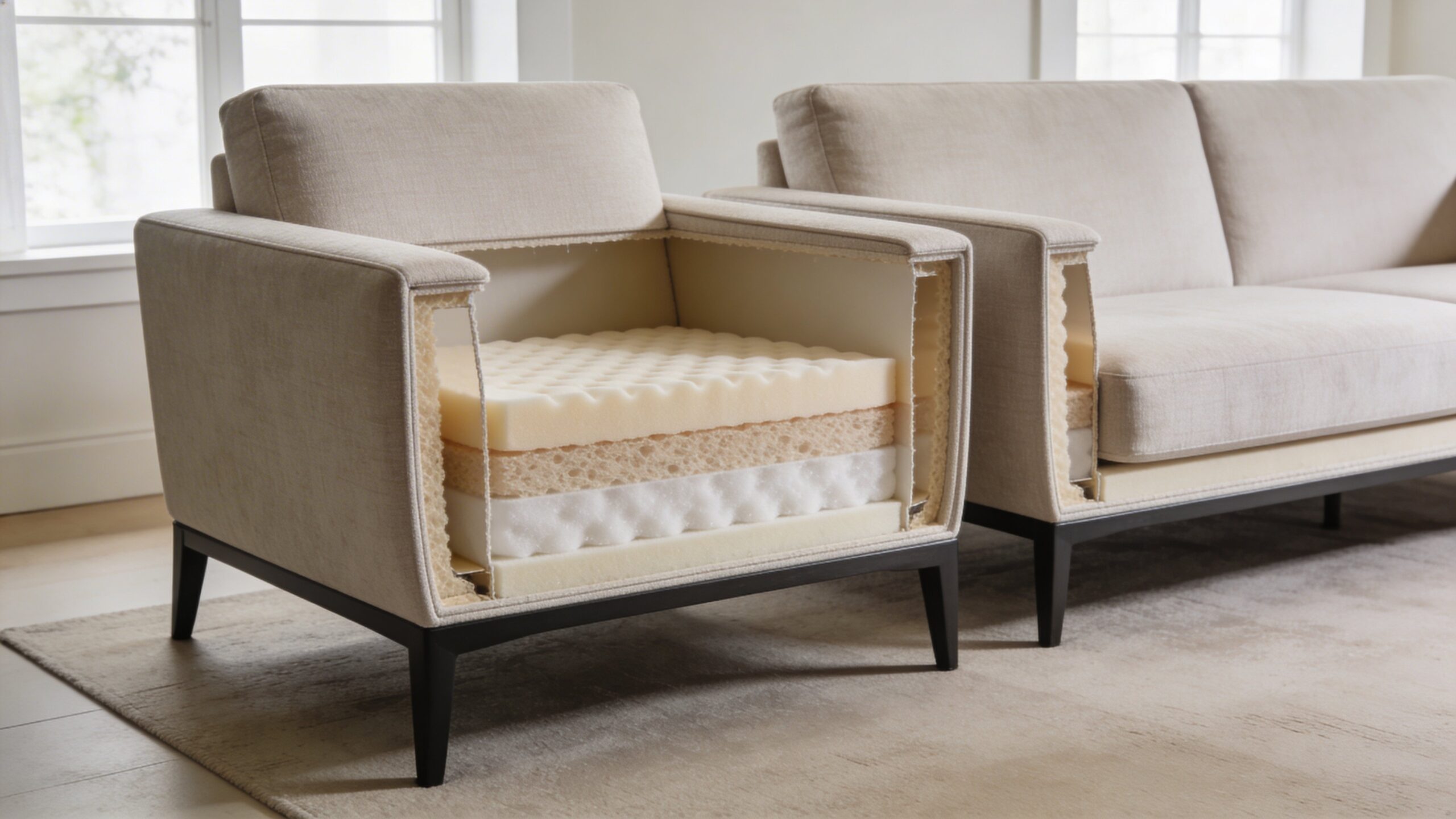
Inside upholstered furniture, foam is typically placed over a supportive framework that may include wood, springs, webbing, or other structural components. The foam acts as the comfort layer between the frame and the user, softening pressure points and helping distribute weight more evenly. In many well-designed pieces, foam is not used alone. It may be paired with fiber wrap, batting, down alternatives, or layered densities to create a more refined sitting experience. This layering allows designers to fine-tune how furniture feels the moment someone sits down and how it continues to perform after months or years of use.
The Difference Between Softness and Support
One of the biggest misconceptions about foam upholstery is that softer always means better. In reality, comfort is a balance between softness and support. Foam that is too soft may feel pleasant for a moment but can lack structure, making the furniture feel tired or unstable. Foam that is too firm may maintain its shape beautifully but feel unwelcoming. The best upholstery foam often strikes a middle ground, giving enough cushion to feel comfortable while offering enough resistance to support the body. This balance is especially important in furniture meant for daily use, where people want both immediate comfort and lasting performance.
Common Types of Foam Used in Upholstery
Several kinds of foam can be used in upholstered furniture, but polyurethane foam is one of the most common. It is versatile, widely available, and can be manufactured in different firmness levels and densities. High-resilience foam is another popular option because it offers stronger support and tends to bounce back well after compression. Memory foam may also appear in some furniture designs, especially in seating where contouring comfort is desired. Each type brings a different feel to the finished product. Some create a crisp, tailored look, while others produce a more relaxed, body-hugging effect that appeals to people seeking softness.
Density and Firmness: The Hidden Language of Comfort
Two important concepts in foam upholstery are density and firmness. Density refers to how much material is packed into the foam, and it often plays a major role in durability. Higher-density foam usually lasts longer and holds its shape better over time. Firmness, on the other hand, describes how hard or soft the foam feels when pressure is applied. These two qualities are not the same, even though they are often confused. A foam can be high density and still feel relatively soft, or lower density and surprisingly firm. Understanding this difference helps explain why some furniture looks excellent but wears out too quickly, while other pieces remain comfortable for years.
How Foam Shapes Furniture Design
Foam upholstery is not only about comfort. It is also a design tool. The way foam is cut, layered, and wrapped affects the lines and personality of a furniture piece. Thick, rounded foam can create a soft and casual appearance, ideal for family rooms and relaxed spaces. Tighter foam applications can produce clean, sculpted forms that work beautifully in modern and contemporary interiors. Designers often rely on foam to define arms, backs, seats, and edges with precision. In this way, foam contributes to both the visual language and tactile identity of furniture, helping a piece look polished while also feeling thoughtfully constructed.
Foam Upholstery and Everyday Living
Furniture is rarely experienced in a showroom-only context. It becomes part of real life, where people watch movies, host friends, read, nap, work, and gather as a family. Foam upholstery plays a central role in how furniture performs during all of those moments. A sofa used every evening needs foam that can handle repeated weight and movement without sagging. Dining chairs need enough comfort for extended conversation without becoming bulky. Accent chairs need to balance style and usability. Good foam upholstery helps furniture adapt to real routines, making it not just attractive but genuinely livable in the spaces where people spend their time.
Why Quality Foam Improves Furniture Longevity
One of the clearest differences between lower-end and better-made upholstered furniture is often found inside the cushion, not on the surface. High-quality foam helps furniture maintain its shape, support, and comfort longer, even when used frequently. It resists permanent compression better and is less likely to develop hollow spots or lumpy textures. This matters because upholstery fabric and frames can remain visually appealing long after weak foam has begun to fail. When that happens, the furniture may still look beautiful but feel worn out. Strong foam upholstery helps protect the value of a piece by preserving the everyday experience that makes furniture worth keeping.
Foam Upholstery in Different Furniture Styles
Different furniture categories call for different foam strategies. Sofas often combine supportive seat foam with slightly softer back cushioning for comfort and structure. Lounge chairs may use layered foam to create a more enveloping feel. Upholstered beds often use foam for visual softness rather than seating support, shaping padded headboards and rails. Ottomans, benches, and dining chairs each require their own balance of firmness and resilience. Even within the same room, foam upholstery may vary widely depending on function. This is why two pieces that appear similar at first glance can feel dramatically different when used, despite sharing comparable fabrics or silhouettes.
The Role of Layering in Premium Upholstery
In higher-end furniture, foam is often layered rather than used as a single block. A supportive base layer may provide structure, while a softer top layer adds comfort and refinement. This creates a more complex and comfortable sitting experience than a one-density cushion alone. Some manufacturers also wrap foam in polyester fiber or similar materials to soften edges and reduce the squared-off appearance of cushions. This layering technique helps furniture feel more luxurious and can enhance both comfort and aesthetics. It is part of what gives premium upholstered furniture that inviting blend of polish and softness people notice the moment they sit down.
Foam Upholstery and Interior Design Harmony
Because foam affects shape and comfort, it also influences how furniture fits into an interior design plan. In minimalist rooms, foam can help maintain crisp geometry and clean profiles. In cozy or traditional spaces, it can create generous, welcoming contours that feel warm and lived in. The depth of cushions, the softness of edges, and the height of upholstered sections all contribute to the overall atmosphere of a room. Foam upholstery supports the idea that furniture is not merely functional. It is also emotional and visual. The way a piece welcomes the body often mirrors the tone a homeowner wants to create in the room itself.
Signs of Good Foam Upholstery
Well-made foam upholstery usually feels consistent across the entire seat or back, without obvious weak spots or hard transitions. It should recover reasonably well after pressure and provide stable comfort rather than collapsing immediately. In many cases, the furniture should feel supportive at the base while remaining comfortable at the surface. Over time, good foam should continue to look balanced and feel dependable. It should also work in harmony with the fabric and frame, rather than making the piece appear overstuffed or under-padded. These qualities are subtle, but they shape the daily experience of using furniture more than many decorative details ever could.
Common Problems Caused by Poor Foam Choices
When the wrong foam is used in upholstery, problems show up quickly. Seats may lose their shape, backs may feel hollow, edges can wrinkle, and the furniture may begin to look older than it really is. A cushion that compresses too easily can strain posture and reduce comfort during longer periods of sitting. Foam that is too rigid may keep its shape but fail to provide a pleasant user experience. In some cases, mismatched foam can also disrupt a furniture design by making cushions appear uneven or awkward. These issues show why foam upholstery should never be treated as an afterthought in furniture construction.
Foam Upholstery and the Feel of Luxury
Luxury in furniture is often associated with beautiful fabrics, elegant frames, and sophisticated styling, but much of that premium impression comes from what happens beneath the surface. Foam upholstery contributes to the feeling of substance, balance, and ease that people associate with high-end seating. A well-cushioned arm, a supportive seat that does not bottom out, and a backrest that feels inviting without collapsing all create a more elevated experience. In that sense, foam upholstery is part of the design story. It translates visual promise into physical comfort, helping furniture live up to the elegance it projects from across the room.
Sustainability and Smarter Upholstery Choices
As furniture buyers become more thoughtful about quality and longevity, foam upholstery is receiving greater attention. Durable foam can support sustainability by helping furniture last longer and reducing the need for early replacement. When a well-built upholstered piece remains comfortable for years, it is less likely to be discarded simply because the cushions no longer feel good. This encourages a more lasting relationship with furniture, especially in homes where comfort and design are both important. While foam itself is often discussed in technical terms, its role in sustainability is practical: better interior components can lead to better long-term use and more enduring value.
What Foam Upholstery Means for Comfort and Design
At its core, foam upholstery is where comfort and design meet. It is the element that softens structure, shapes appearance, and determines how a piece of furniture supports everyday life. Whether used in a sofa, armchair, bench, or headboard, foam influences far more than many people expect. It affects the way furniture feels in the moment and how it performs over time. Understanding foam upholstery makes it easier to appreciate that great furniture is not just about what is seen on the outside. It is also about the thoughtful interior materials that turn a stylish object into a truly comfortable and lasting part of the home.