Foam yoga blocks may look simple at first glance, but they have become one of the most useful and versatile tools in modern yoga. These lightweight rectangular props are designed to bring the floor closer, create more support, improve alignment, and help practitioners move into poses with greater confidence. For beginners, they can turn intimidating postures into approachable ones. For experienced yogis, they can deepen stretches, refine body awareness, and unlock more intelligent movement patterns. In other words, a foam yoga block is not just a shortcut or a safety net. It is a smart training tool that can make yoga more accessible, more effective, and more enjoyable. In many yoga studios, foam yoga blocks are stacked beside mats as standard equipment. Their popularity has grown because they serve so many purposes across different styles of practice. In gentle yoga, they provide stability and comfort. In restorative yoga, they support the body so muscles can release more fully. In vinyasa classes, they help maintain alignment during standing poses and balance work. In strength-focused or advanced classes, they become tools for exploring better form, deeper engagement, and controlled progression. Whether someone is just learning downward dog or has been practicing arm balances for years, a foam yoga block can play an important role.
A: Yes, they are excellent for beginners because they make poses more accessible, stable, and comfortable.
A: Absolutely, experienced practitioners use them for alignment, deeper engagement, and safer progression.
A: Foam is lighter and softer, while cork is firmer and heavier; the best choice depends on personal preference.
A: Two blocks are usually ideal because they create more balanced options for both sides of the body.
A: Yes, they support proper alignment and gradual access to stretches without forcing the body.
A: Yes, their softer feel makes them especially useful for supported and longer-held positions.
A: Good-quality foam blocks are durable, though they may show dents or compression over time with heavy use.
A: Yes, many poses use blocks under the feet, but the surface should be stable and the block should feel secure.
A: Wipe it with a damp cloth and mild soap, then let it air dry completely before storing.
A: Yes, they are affordable, versatile, and useful for beginners, advanced yogis, and recovery-focused movement.
Understanding What a Foam Yoga Block Is
A foam yoga block is a lightweight support prop typically made from dense foam, often EVA foam or similar materials that combine softness with structure. Most yoga blocks are rectangular and sized to fit comfortably in the hand while providing a stable platform under the feet, hands, hips, or back. They usually come in standard dimensions, though some are slightly larger or slimmer depending on the brand and intended use. The material matters because it influences how the block feels during practice. Foam blocks tend to be softer and lighter than cork or wood, making them especially appealing for people who want comfort, portability, and gentle support. What makes the foam yoga block so valuable is its ability to modify the distance between the body and the ground. In yoga, many poses assume a certain level of flexibility, mobility, and balance. Not every body arrives with the same proportions or physical abilities, and that is perfectly normal. A block helps bridge that gap. Instead of forcing the body to strain toward the floor, the floor can be lifted to meet the body. That single adjustment often transforms a pose from awkward and unstable into grounded and effective. Foam yoga blocks also reduce the pressure that can build in the wrists, shoulders, hips, and lower back when a posture is not yet accessible. By elevating the hands in a forward fold or supporting the pelvis in a seated position, the block changes the angle of the body in a way that encourages safer mechanics. This is one reason yoga teachers frequently recommend blocks not only for beginners but for nearly everyone in the room.
Why Foam Is Such a Popular Material
Foam yoga blocks have gained widespread popularity because they strike a balance between support and comfort. Unlike wood blocks, which are firm and durable but sometimes feel unforgiving, foam blocks offer a gentler touch. Unlike some softer props that compress too easily, quality foam blocks still provide structure. This combination makes them especially useful for people who are new to yoga, people recovering from injury, and anyone who prefers a less harsh surface against the body.
Another major benefit is weight. Foam blocks are very light, which makes them easy to carry to class, store at home, or move quickly during a flowing practice. In active sequences, that convenience matters. A practitioner can grab a block, reposition it, or stack it without interrupting the rhythm of the session. For home users, foam blocks are also easy to keep in small workout areas, bedrooms, or living rooms without adding clutter or bulk. Foam blocks are often more affordable than cork or wood versions as well. That lower price point makes them an attractive option for people building their first yoga kit. For many newcomers, buying a mat, strap, and blocks can feel like an investment. Foam keeps the entry barrier lower while still delivering practical value. That accessibility has helped make yoga props feel less specialized and more like essential tools for everyday movement.
Benefits for Beginners
For beginners, the foam yoga block can completely change the experience of learning yoga. One of the biggest early challenges in yoga is the feeling that certain poses are simply out of reach. A student may look around the room and assume everyone else can place their hands flat on the floor in a triangle pose or sit comfortably upright in a seated fold. In reality, bodies differ in flexibility, limb length, torso shape, strength, and previous training. A foam yoga block helps remove the pressure to match an idealized version of the pose. One of the first benefits beginners notice is improved stability. In standing poses, placing a block under the lower hand can make the body feel more organized and balanced. Instead of collapsing or twisting awkwardly, the practitioner can focus on lengthening the spine, stacking the shoulders, and breathing evenly. The block becomes a foundation that builds confidence. That confidence matters because fear of falling or doing a pose incorrectly often holds new practitioners back more than the pose itself.
Blocks also help beginners develop better alignment habits from the start. When someone struggles to reach the floor, they may round the spine, overreach through the shoulders, or shift weight in a way that strains the joints. A foam yoga block offers support at the right height so the body can stay in better position. Over time, that teaches the practitioner what healthy alignment feels like. Rather than reinforcing poor movement patterns, the block supports a stronger foundation for future growth. Another key advantage is comfort. Yoga should challenge the body, but it should not feel punishing. In seated poses, a block under the hips can tilt the pelvis forward and make it much easier to sit tall. In restorative poses, placing a block under the knees, spine, or head can create a more soothing experience. For beginners who might otherwise feel discouraged by tight hips or hamstrings, these changes can make practice feel welcoming rather than frustrating.
Benefits for Experienced Practitioners
It is a mistake to think yoga blocks are only for people who cannot yet do a pose. In fact, many experienced practitioners use blocks precisely because they understand how valuable intelligent support can be. A foam yoga block can sharpen alignment, intensify muscle engagement, and help advanced students explore a pose with more awareness rather than more force. In experienced hands, a block becomes a tool for refinement. A seasoned yogi may place a block between the thighs in bridge pose to activate the inner legs and keep the knees aligned. They may squeeze a block between the hands in chair pose to recruit the arms and upper back more effectively. They may stand on a block to alter the challenge in a balancing pose or use one beneath the feet to increase range in a controlled way. These are not signs of limitation. They are signs of precision.
Foam blocks are also useful in deepening stretches gradually. Rather than dropping into maximum flexibility, advanced practitioners often aim for better control, steadier breath, and more conscious muscular engagement. A block can support those goals by creating feedback. When the body presses into the prop, it receives information about balance, symmetry, and effort. That feedback helps experienced students fine-tune their movement and avoid relying on momentum or passive flexibility alone. For more advanced postures, foam blocks can serve as progressive training aids. They can reduce the distance in backbends, support the hands in arm balance preparation, or create a safer setup for inversions. Even a highly skilled practitioner benefits from tools that allow exploration without sacrificing form. In that sense, the foam yoga block supports advancement not by replacing skill, but by helping build it more thoughtfully.
Common Ways to Use a Foam Yoga Block
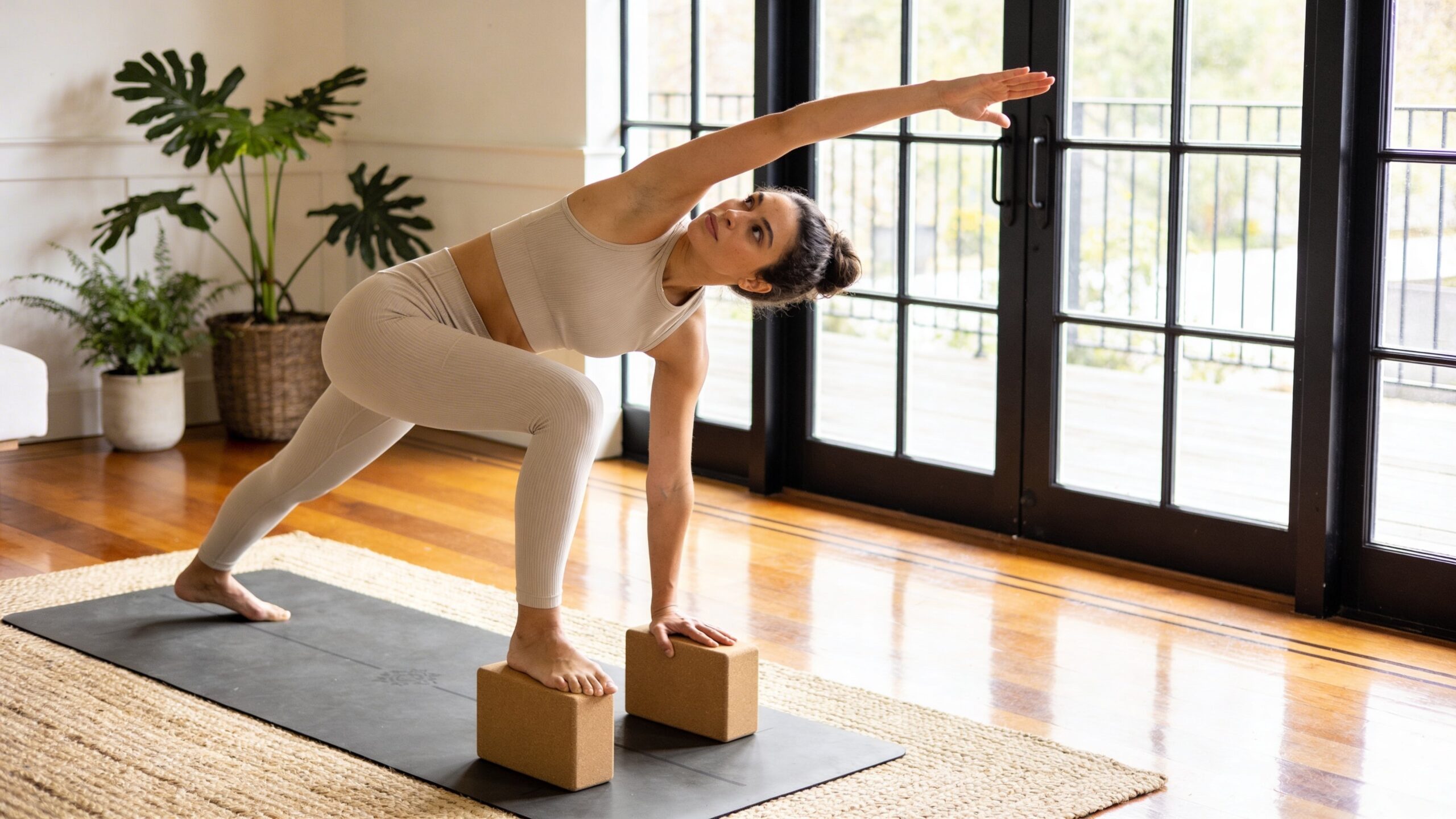
The beauty of a foam yoga block lies in how many different parts of the body it can support. In standing poses such as triangle, half moon, or side angle, the block is often used under the bottom hand. This provides stability and helps the chest stay more open. In seated poses, the block can go under the hips to improve posture and reduce rounding in the lower back. In forward folds, it may sit beneath the hands or forehead to ease tension and encourage calm breathing. In backbends, blocks can create both support and challenge. A block under the sacrum in supported bridge pose offers a gentle opening across the front of the body. In chest-opening practices, lying back on one or two blocks can create a passive stretch that feels both restorative and energizing. During balance work, placing a block under the foot or hand can change the geometry of the pose and make it easier to maintain control. Blocks are also useful in strength-building work. Squeezing a block between the thighs, palms, or forearms can activate muscles that might otherwise remain underused. This simple addition can make basic postures feel more integrated and powerful. The block becomes less about reaching and more about engagement, which expands its value far beyond flexibility support.
Foam Yoga Blocks in Restorative and Recovery Practice
One area where foam yoga blocks truly shine is restorative yoga. These slower, support-based practices focus on relaxation, release, and nervous system recovery. Foam is especially well suited for this because it feels softer against the body than harder materials. When combined with blankets, bolsters, or straps, a foam block can help create shapes that feel deeply restful and sustainable. For people dealing with soreness, stiffness, or stress, restorative use of a foam yoga block can be especially appealing. A supported heart opener, a gentle reclined pose, or a seated forward fold with block assistance can allow the body to settle without strain. This is valuable not only for yoga enthusiasts but also for athletes, office workers, and anyone carrying physical tension from daily life.
Recovery-focused movement has become increasingly important as more people recognize that progress is not only built through intensity. Supportive tools like foam yoga blocks remind practitioners that good movement includes rest, adaptation, and care. The block is not just there to make poses easier. It is there to make them smarter and more sustainable.
Choosing the Right Foam Yoga Block
Not all foam yoga blocks feel exactly the same. Density, texture, size, and edge shape can vary. A denser block will usually provide more support and less compression, while a softer block may feel more comfortable for restorative poses. Rounded edges can feel nicer against the palms or spine, while sharper edges may create a more defined platform. The best choice depends on how the block will be used and what kind of practice the person prefers. Beginners often appreciate standard foam blocks that offer a reliable blend of comfort and stability. Those with sensitive joints may prefer softer edges. Travelers may value extra-light options. Some practitioners even keep more than one type at home, using softer foam blocks for gentle sessions and firmer props for standing or strength work.
It is also worth considering how many blocks to buy. While one block is helpful, two open up many more possibilities. Paired blocks create symmetry in seated poses, support both hands in folds, and offer more balanced setups in restorative work. For anyone serious about building a home yoga practice, two foam yoga blocks are usually a worthwhile choice.
Why the Foam Yoga Block Deserves a Place in Every Practice
The foam yoga block has earned its place as one of yoga’s most dependable props because it helps practitioners meet themselves where they are while still making room for growth. It supports the beginner who wants to feel safe and capable. It challenges the experienced yogi who wants more precision and awareness. It brings comfort to restorative sessions and structure to strength work. Few tools are this simple, affordable, and adaptable. At its core, yoga is not about forcing the body into shapes that look impressive. It is about awareness, connection, balance, and intentional movement. A foam yoga block supports all of those goals. It teaches that modification is not weakness, support is not failure, and using a prop can actually lead to better technique and deeper understanding. For many people, the block is the difference between a pose that feels inaccessible and a pose that feels possible. That is why foam yoga blocks continue to matter in studios, gyms, and home practices around the world. They are not trendy extras or beginner-only accessories. They are practical, versatile tools that make yoga more inclusive and more effective. Whether someone is just starting their journey or refining an advanced practice, the foam yoga block offers a clear message: progress often begins with the right support.