Outdoor Foam Is an Installation System
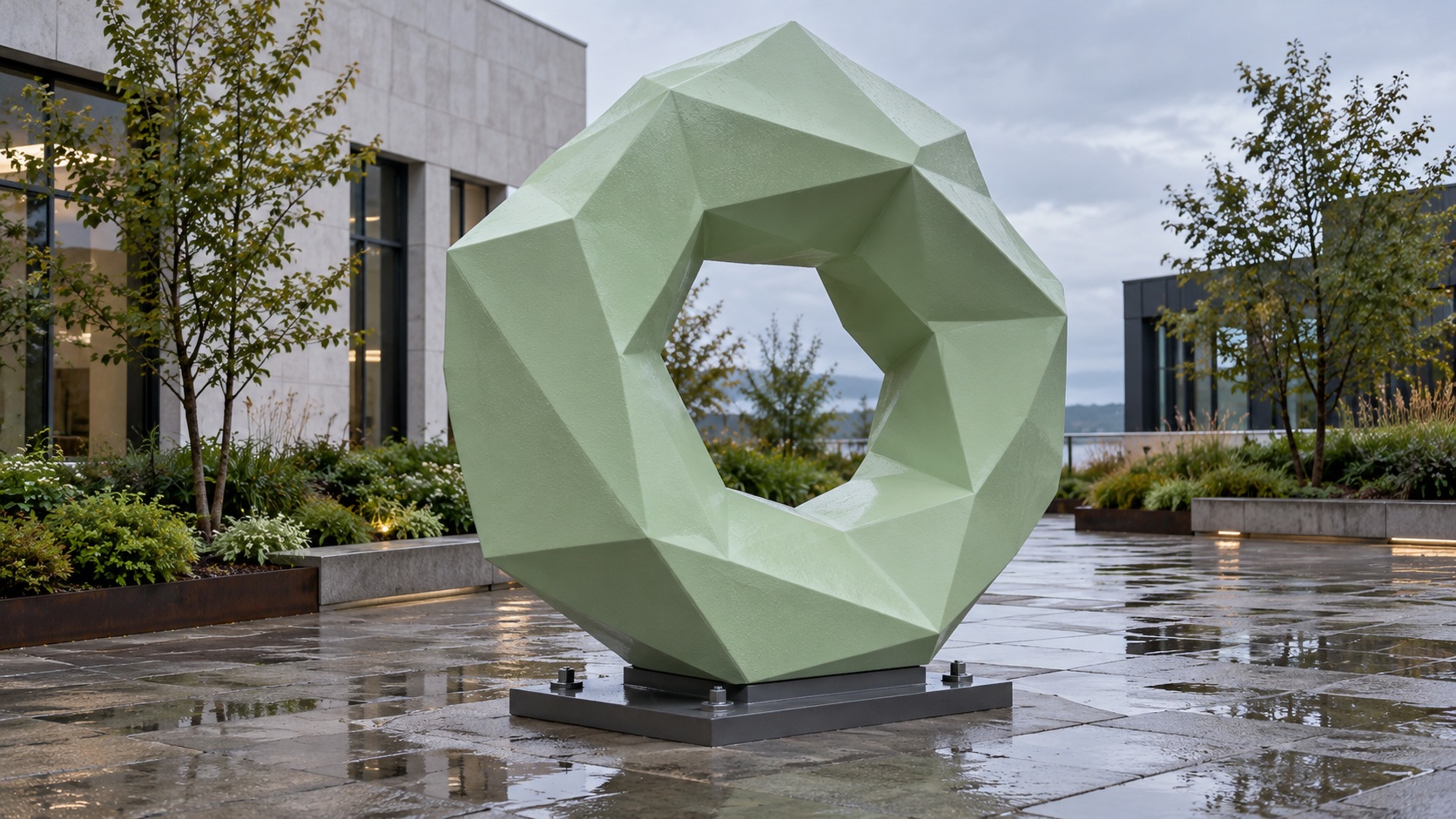
An outdoor foam sculpture is more than a weather-resistant surface over a lightweight shape. Wind acts on the silhouette, rain finds joints and openings, sunlight ages exposed layers, and public access introduces contact the artist may not have intended. Fire planning adds another set of questions about the actual materials, nearby activities, and the site’s rules. The useful design unit is the complete installation: core, skin, armature, attachments, base, ground connection, surroundings, inspection routine, and removal plan. A convincing finish can conceal weaknesses in any of those parts. Plan the installation as a maintained object in a specific place, rather than assuming that one protective coating will make a studio prop suitable for an outdoor season.
A: No. Shape, area, exposure, and the attachment load path require competent assessment.
A: No. The entire compatible layer system and its details determine suitability.
A: No. Fire claims need evidence for the relevant assembly and use.
A: No. Anchorage and ballast depend on the structure and site.
A: Follow a preplanned procedure; do not send workers into dangerous conditions to save artwork.
A: Openings, water entry, and attachment defects may be hidden from ordinary viewing.
A: Do not treat artwork or an open display structure as lightning shelter.
A: Investigate the cause and required repair before concealing it.
A: Only after reassessing durability, structure, maintenance, and relevant site requirements.
A: Assign that responsibility explicitly between the artist, fabricator, and site operator.
Write a Site Brief Before Selecting the Core
Document how long the work will remain outside, whether the public can touch it, and who will inspect it. A weekend display inside a controlled event differs from an unattended installation through winter. Note the ground surface, drainage, exposure to wind, nearby equipment, pedestrian routes, and access for installation vehicles. Photograph the proposed location from several directions. Include service access and the nearest occupied areas so reviewers can understand how an exclusion zone or maintenance visit would affect ordinary site use. These details help the fabricator and site operator discuss the same conditions rather than imagining different settings.
Agree on the intended use explicitly. If sitting, climbing, leaning, or play is not part of the design, consider how the shape and placement might nevertheless invite it. A broad low ledge can look like a seat regardless of the artist’s intention. Restrictions should not rely solely on a small sign. Resolve foreseeable public contact through suitable design, placement, barriers, or a different material system, with competent advice for structural questions.
Check permissions and site requirements early. The owner may require engineering documentation, a particular installation method, insurance, fire review, or removal provisions. These requirements vary by location and use; there is no universal art exemption. Obtain the relevant decisions before carving an object whose finished dimensions or material choices cannot be changed economically. Keep the responsible site contact involved when the design develops.
Give Wind a Real Load Path
Lightweight foam does not make a large sculpture resistant to wind. A broad face can act like a sail, and an irregular shape may experience forces in several directions. The important question is how those forces travel from the exterior through the sculpture to its attachments and the ground. A coating that resists a fingertip dent is not evidence of a reliable structural load path. Have a competent engineer assess the actual geometry, exposure, support, and anchorage.
Do not attach a major tie-down to an arbitrary patch of foam and assume the low weight makes it adequate. Local crushing, pullout, tearing, joint failure, base movement, and ground conditions all deserve consideration. The appropriate solution depends on the design and site, so avoid universal ballast weights or anchor recipes. Record the engineered arrangement clearly enough that the installer does not substitute a convenient attachment on arrival.
Detail Rain Paths Instead of Just Painting Over Them
Water management starts with geometry. Upward-facing recesses, poorly sealed seams, penetrations, and flat ledges can collect rain even when the visible surface looks well coated. Review where water will run and where it could remain. Include the underside and the junction between sculpture and base. A beautiful top surface does little for an unprotected opening hidden at the back of the work.
Ask the suppliers about the complete layer system, not merely whether a finish is sold for outdoor use. Core compatibility, adhesive durability, reinforcement, primer, topcoat, thickness, application conditions, and cure all influence performance. A coating may be suitable on one substrate but unsuitable on another. Obtain documented instructions and test representative details, including seams and penetrations, before committing to the whole sculpture.
Do not assume that sealing everything is always the answer. Some constructions need planned drainage or ventilation, and improvised holes can create new weaknesses. Resolve these details with the designer and relevant suppliers. The goal is a documented water-management approach for the assembly. Avoid trapping water behind a skin or creating a concealed reservoir that makes the piece heavier and complicates later inspection.
Consider the surrounding ground as part of the system. Irrigation, roof runoff, pooling, splashback, and snow storage can expose the lower sculpture differently from ordinary rainfall. A base that works on a dry workshop floor may sit in standing water at the venue. Coordinate landscape maintenance and drainage arrangements with the site operator so routine grounds work does not undermine the installation.
Plan for Sun, Temperature, and Seasonal Movement
Review outdoor temperature and ultraviolet exposure with the material suppliers. A dark finish in direct sun can create different surface conditions from a pale sample tested indoors. Foam, coatings, adhesive joints, and internal supports may respond differently to changing conditions. Do not assign a generic outdoor life expectancy to an assembly without evidence for its actual materials and environment.
Representative samples can help evaluate appearance and detail behavior, but they do not certify long-term durability or structural performance. Include realistic joints and edges, document exposure conditions, and inspect changes over time. Use supplier data and competent design advice where testing beyond a studio trial is needed. A short successful exposure during mild weather should not be presented as proof of year-round service.
In freezing conditions, water retained in cracks or cavities can contribute to damage. Snow and ice also affect access, inspection, and surrounding pedestrian safety. Establish who will clear the area and what methods they may use near the sculpture. Deicing chemicals, shovels, and maintenance machinery can damage a finish or base if their interaction with the installation has not been considered.
Keep Fire Planning Separate From Weatherproofing
A weather-resistant finish is not automatically a fire-protective system. Likewise, a flame-retardant claim for one ingredient does not establish the behavior of the complete outdoor artwork. Identify the actual core, skin, adhesive, coatings, and nearby combustible materials. Provide relevant documentation to the site’s responsible fire reviewer and ask what requirements apply to that particular installation. Avoid describing the work as fireproof or using a small informal burn demonstration as approval.
Review ignition sources around the proposed location. Outdoor heaters, cooking equipment, smoking areas, temporary electrical equipment, and maintenance hot work can change the exposure. Appropriate separation and controls depend on the products, equipment instructions, and site requirements. Do not publish a single clearance distance as if it applies to every sculpture and activity. Coordinate later event changes so a heater is not placed beside the artwork after the initial review.
Build a Weather Action Plan Before Opening
Choose who monitors conditions, who can close the area, and how the public will be kept away when limits are approached. Engineering advice should establish installation-specific wind actions; the weather forecast alone cannot provide a structural rating. Allow time to act before conditions become dangerous. A plan that requires a crew to wrestle a large lightweight sculpture down during severe gusts may be unworkable precisely when it is needed.
For events, connect the sculpture plan to the broader weather procedure. The National Weather Service recommends a defined plan for lightning at organized outdoor activities. People need an appropriate shelter destination; the sculpture, its canopy, or an open-sided display structure should not be treated as lightning shelter. Staff should not remain outside protecting artwork when the event plan calls for withdrawal.
Set communication methods that work at the location and during busy periods. The person monitoring weather needs access to reliable information and a way to reach the decision maker. Define an alternative if that person is absent or a phone fails. Brief contractors and temporary staff so they understand who can order closure without waiting for the artist to arrive.
Prepare the removal or securing procedure under normal conditions. Check access for lifting or transport equipment and confirm that the required crew and storage space are available. Some installations are better left isolated in place under a documented plan than moved during worsening weather. The choice must be made by competent people for the particular structure, not improvised by the nearest volunteers when the wind rises.
Inspect Details That a Distant View Misses
Create an inspection route covering the skin, joints, exposed edges, attachment points, base, and surrounding ground. Look for new cracks, looseness, deformation, water retention, coating loss, and evidence of public interference. The inspection should be practical enough to repeat and specific enough to detect change. Give inspectors a way to report concerns even when the usual site manager is absent. A photograph from across the courtyard is useful context but cannot replace checking a concealed mounting detail.
Document the baseline condition after installation and before public access. Record what is acceptable, what needs review, and what requires immediate closure. Provide those criteria to the site team in understandable terms. They should not have to diagnose a structural defect to know that a newly loose base or exposed core warrants restricting access and contacting the responsible professional.
Repair Without Hiding the Cause
When damage appears, investigate why it occurred before applying another cosmetic layer. A crack may reflect impact, movement, water entry, poor adhesion, or another issue. Covering it can conceal evidence without restoring function. Restrict access where the condition raises a safety concern, then involve the designer, fabricator, engineer, or product supplier as appropriate. Record both the repair and the reason it was selected.
Use compatible repair materials and application conditions. Outdoor touchups may require weather windows and cure restrictions that were easier to provide in the original workshop. Keep the public away from active chemical work and incomplete repairs, and follow the product’s exposure controls. Do not introduce a different coating casually if the original assembly’s fire or durability documentation depends on its layer system.
After significant weather or impact, inspect before reopening rather than waiting for the next routine date. Reassess attachments and ground conditions as well as the visible sculpture. A successful previous season does not guarantee that fasteners, finishes, or supports remain unchanged. Maintenance records help show whether the object is aging predictably or developing a pattern that calls for removal.
End the Installation Deliberately
Include dismantling in the original commission. Identify lifting points, module joints, transport supports, waste arrangements, and the intended destination of reusable components. Avoid making the final crew discover hidden attachments by cutting randomly into the object. Keep installation information accessible through the removal date, and preserve relevant identification for any components entering storage or a future artwork.
Set a review date for extending the installation. An artwork commissioned for a short event should not become permanent merely because nobody scheduled its removal. Extension changes weather exposure, maintenance needs, and sometimes site permissions. Obtain the necessary reassessment, repair, or replacement before granting the object another season. Planned retirement can be a responsible outcome for a lightweight temporary material system.
Design for the Whole Outdoor Life
Reliable outdoor foam work combines documented materials, engineered support, thoughtful water detailing, fire review, and active inspection. Weatherproof appearance is only the beginning; the operating and removal plans complete the installation.