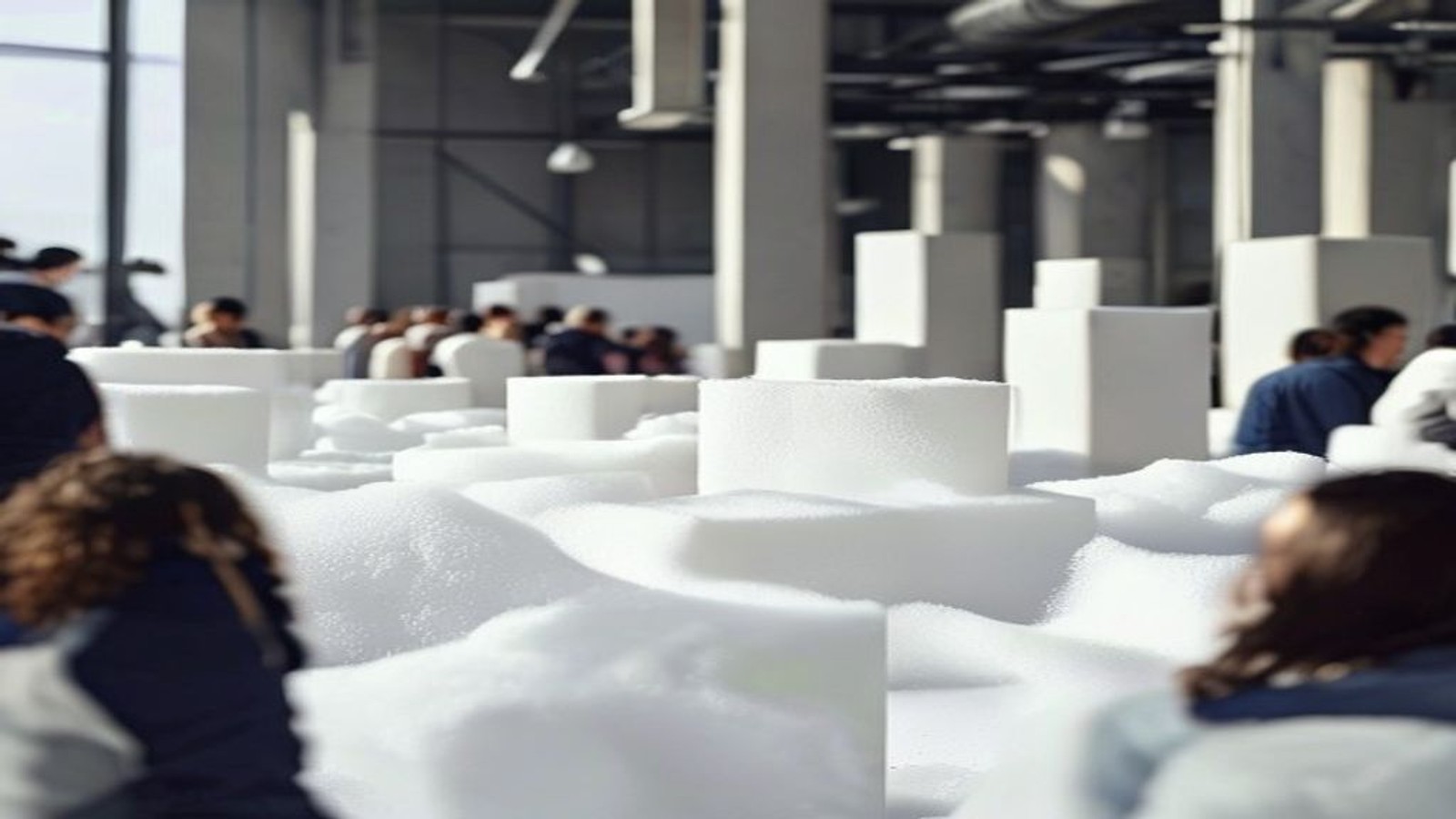
Foam sculptures appear everywhere—from immersive museum installations and themed environments to architectural features, trade-show displays, and large-scale public art. Lightweight, versatile, and highly expressive, foam has become one of the most popular sculptural materials of the modern era. Yet behind its visual impact lies a growing question that artists, fabricators, architects, and sustainability teams can no longer ignore: what is the true environmental cost of a foam sculpture over its entire life? This is where Life-Cycle Assessment, commonly known as LCA, becomes essential. Rather than judging foam sculpture based on a single moment—such as the materials used or how it is disposed of—LCA examines the full journey of a piece from raw material extraction through fabrication, installation, use, and end-of-life. When approached practically, LCA is not a bureaucratic burden. It becomes a design tool, allowing creators to make smarter decisions that reduce waste, energy use, emissions, and long-term environmental impact without sacrificing creativity. This walkthrough demystifies foam sculpture LCA by breaking it down into clear, real-world stages. Whether you are an artist, studio manager, exhibit designer, or sustainability consultant, this guide will help you understand how to assess, document, and improve the environmental performance of foam-based work in a practical and repeatable way.
A: No—clear documentation and consistent assumptions are enough for practical assessments.
A: Often yes, but transport distance and processing energy still matter.
A: It can, but increased lifespan may outweigh added material impact.
A: As detailed as needed to guide decisions—not academic-level.
A: Yes, especially for commercial, museum, and public installations.
A: Ignoring end-of-life planning.
A: No—its impact depends on design, lifespan, and disposal strategy.
A: Ideally yes—early decisions matter most.
A: Absolutely—reuse dramatically improves life-cycle performance.
A: No—small studios benefit just as much from life-cycle thinking.
Understanding Life-Cycle Assessment in the Context of Foam Sculpture
Life-Cycle Assessment is a structured method for evaluating environmental impacts associated with all stages of a product’s life. In foam sculpture, this means looking beyond aesthetics and focusing on materials, processes, energy, transportation, durability, reuse potential, and disposal pathways.
Unlike abstract sustainability ideals, LCA is rooted in quantifiable flows. These flows include raw materials extracted, energy consumed, emissions released, waste generated, and resources recovered or lost at the end of a sculpture’s life. The goal is not perfection, but informed trade-offs. Foam will never be impact-free, but its footprint can be meaningfully reduced when decisions are guided by life-cycle thinking.
For sculptural applications, LCA is typically qualitative-quantitative hybrid. Studios may not have access to industrial databases or specialized software, but meaningful assessments can still be achieved using supplier data, production logs, energy estimates, and documented disposal outcomes. The value lies in consistency and transparency rather than absolute precision.
Step One: Defining the Scope and Functional Unit
Every Life-Cycle Assessment begins with a clear definition of scope. For foam sculpture, this step determines what you are measuring and why. Without it, comparisons become meaningless and conclusions unreliable.
The functional unit is the anchor of your assessment. It defines what the sculpture does and how long it is expected to perform that function. For example, a functional unit might be a freestanding foam sculpture displayed indoors for five years, or a themed façade element designed for a six-month exhibition run. Defining function clarifies expectations around durability, maintenance, and replacement.
Scope boundaries establish what is included in the assessment. A cradle-to-grave scope includes raw material extraction, foam manufacturing, sculpting processes, finishing, transportation, installation, maintenance, and end-of-life. A cradle-to-gate scope might stop at fabrication, while cradle-to-cradle expands the analysis to include material recovery and reuse. Most foam sculpture LCAs benefit from cradle-to-grave boundaries, especially when disposal or reuse strategies are being evaluated.
Step Two: Raw Material Extraction and Foam Production
The environmental story of a foam sculpture begins long before a hot wire ever touches the surface. Foam materials—whether polystyrene, polyurethane, polyethylene, or bio-based alternatives—originate from complex industrial supply chains.
Traditional petroleum-based foams rely on fossil fuel extraction, chemical processing, and energy-intensive polymerization. These steps carry impacts such as greenhouse gas emissions, water use, and potential toxicity. Understanding the source of your foam allows you to identify hotspots before fabrication even begins.
Some suppliers offer recycled-content foams or bio-derived components. While these alternatives may not eliminate environmental impact, they often reduce reliance on virgin fossil resources. Life-Cycle Assessment evaluates these trade-offs by examining not just material composition, but upstream energy intensity and byproduct handling.
At this stage, studios should document foam type, density, supplier certifications, recycled content percentages, and transportation distance from manufacturer to workshop. These details form the foundation of the material inventory.
Step Three: Fabrication and Sculpting Processes
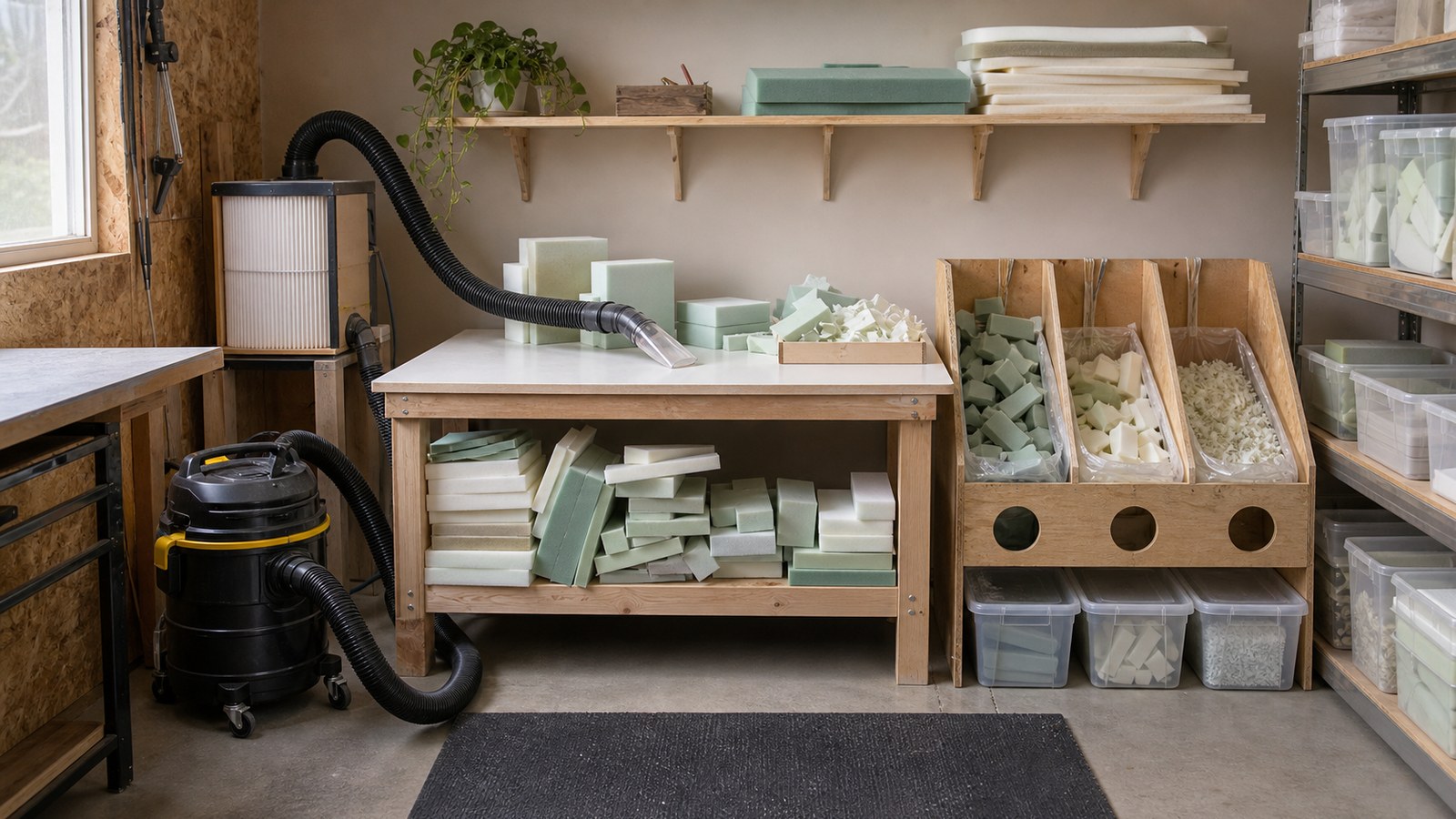
Once foam enters the studio, fabrication becomes the dominant phase of environmental impact. Cutting, carving, laminating, sanding, and coating all consume energy and generate waste. Life-Cycle Assessment treats the studio not as a neutral space, but as an active system with inputs and outputs.
Energy use is often the largest contributor in this phase. Hot-wire cutters, CNC machines, dust collection systems, lighting, and climate control all draw electricity. Estimating energy consumption does not require complex instrumentation. Studios can approximate usage based on machine wattage and operating hours, creating reasonable energy profiles for different projects.
Material efficiency plays an equally important role. Foam offcuts, dust, and failed components represent embodied energy that never fulfills the sculpture’s function. LCA encourages process optimization, such as nesting CNC cuts, modular design, and offcut reuse, to reduce material loss.
Adhesives, coatings, and hard-shell finishes also factor into the assessment. These materials introduce additional chemical inputs, emissions, and curing energy. Choosing low-VOC coatings or water-based systems can reduce both environmental and occupational health impacts, improving overall life-cycle performance.
Step Four: Transportation and Logistics
Foam’s lightweight nature offers an advantage in transportation, but logistics still contribute to a sculpture’s footprint. Life-Cycle Assessment examines how materials and finished pieces move through space, from supplier to studio, studio to site, and potentially site to storage or disposal.
Transportation impacts depend on distance, mode, and load efficiency. A locally sourced foam block transported by truck may have a lower footprint than a “greener” foam shipped internationally. Similarly, modular sculptures that pack flat or stack efficiently can reduce shipping volume and fuel use.
Installation logistics matter as well. On-site equipment, lifts, temporary supports, and crew travel all contribute incremental impacts. While these may seem minor individually, LCA captures their cumulative effect, revealing opportunities for smarter planning and coordination.
Step Five: Use Phase, Durability, and Maintenance
Many environmental assessments overlook the use phase, but for foam sculptures, this period can be critical. The longer a sculpture performs its intended function without replacement, the lower its annualized environmental impact becomes. Indoor installations typically require minimal maintenance, while outdoor or high-traffic environments demand protective coatings, repairs, or periodic refurbishment. Life-Cycle Assessment evaluates whether increased upfront material use—such as thicker shells or reinforced cores—reduces long-term impact by extending service life.
Maintenance activities also matter. Cleaning agents, repainting, and repairs introduce additional materials and energy. Designing for easy access, modular repair, and surface renewability can significantly improve life-cycle outcomes. In many cases, durability becomes a sustainability multiplier. A sculpture designed to last twice as long does not merely double its value—it effectively halves the environmental impact per year of use.
Step Six: End-of-Life Scenarios and Disposal Pathways
End-of-life is often the most challenging phase of foam sculpture LCA, but also the most revealing. Traditional foam disposal typically involves landfill or incineration, both of which carry environmental costs.
Life-Cycle Assessment encourages proactive end-of-life planning. Can the sculpture be disassembled? Can foam components be reused in future projects? Is mechanical recycling or densification available locally? Even partial material recovery can dramatically change the environmental profile.
Some studios implement closed-loop systems, reclaiming foam offcuts and retired sculptures for reuse as cores, fillers, or recycled feedstock. Others partner with recycling facilities or industrial users who can repurpose foam waste. Documenting these pathways strengthens the credibility and usefulness of the LCA. Design decisions made at the concept stage—such as avoiding permanently bonded mixed materials—often determine whether end-of-life recovery is possible at all.
Step Seven: Interpreting Results and Identifying Hotspots
Once data from all life-cycle stages is collected, interpretation begins. The goal is not to generate a single score, but to identify impact hotspots and improvement opportunities. Common hotspots in foam sculpture LCAs include raw material production, fabrication energy use, and end-of-life disposal. Understanding where impacts concentrate allows studios to prioritize changes that deliver the greatest benefit.
Interpretation should also consider trade-offs. For example, a heavier protective coating may increase material impact but extend lifespan significantly. LCA provides the framework to weigh these outcomes logically rather than intuitively. Clear documentation is essential. Even a simplified LCA gains value when assumptions, data sources, and limitations are transparently recorded.
Step Eight: Using LCA to Inform Design and Client Decisions
The most powerful role of Life-Cycle Assessment is not retrospective reporting, but forward-looking design guidance. When integrated early, LCA influences material selection, structural strategy, fabrication methods, and logistics planning.
Clients increasingly request sustainability documentation, especially in commercial, institutional, and public projects. A well-articulated foam sculpture LCA demonstrates responsibility, professionalism, and environmental awareness without compromising artistic intent.
Studios can use LCA findings to justify design choices, propose alternative materials, or highlight long-term value. Rather than framing sustainability as a constraint, LCA reframes it as a design asset.
Why Foam Sculpture LCA Is Becoming Industry Standard
As environmental accountability grows across creative industries, foam sculpture is entering a new era of transparency. Life-Cycle Assessment provides a common language that connects artists, fabricators, architects, sustainability consultants, and clients. Foam will remain a powerful sculptural medium. Its future, however, depends on thoughtful use, responsible design, and honest assessment. LCA does not demand perfection—it demands awareness. By understanding the full life of a foam sculpture, creators gain control over their impact, aligning artistic ambition with environmental stewardship.
Conclusion: From Material to Meaning
Foam sculpture Life-Cycle Assessment is not an abstract exercise reserved for engineers or policy experts. It is a practical, step-by-step way of understanding how creative choices ripple through the environment. From raw material extraction to final disposal, every decision shapes the sculpture’s footprint. When these decisions are informed by LCA, sustainability becomes embedded in the creative process rather than added as an afterthought. In a world where art increasingly intersects with public space, architecture, and shared environments, responsible making matters. Life-Cycle Assessment offers a path forward—one where foam sculpture remains bold, expressive, and imaginative, while also being conscious, credible, and future-ready.