Design the Skeleton to Outlive the Scenic Skin
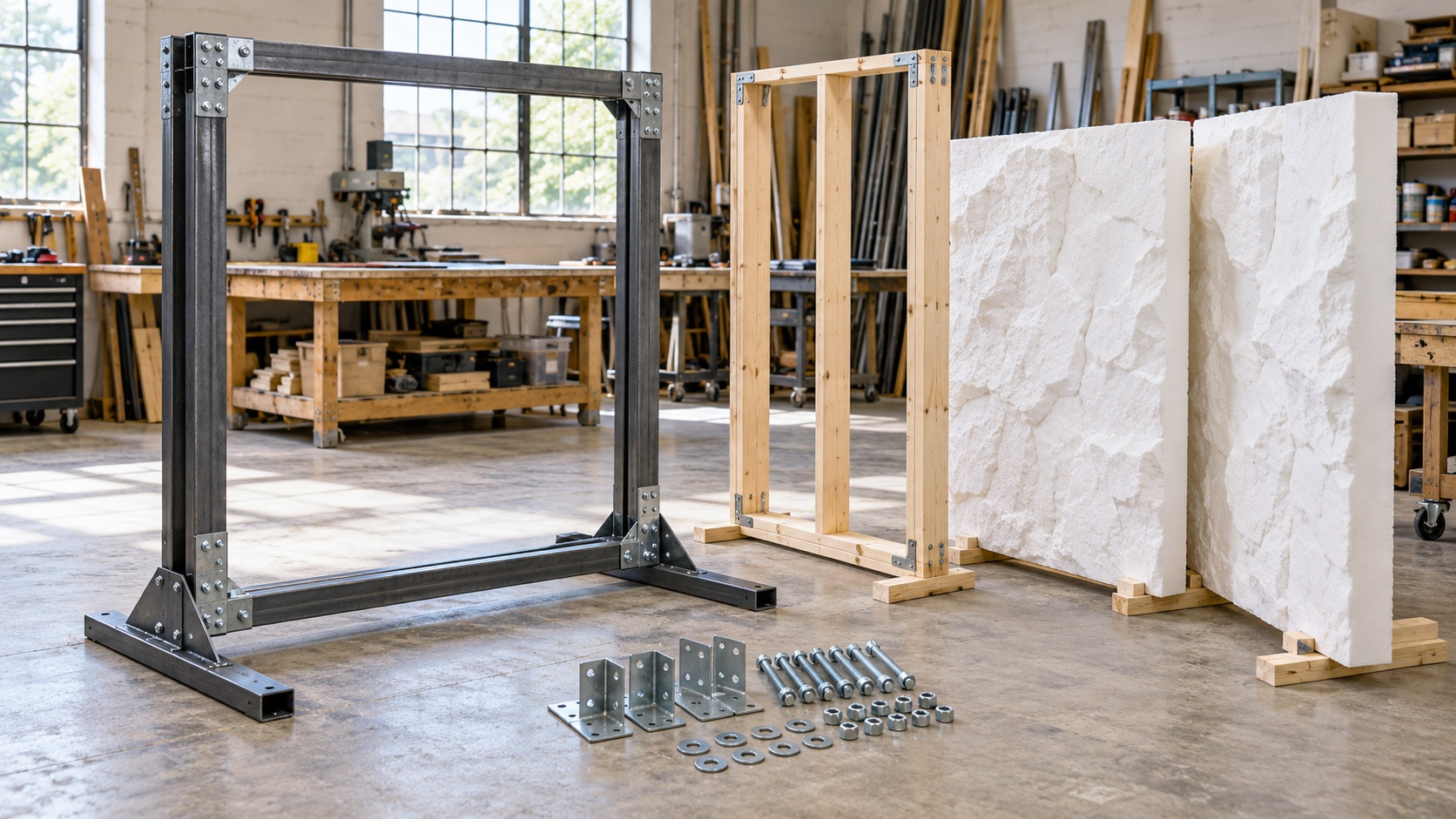
A reuse-ready armature is not simply a frame held together with bolts. It is a supporting system that can be inspected, separated from its decorative surfaces, identified in storage, and assessed for another appropriate use. Metal members, timber components, connection plates, and fasteners can each have different inspection and retirement needs. The most valuable reuse decision often happens before foam is attached: preserve access to the load-carrying structure and avoid burying every interface beneath an inseparable scenic shell. This can make local repairs, new skins, and orderly disassembly possible without pretending that any old frame is suitable for any new sculpture. Reuse must preserve knowledge of what the components are and what they were designed to do. Start with the intended loads and installation, then design the next separation alongside the first assembly. The result should be a dependable inventory of known parts, not a collection of mystery supports whose strength is guessed from their appearance.
A: No. Access, condition, identification, separation, inspection, and a plausible next use all matter.
A: No. Changed geometry, loads, interaction, and exposure require appropriate reassessment.
A: Not necessarily. Durable welded subassemblies can remain reusable units within a broader separation plan.
A: Product type, condition, prior damage, and connection behavior can matter to the next use.
A: Use hardware identified and specified for the actual design rather than unknown similar-looking pieces.
A: A documented opening and enough space for the actual tools and removal sequence.
A: It reveals trapped connections, changing support conditions, handling needs, and packing problems before strike.
A: No. Follow the relevant inspection and authorization process for its role and history.
A: Link identity, dimensions, location, condition status, and relevant accepted-use information.
A: A documented return to appropriate service with required inspection, repair, and design review accounted for.
Define What the Armature Actually Supports
Map the forces the assembly must carry: its own completed mass, handling, transport, attached equipment, and intended interaction. A stationary indoor display differs from a touring element, an outdoor sculpture, or a suspended object. Do not assume a frame proven in one condition is automatically suitable in another.
The support concept belongs to the responsible designer before the foam shape closes around it.
Separate structural members from decorative ribs or temporary carving supports. A component that locates foam during fabrication may not be intended to carry the finished installation. Mark that distinction in the drawings and records. Otherwise a later repairer may remove a necessary brace because it looks temporary, or reuse a temporary piece as though it had an established load-carrying role.
Obtain the appropriate qualified assessment for the actual project. Ontario’s scenery guidance discusses design and construction considerations and the potential need for engineering expertise. Use the requirements applicable to the installation rather than treating a general reuse ambition as authority to redesign supports without review.
Choose Metals for a Known Connection System
Identify the metal, member form, dimensions, and any relevant grade or supplied system. A familiar profile shape does not reveal every property needed for a new design. Retain documentation where available and avoid mixing visually similar unknown components into a trusted inventory. Reuse becomes easier when members come from a consistent documented system with replaceable parts.
Consider how connections will be made, inspected, and separated. Welded subassemblies can remain useful reusable units, while bolted interfaces may connect those units to bases or extensions. The choice is not a moral contest between welding and bolts. It is a design question about load transfer, fabrication quality, access, transport, maintenance, and the realistic next use.
Use Timber With Its Condition in View
Record the timber product and relevant specification, including whether the member is solid wood, plywood, or another engineered product. Avoid treating a visually similar replacement as automatically equivalent. Previous holes, cuts, splits, moisture exposure, or adhesive residues can affect how a reclaimed component fits the next design. The responsible assessment should consider the actual piece, not only its original nominal dimensions.
Wood connections require attention to the material and connection design. The USDA Forest Service’s Wood Handbook is an authoritative technical reference on wood as an engineering material. It does not turn a reclaimed board into a rated component by inspection from a photograph. Use suitable expertise when a connection’s performance matters to the installation.
Design replaceable local connection regions where appropriate. Repeatedly driving fasteners into the same damaged area is not a reuse strategy. A planned replaceable block, plate, or other supported detail can preserve the main member while allowing controlled maintenance. Such details need to belong to the design rather than being improvised after a joint becomes loose.
Store timber so its identity and condition remain assessable. Keep it away from avoidable wetting and floor contamination, and inspect before it returns to service. A reusable member hidden beneath paint, foam, or old adhesive may require more investigation than a clean piece with a known history. Factor that effort into the decision to retain it.
Make Fastener Selection Deliberate
Specify the connection hardware required by the actual design, including relevant type, size, grade, washers, locking method, and replacement requirements. Do not substitute a convenient similar-looking bolt without authorization. A parts bin containing assorted unknown hardware can be useful for noncritical experiments but should not masquerade as a controlled structural supply.
Keep hardware identification with the assembly record and package removable sets by location where that improves clarity. Standardizing compatible sizes can reduce tool changes and losses, but it should not override connection requirements. The objective is fewer unnecessary variations within a supported design, not one universal fastener for every load and material.
Determine which components may be reused and which require replacement under the relevant design and manufacturer guidance. Threads, locking features, deformation, corrosion, and previous service can matter. Avoid blanket promises that all bolts can be reused indefinitely or that every item must be discarded after one assembly. The actual specification should govern the decision.
Preserve Tool Access After Finishing
Model the space needed to insert a tool, turn it, hold the opposing part, and remove the fastener. A connection can be visible yet impossible to service because a neighboring foam mass blocks movement. Test access with the actual tool during dry assembly. If the designer intends a specific sequence, show it rather than leaving the installer to discover it by trial.
Use planned removable scenic covers or panels where the structure needs continued access. Keep their identifiers and opening method in the handover information. A concealed screw beneath an unmarked painted scale is not meaningfully accessible. The scenic finish should hide the mechanism from the audience without hiding its existence from the people responsible for maintenance.
Protect connection surfaces from uncontrolled coating, adhesive, and filler buildup. A registration face or threaded component can lose its function beneath an otherwise attractive finish. Inspect interfaces after the full surface process. If a finish must be removed for assembly, identify the accepted method and touch-up requirement so crews do not attack the joint with an unsuitable solvent or tool.
Photograph hidden regions before closing them. Show member identifiers, fastener locations, and the relationship between the foam and structure. These images are especially useful when a new decorative skin is proposed later. They let the team plan separation without cutting blindly through an unknown support.
Attach Foam So Separation Is Realistic
Choose the foam-to-armature relationship around the actual use and removal plan. Some assemblies may use removable carriers or local attachment features; others may require a more permanent bond. Do not weaken an essential connection merely to claim easy disassembly. The support and scenic requirements must be satisfied first, with separation planned through appropriate details.
Distinguish replaceable skins from reusable cores and reusable frames. A frame can survive while the old foam is retired, or a complete core-and-frame module can return intact with a new surface treatment. Record the intended reusable unit. Without that definition, a strike crew may spend hours separating a component that was meant to remain assembled, or destroy a module that could have been retained.
Rehearse Disassembly Before the First Event
Complete a dry assembly and reverse it using the expected tools and sequence. Check whether a connection becomes trapped, whether a heavy subassembly needs support during release, and whether the removed parts fit their carriers. The disassembly should not depend on someone remembering which apparently identical bolt was installed first.
Provide handling and temporary-support information through the responsible design. Removing one brace can change the condition of the remaining assembly even before the final part is detached. Do not improvise release order on a large structure. Keep the work area controlled and use appropriate personnel and equipment for the actual loads and geometry.
Label modules and mating parts on durable hidden surfaces. Include orientation where a reversed member can still appear to fit. Store hardware in identified containers instead of taping loose bags to fragile foam. A clear inventory at strike reduces both lost parts and the temptation to replace missing specified hardware with whatever happens to be nearby.
Record any approved field changes before packing. A drilled hole, shortened member, or substituted plate can affect future reuse even if the finished sculpture looked unchanged. Update the inventory and drawings so the next project begins with the structure that actually exists, not the original unmodified plan.
Inspect Before Returning Parts to Stock
Separate accepted reusable components from items awaiting assessment, repair, or retirement. Look for the conditions identified in the design and maintenance information. A member that was struck during transport should not return automatically to the trusted shelf because it has been straightened enough to look normal.
Keep condition records proportional to the role of the component. Critical supports and attachments need the appropriate inspection and authorization, while nonstructural spacers may require a simpler inventory check. Avoid assigning everyone the same generic green tag. The tag should communicate an actual status within a defined process, not an unsupported lifetime guarantee.
Assess new uses as new uses. An armature that supported a compact indoor foam form may need review before receiving a taller outdoor skin with a different wind area. Reuse preserves material, but geometry and conditions still change the design problem. Keep previous accepted use information available without letting it become blanket approval.
Make the Library Worth Using
Store known parts by dimensions, connection family, condition, and location. Include photographs and records needed to understand available subassemblies. A designer should be able to discover an appropriate reusable base early enough to incorporate it into the concept rather than learn of it after a new one has been fabricated.
Track actual returns to service. A full warehouse does not prove avoided production if nobody can identify or trust the stored members. Review items that repeatedly occupy space without a plausible next use. Repair, repurpose through an appropriate design, transfer to an accepting user, or retire through a suitable route as the condition and evidence support. Compare complete effort: new material avoided, inspection, repair, transport, storage, and replacement hardware. Reuse can provide a clear practical benefit without a universal carbon percentage. Report actual successful cycles and the limits of the record. That creates a credible foundation for improving the system rather than measuring sustainability by accumulation alone.
Adapt Through Known Interfaces
A common base can serve several scenic concepts when its connection arrangement and assessed limits remain clear. Give designers its actual interface information early. They can then shape new foam modules around a known starting point instead of forcing an unrelated sculpture onto it after fabrication.
Keep adapters identifiable as separate designed components. An adapter changes the load path and can introduce new clearances or handling needs. Record what it connects, which revision it belongs to, and any effect on the approved assembly sequence.
Do not let a growing collection of undocumented adapters erase the original system’s clarity. Review combinations as combinations, retire superseded parts, and keep the inventory connected to the structure that will actually be assembled.
Keep the Knowledge With the Frame
A reusable armature needs accessible connections, identifiable materials, controlled hardware, and a service history. Design separation without compromising support, inspect before reuse, and reassess changed applications. The frame lasts longer when the information needed to trust it lasts alongside it.