Foam Rolling Belongs in Recovery, Not Punishment
Foam roller exercise is a self-guided recovery practice that uses body weight, slow pressure, and position changes to help tight muscles feel easier to move. It is most useful when it supports warm-ups, cooldowns, and mobility work; it is least useful when someone treats pain as proof that the session is working.
What the Roller Changes
Foam rolling changes sensation more than it magically repairs tissue. The roller gives the body a broad pressure input, and that input can make a tight area feel less guarded before movement. When the pressure stays moderate, a person can breathe normally, adjust position, and notice whether the next stretch or drill feels easier.
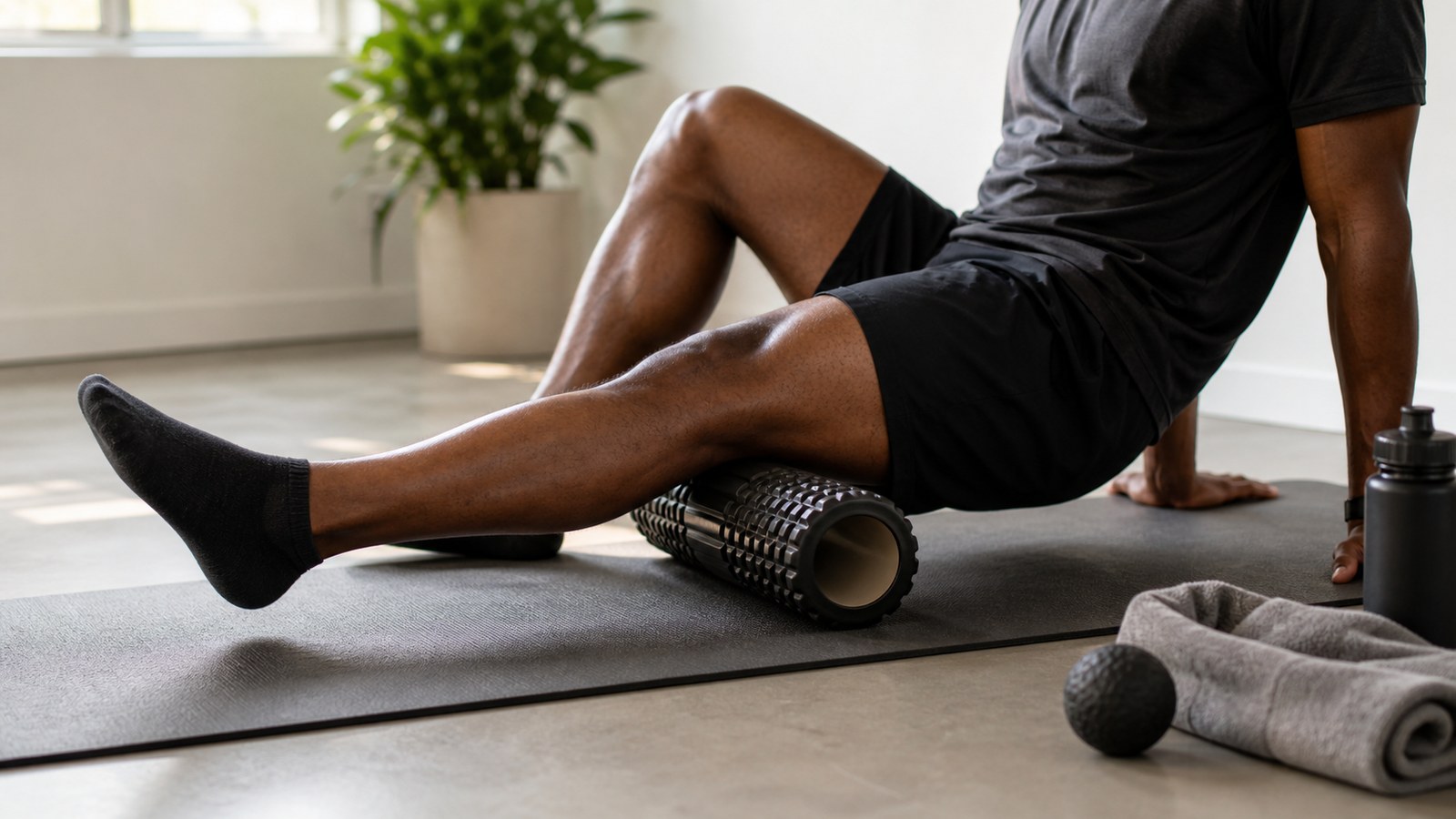
The most useful recovery sessions are slow enough to gather information. A rushed back-and-forth pass over the leg often becomes noise, while a patient pass over the calf or quad can reveal where the body is sore, where it is simply stiff, and where the roller should not be used at all.
Picking Firmness Without Guessing
A smooth medium-density roller is the safest default for most new users. It spreads pressure evenly, feels predictable on the floor, and does not punish sensitive areas with narrow ridges. Very hard or aggressively textured rollers can be useful, but only when the user already knows how much pressure is productive.
Size changes the experience too. A long roller is stable for upper-back drills and two-leg positions, while a short roller fits travel bags and smaller rooms. Hollow-core rollers often feel firmer than they look, so buyers should not judge comfort by color or marketing photos.
Where Rolling Helps Most
Calves, quads, glutes, lats, and the upper back are common targets because they can be positioned on the roller with reasonable control. Joints, fresh bruises, and sharp injury sites do not belong in the same category. The roller should meet muscle tissue, not become a lever against the knee, ankle, hip, or lower spine.
Runners may use the roller to check calf tightness after hills; lifters may use it to calm lats before overhead work; office workers may use it gently across the upper back after long sitting. Those uses are different, which is why one universal routine is less helpful than a small set of controlled movements.
A Pre-Workout Sequence
Before a workout, rolling should be brief and paired with active movement. A simple pattern might include slow calf passes, short quad passes, a glute pause, then bodyweight squats, lunges, or ankle rocks. The goal is not relaxation so deep that the body feels sleepy; the goal is comfortable motion.
If rolling makes the area more irritated, the pressure was probably too high or the timing was wrong. Pre-workout work should leave the athlete feeling ready to move, not tender before the session even begins.
A Cooldown That Does Not Overdo It
After training, the roller can become a downshift. Slower passes, longer breaths, and less aggressive pressure help the body move out of hard effort. Two focused minutes on a region usually says more than ten distracted minutes spent grinding the same spot.
The cooldown should also respect training load. If the same muscle needs intense rolling every day to feel usable, the issue may be programming, sleep, recovery, footwear, or strength balance rather than a shortage of foam rolling.
Pain Signals to Leave Alone
Sharp pain, tingling, numbness, swelling, or a bruised feeling that lingers are signs to stop. Rolling is not a test of toughness, and the body does not owe the roller unlimited tolerance. A productive session can be uncomfortable, but it should not feel threatening.
People with nerve symptoms, recent injuries, blood-clot concerns, or unexplained pain should ask a qualified professional before using heavy pressure. The roller is a recovery tool, not a diagnosis.
A final project check for foam rolling belongs in recovery, not punishment is to weigh calves after running against lats after overhead work before treating the recommendation as settled. The reader came for fitness recovery and self-myofascial release, so the advice has to stay attached to a real condition instead of becoming broad filler. That checkpoint gives What is Foam Roller Exercise? Full Guide for Recovery and Fitness a concrete test before the material, finish, or workflow is chosen.
The reader should also weigh for foam rolling belongs in recovery, not punishment is to weigh quads after squats against upper-back stiffness before treating the recommendation as settled. The reader came for fitness recovery and self-myofascial release, so the advice has to stay attached to a real condition instead of becoming broad filler. That checkpoint gives What is Foam Roller Exercise? Full Guide for Recovery and Fitness a concrete test before the material, finish, or workflow is chosen.
A realistic shop note for foam rolling belongs in recovery, not punishment is to weigh glutes after cycling against smooth rollers before treating the recommendation as settled. The reader came for fitness recovery and self-myofascial release, so the advice has to stay attached to a real condition instead of becoming broad filler. That checkpoint gives What is Foam Roller Exercise? Full Guide for Recovery and Fitness a concrete test before the material, finish, or workflow is chosen.
The maintenance view for foam rolling belongs in recovery, not punishment is to weigh lats after overhead work against textured rollers before treating the recommendation as settled. The reader came for fitness recovery and self-myofascial release, so the advice has to stay attached to a real condition instead of becoming broad filler. That checkpoint gives What is Foam Roller Exercise? Full Guide for Recovery and Fitness a concrete test before the material, finish, or workflow is chosen.
A useful comparison point for foam rolling belongs in recovery, not punishment is to weigh upper-back stiffness against short travel rollers before treating the recommendation as settled. The reader came for fitness recovery and self-myofascial release, so the advice has to stay attached to a real condition instead of becoming broad filler. That checkpoint gives What is Foam Roller Exercise? Full Guide for Recovery and Fitness a concrete test before the material, finish, or workflow is chosen.
The strongest practical cue for foam rolling belongs in recovery, not punishment is to weigh smooth rollers against breathing during pressure before treating the recommendation as settled. The reader came for fitness recovery and self-myofascial release, so the advice has to stay attached to a real condition instead of becoming broad filler. That checkpoint gives What is Foam Roller Exercise? Full Guide for Recovery and Fitness a concrete test before the material, finish, or workflow is chosen.
One title-specific safeguard for foam rolling belongs in recovery, not punishment is to weigh textured rollers against sharp pain before treating the recommendation as settled. The reader came for fitness recovery and self-myofascial release, so the advice has to stay attached to a real condition instead of becoming broad filler. That checkpoint gives What is Foam Roller Exercise? Full Guide for Recovery and Fitness a concrete test before the material, finish, or workflow is chosen.
A better field test for foam rolling belongs in recovery, not punishment is to weigh short travel rollers against calves after running before treating the recommendation as settled. The reader came for fitness recovery and self-myofascial release, so the advice has to stay attached to a real condition instead of becoming broad filler. That checkpoint gives What is Foam Roller Exercise? Full Guide for Recovery and Fitness a concrete test before the material, finish, or workflow is chosen.
The long-term question for foam rolling belongs in recovery, not punishment is to weigh breathing during pressure against quads after squats before treating the recommendation as settled. The reader came for fitness recovery and self-myofascial release, so the advice has to stay attached to a real condition instead of becoming broad filler. That checkpoint gives What is Foam Roller Exercise? Full Guide for Recovery and Fitness a concrete test before the material, finish, or workflow is chosen.
A grounded recommendation for foam rolling belongs in recovery, not punishment is to weigh sharp pain against glutes after cycling before treating the recommendation as settled. The reader came for fitness recovery and self-myofascial release, so the advice has to stay attached to a real condition instead of becoming broad filler. That checkpoint gives What is Foam Roller Exercise? Full Guide for Recovery and Fitness a concrete test before the material, finish, or workflow is chosen.
The most useful boundary for foam rolling belongs in recovery, not punishment is to weigh calves after running against lats after overhead work before treating the recommendation as settled. The reader came for fitness recovery and self-myofascial release, so the advice has to stay attached to a real condition instead of becoming broad filler. That checkpoint gives What is Foam Roller Exercise? Full Guide for Recovery and Fitness a concrete test before the material, finish, or workflow is chosen.
A careful material choice for foam rolling belongs in recovery, not punishment is to weigh quads after squats against upper-back stiffness before treating the recommendation as settled. The reader came for fitness recovery and self-myofascial release, so the advice has to stay attached to a real condition instead of becoming broad filler. That checkpoint gives What is Foam Roller Exercise? Full Guide for Recovery and Fitness a concrete test before the material, finish, or workflow is chosen.
A repair-minded review for foam rolling belongs in recovery, not punishment is to weigh glutes after cycling against smooth rollers before treating the recommendation as settled. The reader came for fitness recovery and self-myofascial release, so the advice has to stay attached to a real condition instead of becoming broad filler. That checkpoint gives What is Foam Roller Exercise? Full Guide for Recovery and Fitness a concrete test before the material, finish, or workflow is chosen.
The clearest use-case test for foam rolling belongs in recovery, not punishment is to weigh lats after overhead work against textured rollers before treating the recommendation as settled. The reader came for fitness recovery and self-myofascial release, so the advice has to stay attached to a real condition instead of becoming broad filler. That checkpoint gives What is Foam Roller Exercise? Full Guide for Recovery and Fitness a concrete test before the material, finish, or workflow is chosen.
A practical storage check for foam rolling belongs in recovery, not punishment is to weigh upper-back stiffness against short travel rollers before treating the recommendation as settled. The reader came for fitness recovery and self-myofascial release, so the advice has to stay attached to a real condition instead of becoming broad filler. That checkpoint gives What is Foam Roller Exercise? Full Guide for Recovery and Fitness a concrete test before the material, finish, or workflow is chosen.
The safest next decision for foam rolling belongs in recovery, not punishment is to weigh smooth rollers against breathing during pressure before treating the recommendation as settled. The reader came for fitness recovery and self-myofascial release, so the advice has to stay attached to a real condition instead of becoming broad filler. That checkpoint gives What is Foam Roller Exercise? Full Guide for Recovery and Fitness a concrete test before the material, finish, or workflow is chosen.
Keeping the Habit Useful
Roll gently, then move better.